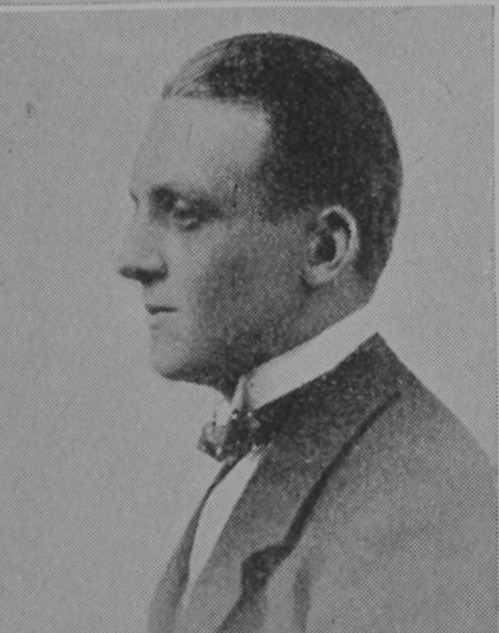
Timbrell G Sergt 225 3rd Australian Light Horse
TIMBRELL, GORDON, Sergt., No. 225, 3rd Light Horse, Australian Expeditionary Force, 2nd s. of the late Samuel Timbrell, for many years Manager of the Central Station Hotel, Glasgow, by his wife, Charlotte Whyte (now wife of Anderson Rodger, of 59, Longridge Road, Earl’s Court, S. W.), dau. of George Gordon, of Aberdeen; b. Glasgow, 13 April, 1891; educ. Glasgow High School, and on leaving there in 1906 went to Stubbington House, Fareham, to be prepared for entrance in the Royal Navy as an Engineer Cadet. This idea had to be abandoned owing to the new age limit (12 years) coming into force, bringing Engineers under the same regulations as the Executive Cadets. Shortly afterwards he entered the office of a shipping firm in Stettin, with the purpose of learning the German language in combination with business training, and on leaving there, returned to Glasgow where he served a brief apprenticeship in a stockbroker’s office, and then went to Australia in 1910. He first took up sheep farming, but city life lured him, first to Melbourne, where he gained some experience in the wool trade, and then to Adelaide, where he managed the shipping department of Messrs. Bagot, Shakes & Lewis, Ltd. He had been with them three years when war broke out. He immediately volunteered and joined the Light Horse as a private, but being a fluent speaker of French and German, and a hard and fearless worker, he quickly won promotion and was appointed Sergt. early in March. He was killed in action at the Dardanelles, 1 July, 1915; unm.
In a letter from Sergt. Smith under date of 26 June, printed in the Glasgow High School Magazine, Dec. 1915, p. 37, is the following passage: “My outlook on the world and things in general just now is even brighter than usual. Timmy (Sergt Gordon Timbrell) is a wonderful boy and yesterday secured all manner of good things. We dined last night on turtle soup, thick mutton stew, pineapple, cakes, dates and coffee, and wound up with cigarettes. This morning for breakfast we had porridge and milk as a preliminary to what was in itself a splendid feed.’ When Timmy is purveyor we are sure to be all right. The hardships of war! They have not existed so far.” And in a later letter he wrote: “You will no doubt have heard of poor Timmy’s death. He was killed in the trench last Thursday evening. You don’t know how I miss him. We have been the best of pals all the time. He was as game as you make ’em.” The secretary of his firm wrote: “He was a courageous and chivalrous young fellow, and had done uncommonly well in our firm. We were only awaiting his return, and the return of something like normal conditions to give him that lift which he had so well earned.”
Source : De Ruvigny’s Roll Of Honour Vol 1