Stewart J A L Lt 1st Rifle Brigade

Stewart J A L Lt 1st Rifle Brigade

STEWART, JAMES ALEXANDER LOGAN, of Alltyrodyn, Lieut., 1st Battn The Rifle Brigade, elder s. of the late Lieut. James Logan Stewart, 7th Hussars (died v.p. 29 June, 1898), by his wife, the Hon. Eveline Mary (Alltyrodyn, Llandyssul, co. Cardigan), sister of Roland John, 13th Baron Dormer, and dau. of the Hon. Sir James Charlemagne Dormer, K.C.B., and grandson of the late James Stewart, of Alltyrodyn, J.P., D.L.; b. Bombay, India, 7 March, 1893; educ. Winchester, and Trinity College, Cambridge; suc. his grandfather, 23 April, 1908; gazetted 2nd Lieut. in the Reserve Battn. of the Rifle Brigade, 2 Sept. 1913; and promoted Lieut., 1st Battn., 30 Nov. 1914; went to France and joined his regt. at Ploegsteert Wood in Dec. following, and was killed in action at Shell Trap Farm, near Ypres, 13 May, 1915. On this occasion the position he was in command of was heavily shelled and temporarily captured, by the Germans, and on the Rifle Brigade. subsequently retaking the position, no trace could be found of his body or of those of his men; unm. In 1911, he played for Winchester against Eton; was a good all-round sportsman, being a first-rate shot, fisherman and cricketer. His brother, 2nd Lieut. Douglas Stewart, is now (1916) on active service with the Royal Hussars.

Source : De Ruvigny’s Roll Of Honour Vol 1

Stewart G Captain 1st Coldstream Guards

Stewart G Captain 1st Coldstream Guards

STEWART, GEOFFREY, Capt., 1st Battn. Coldstream Guards, elder and only surviving s. of the late Major-Gen. Sir Herbert Stewart, K.C.B., by his wife, Georgina Janet, widow of Major-Gen. Sir Henry Tombs, K. C.B., and dau. of Admiral Sir James Stirling, and great grandson of the Hon. Edward Richard Stewart [7th s. of John, 7th Earl of Galloway, K.T.]; b. Binfield, co. Berks, 28 Oct. 1878; educ. Eton; gazetted 2nd Lieut. Coldstream Guards, 13 July, 1898, and promoted Lieut. 12 Dec. 1899, and Capt. 3 Feb. 1907; served in the South African War, 1899-1902; took part in the advance on, and relief of, Kimberley, including actions at Belmont, Enslin, Modder River, and Magersfontein; operations in the Orange Free State, Feb. to May, 1900; including actions at Vet River and Zand River; operations in the Transvaal in May and June, 1900, including actions near Johannesburg, Pretoria and Diamond Hill; operations in the Transvaal, east of Pretoria, July to Oct. 1900, including action at Belfast, and operations in the Transvaal, west of Pretoria, Nov. 1900; operations in the Transvaal, 30 Nov. 1900, to Sept. 1901, and those in Cape Colony, Sept. 1901, to 31 May, 1902, receiving the Queen’s medal with two clasps. He was employed with the Egyptian Army from 26 Oct. 1905, to 25 Oct. 1907; retired from the Coldstream Guards in 1910, and joined the Reserve of Officers, 23 July, 1910, joining the Leicestershire Yeomanry (T.F.) as Capt. in 1911, being promoted Major, 18 Feb. 1914. When war broke out was on the North Midland Mounted Brigade Staff, but rejoined the Coldstream Guards in Dec.; went to France at once, and was killed in action at Givenchy, on the 22nd of that month. He was mentioned in F.M. Sir John (now Lord) French’s Despatch of 5 April [London Gazette, 22 June], 1915. He was at one time Page of Honour to Queen Victoria. Capt. Stewart m. at the Guards Chapel, Wellington Barracks, 2 June, 1908, Violet (Winwick Manor, Rugby), dau. of William Clarence Watson, of Colworth, co. Beds., and had two children: Malise Herbert, b. 16 Feb. 1911, and Jean Violet, b. 25 March, 1909.

Source : De Ruvigny’s Roll Of Honour Vol 1

Stewart D E M Lt Col 1st Canterbury Regiment New Zealand Expeditionary Force

Stewart D E M Lt Col 1st Canterbury Regiment New Zealand Expeditionary Force

STEWART, DOUGLAS EVERARD MACBEAN, Lieut.-Col. 1st Canterbury Regt., New Zealand Expeditionary Force, s. of Francis Macbean Stewart, L.R.C.P., L.R.C.S., of Canterbury, New Zealand, formerly of Inverness, Scotland, by his wife, Annie Stevens (Bealey Avenue, Christchurch, N.Z.), dau. of S. C. Farr; b. Ashburton, Canterbury, 25 May, 1877; educ. Boys’ High School, Christchurch. On leaving school was for several years accountant for Messrs. Kempthorne, Prosser & Co., and later joined in establishing the firm of Stevenson, Stewart & Co., shipping agents. In 1900 was Lieut. Canterbury Highland Rifles, 10 months later becoming Capt. Commanding. When the Territorial scheme came into operation he was offered and accepted the Captaincy of the 1st (Canterbury) Infantry Regt., and in May, 1912, was promoted Major. On the outbreak of war he volunteered for foreign service, was given the command of his regt. 12 Aug. 1914, and was killed in action in the landing at the Dardanelles, 25 April, 1915. Col. Stewart held the medal for 12 years’ service with the New Zealand Volunteer and Territorial Forces, and was mentioned in Sir Ian Hamilton’s Despatch of 12 June, 1915.

In announcing his death, Major A. E. Loach, who succeeded to the command, wrote: “From first to last Col. Stewart evinced an unfailing interest in the efficiency and welfare of his command, and his loss is most keenly felt by one and all, not only in a personal sense, but in that the regt. has been deprived, at this early stage, of that able leadership, confidence in which means so much to any regt. on active service. . . . I enclose with this letter reports from Lieut. Lawry and Corpl. McInnis, who were with the Colonel at the time of his death. On Sunday last, after a landing had been effected, Col. Stewart pushed on to the rendezvous with the 1st and 2nd Companies, leaving me behind to bring on the remainder of the battn. The Colonel was accompanied by the Adjutant, but on attaining the ridge occupied by our troops he was separated from the majority of his men, the difficult nature of the country and the disposition of the troops being such that it was impossible to maintain touch. From Lieut. Lawry’s account it is evident that the Colonel, regardless of danger, gallantly pushed right into the firing line, with the object of steadying and encouraging the men preparatory to withdrawing them to a more suitable position. The circumstances under which your husband so bravely met a soldier’s end make the regt. proud, indeed, to have served under so gallant an officer, and his example will prove an incalculable stimulus to his regt. throughout the campaign.” The reports above referred to are as follows: Gallipoli, 27 April, 1915.-Sir, On the afternoon of Sunday, the 25th instant, I found myself left with a mere handful of some six or eight men on the extreme left of the firing line, about the spot Gallipoli 237-z-6. This ridge was so strongly occupied by Turks that I had to shelter my men down the side of the cliff. On the opposite bank shrapnel was raining torrents of lead, and we saw Col. Stewart nearly struck. He called to us, What are you doing?’ and learning that I had so few men, said, “Lie doggo where you are, I am sending for reinforcements.” Shortly afterwards he joined us, and about 100 reinforcements-Australians, Aucklanders and Canterbury men soon came up. Col. Stewart took charge, and with great coolness led us on to successive positions till we were within 150 yards of the crest where he decided to await the enemy. An Australian said to him, “Sir, we took this hill six times to-day, and 6 six times we have been driven back.” With characteristic coolness the Colonel replied, “Very well, we will take it a seventh time, and this time with the help of God and the battery we will hold it. But this is a better position than on the top, so we will await them here.” The hillside was covered with scrub, and as the Turks came on the Colonel moved with great daring from bush to bush, controlling fire and encouraging the men. At one time an Australian Capt. urged him to retire, but he replied, “No, if we lose this hill we are done. We must hold on.” There seemed to be snipers about picking off the officers. Possibly the Colonel was too unmindful of his own safety, and about 4 p.m. he was killed instantaneously by a bullet which passed through both temples. Immediately after the Turks made a bayonet charge. Finding myself the only officer on the ridge, I ordered rapid fire, which the men gave heartily, the Turks retiring to their trench. In a few minutes they charged again, and again rapid fire held them back, but as they fell back they rushed round our left flank. We swung our thin line round and a third time drove them back. But by now–4.45 p.m.-the ranks were sorely depleted. I had only a dozen men able to fire, and we took the opportunity to get away down into the valley with the wounded. I am sure that Col. Stewart’s cheery coolness under so very hot a fire enabled our men to do valuable and desperate work against vastly superior numbers. (Signed: R. A. R. Lawry, Lieut., Canterbury Infantry Battn.)

“Gallipoli, 26 April, 1915.-Sir, I was with Col. Stewart yesterday afternoon (25 April, 1915) when he was killed. It was about 4 in the afternoon, and we were very hard pressed trying to hold the top of ridge 237-z-6. We were on the point of retiring when Col. Stewart arrived with about 30 men, Australians and New Zealanders, and said, “Hullo, Corporal, how’s things?” I told him things were pretty hot and we were thinking of retiring. “Well, come on boys,” he said, “we’ll give them a bit more before we leave,” and although I told him it was not safe for him to come on the top as men were falling all round us, he came and knelt down beside me, and a few seconds later a bullet struck him in the temple, passing clean through his head, killing him instantly. I was hit twice myself then, one grazing my shoulder and another hitting the cartridges in my belt, but doing no damage. There were only about a dozen of us left then. Col. Stewart died fighting, Sir, like the brave man he was. (Signed) Corpl. A. McInnis, 2nd South Canterbury Coy., Canterbury Infantry Battn.”

Col. Stewart m. Christchurch, Canterbury, New Zealand, 9 April, 1902, Edit Illa (Zeitoun, Merivale Lane, Christchurch, New Zealand), eldest dau. of Richard Hill Fisher, of Canterbury, New Zealand, and had issue two sons and a dau.: Ian Warren, b. 30 March, 1903; Donald Machean, b. 16 March, 1905; Patricia Joan Hill, b. 24 Feb. 1910.

Source : De Ruvigny’s Roll Of Honour Vol 1


Stevenson G Cpl 9137 1st Cameron Highlanders

STEVENSON, GEORGE, Corpl., No. 9137, B. Coy., 1st Battn. Cameron Highlanders (Machine Gun Section), 3rd s. of the late John Kay Stevenson, 41, Muirpark, Eskbank, Dalkeith, late Sergt., 2nd Argyll and Sutherland Highlanders (died 23 Nov. 1915), by his wife, Jessie, dau. of the late Charles Graham, of Kirkcaldy, Master Painter; b. Eskbank, Dalkeith, co. Midlothian, 31 Aug. 1893; educ. Dalkeith High School; enlisted 4 Oct. 1911; went to France with his regt., and was killed in action, 14 Sept. 1914, at the Battle of the Aisne ; unm. Mrs. McLachlan, wife of the Col. Commanding 1st Camerons, wrote: “Tonight an officer of the Camerons has just been to see me, and I asked him about your George. He says that he was killed and buried on the battlefield during a lull in the fighting. He also said that George was a very fine soldier, and a great loss to the Machine-Gun Section.”

Source : De Ruvigny’s Roll Of Honour Vol 1
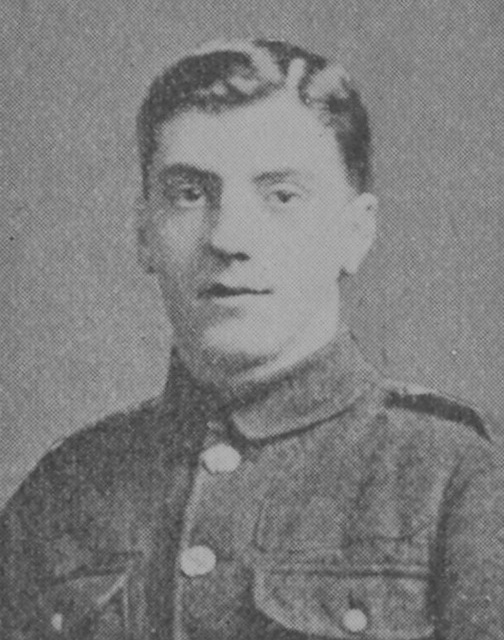
Stevenson C L/Cpl 1803 Royal Army Medical Corps

Stevenson C L/Cpl 1803 Royal Army Medical Corps

STEVENSON, CHARLES, Lc.-Corpl., No. 1803, 3/1st Battn. R.A.M.C. (T.F.), s. of Charles Stevenson, Ex-Provost of South Queensferry, West Lothian, by his wife, Jeanie, dau. of Robert Gibb, of Paisley, Scotland and Manitoba, Canada; b. Milngavie, 1873; educ. South Queensferry Public School; was an Organist and Choirmaster (retired); volunteered after the outbreak of war; left England for the Dardanelles, 30 July, 1915, and was drowned when H.M. Transport Royal Edward was sunk in the Ægean Sea, 13 Aug. 1915, by an enemy submarine; unm.

Source : De Ruvigny’s Roll Of Honour Vol 1
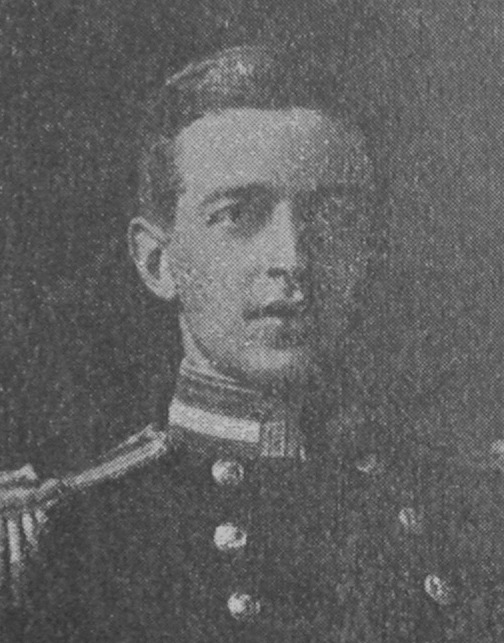
Stevens R W M Captain Royal Irish Rifles

Stevens R W M Captain Royal Irish Rifles

STEVENS, REGINALD WALTER MORTON, Capt., Royal Irish Rifles, and Brigade Major, 9th Infantry Brigade, 2nd s. of Col. George Morton Stevens, late R.A., by his wife, Mary, dau of Surg.-Gen. William Campbell Maclean, C.B., M.D., LL.D.; b. Dover, 18 Dec. 1876; educ. Mr. T. Eastman’s, Stubbington; Appuldurcombe, I.W., and the Royal Military College, Sandhurst; gazetted 2nd Lieut., Royal Irish Rifles, 5 Sept. 1896, and promoted Lieut. Aug. 1898; and Capt. 2 Jan. 1904; joined the 2nd Battn. at Poona in Oct. 1896; served in the South African War, Oct. 1890-1902; took part in operations in Cape Colony, 1899 to 1900 (was severely wounded at Stormberg, 10 Dec. 1899) and Nov 1900, to April, 1901 (Assistant Staff Officer to Assistant Inspector- Gen., Western Section, Lines of Communication), and in Orange River Colony, April, 1901, to 21 May, 1902 (Queen’s medal with two clasps, King’s medal with two clasps); and (2) in East Africa; was Special Service Officer on Staff during operations in Somaliland, 7 May, 1903, to 12 June, 1904; present at action at Jedballi (medal with two clasps); was Adjutant 25 Jan. 1905 to 25 Jan. 1908, and Officer of a company of Gentlemen Cadets at the R.M.C., Sandhurst, 25 Jan. 1908 to 21 Jan. 1910; joined the Staff College in 1910; was attd to the Naval War College, Portsmouth, 1912, and 1 Nov. of that year was appointed Brigade Major, 9th Infantry Brigade, Southern Command, an appointment he continued to hold until his death.

He went to the front 13 Aug. 1914; was in action at Le Cateau on the 26th, and an urgent order to retire instantly having been received, to ensure its reaching the front line and being acted on without delay, Capt. Stevens rode himself to deliver it and was mortally wounded in doing so, and died in a farmhouse the following day, 27 Aug. 1914. He was mentioned in F.M. Sir John (now Lord) French’s Despatch of 8 Oct. [London Gazette, 19 Oct.], 1914, for gallant and distinguished service in the field. He m. at Alverstoke, Hants, 1912, Elisabeth (Cambridge Cottage, Alverstoke), dau. of the late Rev. J. C. Mace, of Hawley, Blackwater, and had a dau., Agnes Desirée, b. 11 Sept. 1914-two weeks after her father’s death.

Source : De Ruvigny’s Roll Of Honour Vol 1

Stevens L B 2nd Lt 2nd South Staffs Regiment

Stevens L B 2nd Lt 3rd South Staffs Regiment

LOTHIAN BASIL STEVENS, son of Colonel G. M. Stevens, was born in 1894, came up to Balliol as a Blundell Scholar in 1913, and took a First in Mathematical Moderations in 1914. He enlisted in the Public Schools Battalion Middlesex Regiment in August 1914, but was given a commission in October in the 3rd South Staffordshire Regiment, and went to France in March 1915. There he was attached to the 2nd Battalion of the Scottish Rifles, and was killed in the action at Fromelles in May 1915. He was with his platoon, holding a German trench against an overwhelming counter-attack when he was killed.

Stevens was a mathematician of great promise, and a man of wide interests and attractive character. His achievements in his short period at College, and his tragically short career on active service, show that he would have gone far if he had lived. It is eminently fitting that his name, with that of G. M. Paddison, has been associated with the War Memorial Exhibition now attached to the Blundell Scholarship.

Source : Balliol College War Memorial Book

Stevens L B 2nd Lt 2nd South Staffs Regiment

STEVENS, LOTHIAN BASIL, 2nd Lieut., 3rd Battn. South Staffordshire Regt., attd. 2nd Battn. Scottish Rifles, yst. s. of Col. George Morton Stevens, late R.A., by his wife, Mary, dau. of Surg. -Gen. William Campbell Maclean, C.B., M.D., LL.D.; b. Southampton, 13 March, 1894; educ. Blundells School, Tiverton, and Balliol College, Oxford (Mathematical Scholar); where he took a first-class in moderations in mathematics, July, 1914; joined the Public Schools Battn. of the Middlesex Regt. in Sept. 1914, and obtained a commission in the 3rd South Staffordshires, 3 Oct. 1914; went to France in March, 1915; was attd. to the 2nd Scottish Rifles; was reported wounded and missing after the fighting at Fromelles, 9 May following, and is now assumed to have been killed in action that day; unm. The officer commanding the 2nd Scottish Rifles wrote:  “I am afraid your son must have died from his wound. It is a great distress to us all, as he was so keen and interested in his work, and such a bold and reliable leader.” His brother, Capt. R. W. M. Stevens, died of wounds, 27 Aug. 1914.

Source : De Ruvigny’s Roll Of Honour Vol 1
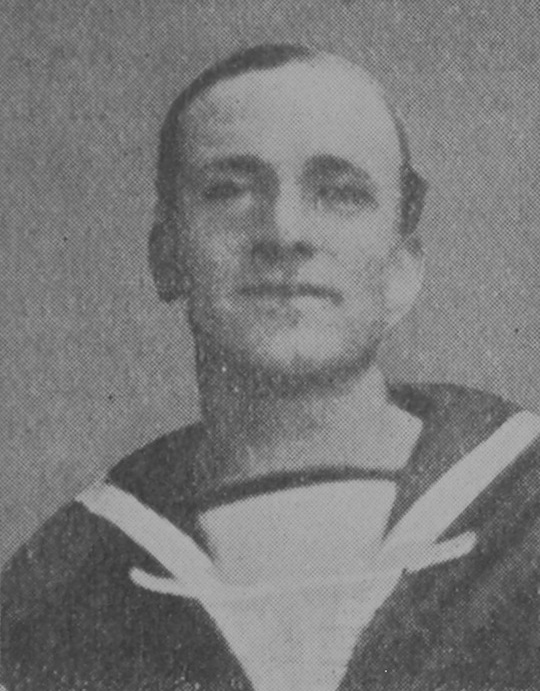
Braithwaite R W Captain 10th Durham Light Infantry

Braithwaite R W Captain 10th Durham Light Infantry

CAPTAIN RICHARD WILFRED BRAITHWAITE, Durham Light Infantry, was the son of the late Reverend J. M. Braithwaite, Vicar and Rural Dean of Croydon.

He was educated at Marlborough College and began his career as a planter in Ceylon. He fought and was wounded in the South African War as a trooper in the Ceylon Mounted Infantry. In 1910 he became a member of the Stock Exchange and a partner in the firm of Foster and Braithwaite.

On the outbreak of War he received a commission as Captain in the 10th Durham Light Infantry. He was wounded on 27 July 1915, but refused to leave the trenches, and was killed four days later.

Captain Braithwaite married, in 1907, a daughter of Mr. Brodhurst Hill.

Source : The Stock Exchange War Memorial 1914-1918

Blackwell W G Lt 8th Royal Fusiliers

Blackwell W G Lt 8th Royal Fusiliers

L IEUTENANT WILLIAM GORDON BLACKWELL (“Don”), Royal Fusiliers, was the seventh son of Samuel John Blackwell, J.P., and of Elizabeth, his wife, and was born in 1885.

Educated at Mr. Herbert Bowden-Smith’s Preparatory School at Bengeo and privately, he joined his brother Robert in the firm of Blackwell Brothers, and became a member of the Stock Exchange in 1908.

On the declaration of war he enlisted straightway in the Honourable Artillery Company and was sent to the French front in September 1914, obtaining a commission in the 4th Royal Fusiliers in 1915.

He fell at Flers, in the battle of the Somme, on 6 October 1916, being then attached to the 8th Royal Fusiliers.

One of his Commanding Officers wrote of him: “I saw a great deal of him and he naturally endeared himself to me by his kind nature and manliness of character. I deplore his loss; the nation has lost a gallant soldier and a great gentleman.”

His Major wrote: “He was a grand soldier; he could get the utmost out of men and did so, but they all worshipped him.”

Lieutenant Blackwell married in 1910 Nina Mary, daughter of the late Middleton Moore O’Malley and Mrs. O’Malley of West- port, co. Mayo, and leaves a widow and one son.

Source : The Stock Exchange War Memorial 1914-1918

Blackwell W G Captain 8th Royal Fusiliers

Source : The Sphere 13th Jan 1917

Bessell M Captain 10th Queen’s Royal West Surrey Regiment

Bessell M Captain 10th Queens Royal West Surrey Regiment

CAPTAIN MOWBRAY BESSELL, The Queen’s (Royal West Surrey) Regiment, was born on 23 September 1876. He became a member of the Stock Exchange in 1902. A keen supporter of the Volunteer movement, he was for many years a captain in the 3rd Volunteer Battalion, Royal Fusiliers.

On the outbreak of war he applied for a commission and was gazetted Lieutenant in the East Surrey Regiment, being promoted Captain on 1 January 1915 and transferred to The Queen’s Regiment.

He was one of the many victims of the battle of the Somme, being killed in action on 15 September 1916 at Flers.

His Colonel wrote: “You know how much we all loved him, and personally I feel I have lost a real and dear friend; never was there a more loyal and hardworking officer. I can’t tell you what I and all the regiment owe him. He loved his Company and was always working for them, and it was through him that they were able to do what they did last Friday, and go through everything with the greatest dash and in a manner unsurpassed by any regiment in the British Army.”

Captain Bessell was married, and resided at Indian Farm, Effingham, Surrey.

Source : The Stock Exchange War Memorial 1914-1918