Bridger W Pte 202915 4th Royal Scots Fusiliers

BRIDGER, WALTER, Private, No. 202915, 4th (Territorial) Battn. The Royal Scots Fusiliers, yst. s. of the late Frank Bridger, by his wife. Ruth (Church Farm, Sutton, co. Surrey); b. Sutton aforesaid, 3 July, 1898 : educ. there; was a Shop Assistant; joined the Royal Scots Fusiliers, 10 July 1916; served with the Expeditionary Force in France and Flanders from early in Aug., and was killed in action at Péronne Wood 1 Sept. 1918. Buried there; unm.

Source : De Ruvigny’s Roll Of Honour Vol 5

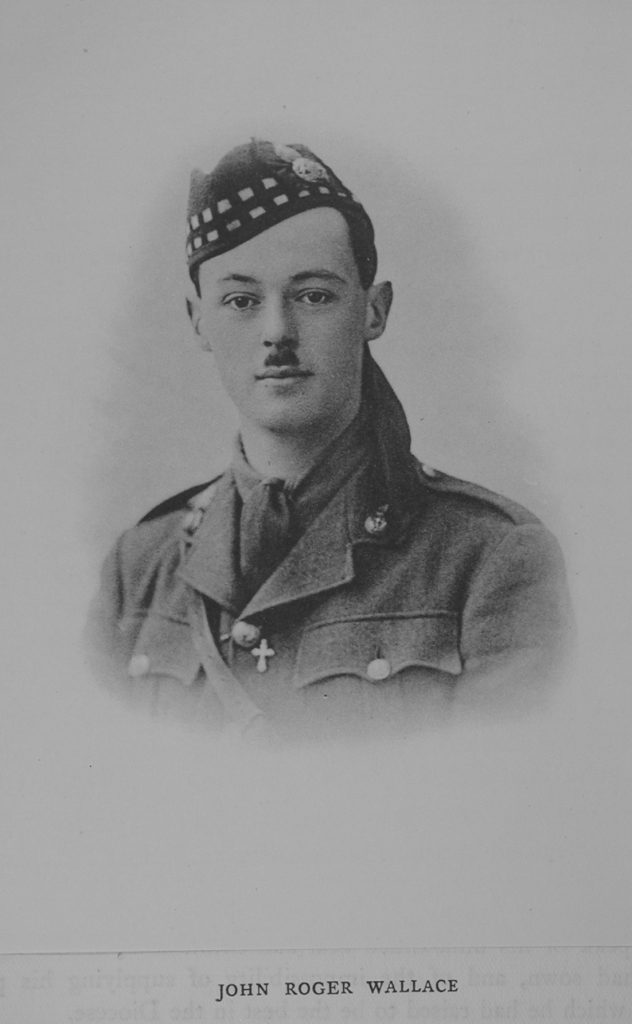
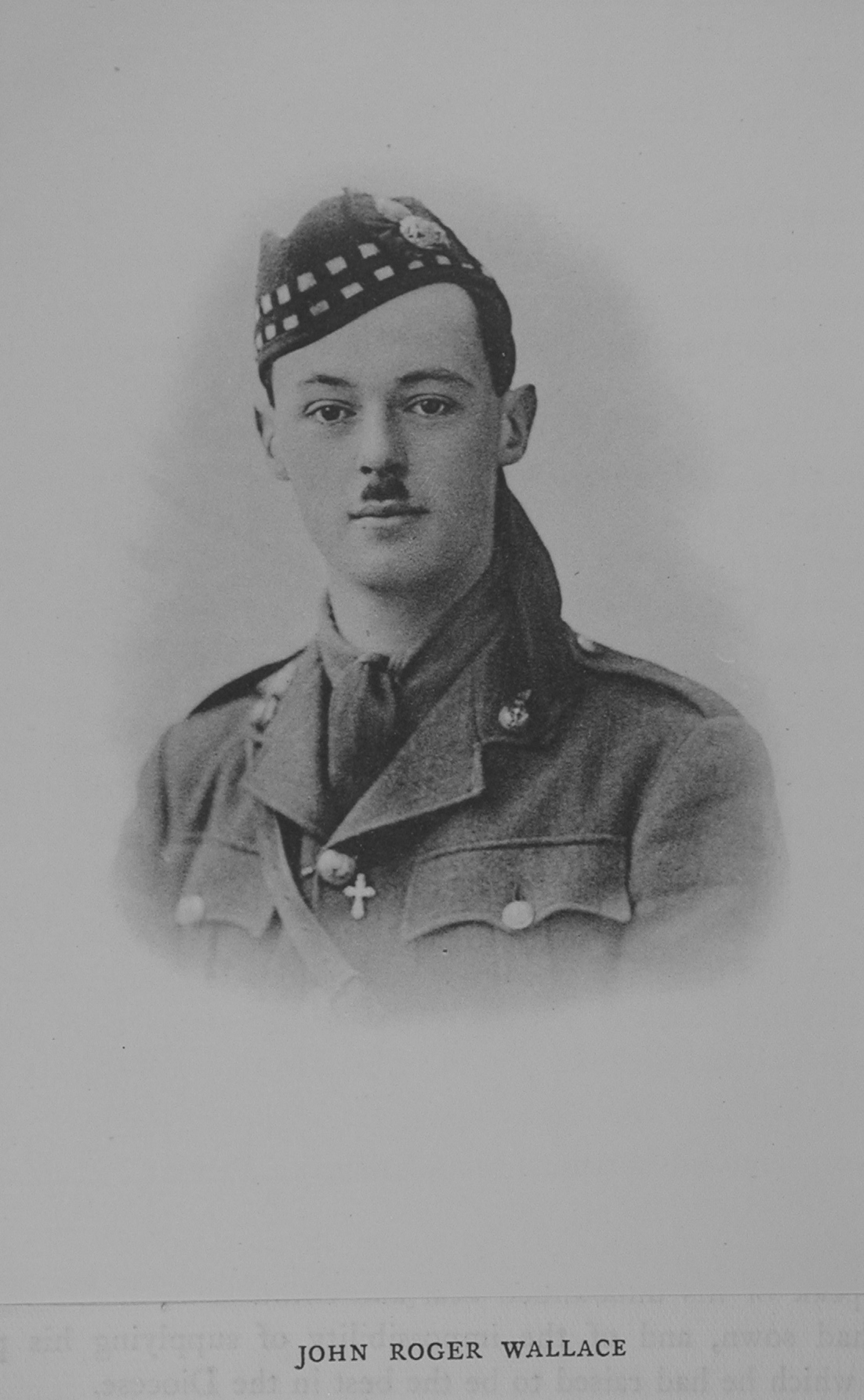
Wallace J R 2nd Lt 1st Royal Scots Fusiliers

Wallace J R 2nd Lt 1st Royal Scots Fusiliers

SECOND LIEUTENANT J. R. WALLACE

1ST BATTALION THE ROYAL SCOTS FUSILIERS

JOHN ROGER WALLACE was the younger son of Roger William Wallace, к.с., of 36, Campden Hill Gardens, London.

He entered the School in 1907, and left in 1912. He was a fine short-distance runner, and contributed largely to winning the Wrigley Cup for his House in 1912.

In 1913 he went up to Oriel College, Oxford. At the beginning of the War he joined the Artists’ Rifles and went with them to France, where he was given a Commission in the and Battalion of the Royal Scots Fusiliers. In December, 1914, he was invalided home after an attack of pleurisy, caught in the trenches. Early in 1915, after taking out a draft of men from Ayr, he was transferred to the 1st Battalion of the Regiment.

He was struck in an advanced trench near Ypres by a mortar bomb, but refused to be carried off until he had handed over the trench to his Commanding Officer. He was taken to a dressing station about a mile in the rear, but died there shortly afterwards, on April 22nd, 1915. Age 20. The following is an extract from a letter written by his Commanding Officer:-

“His pluck and unselfishness will always be remembered in the Scots Fusiliers. His one idea was that the men wounded at the same moment as himself should be cared for first. Both in his life and in his death he was a splendid example.”

“A braver man and a truer friend,” writes a Private, “I have never known.”

Source : Memorials Of Rugbeians Who Fell In The Great War Vol 1
Bell T 2nd Lt 5th Royal Scots Fusiliers

BELL, THOMAS, 2nd Lieut., 5th (Territorial) Battn. The Royal Scots Fusiliers, eldest s. of Charles P. Bell, of Main Street, Muirkirk, N.B., School Teacher, by his wife, Margaret, dau, of Thomas Steele; b. Muirkirk aforesaid, 8 Jan. 1894; educ. Muirkirk, and Technical School, Ayr; was a Pattern Maker; joined the Royal Scots Fusiliers in April, 1911; was mobilized on the outbreak of war in Aug. 1914; served with the Egyptian Expeditionary Force in Egypt and Palestine from 1915; gazetted 2nd Lieut. 7 Dec. 1917; proceeded to France in March, 1917, and was killed in action at Vimy Ridge, near Arras, 26 May following. Buried in Aux Reitz Military Cemetery, Neuville St. Vaast, north of Arras. His Commanding Officer wrote: “No one ever earned a commission more than he did. His men trusted him thoroughly. He was a man of very fine character, and his loss is a very real one to the battalion. He died as he had lived, doing his duty nobly and well.” Unm.

Source : De Ruvigny’s Roll Of Honour Vol 5

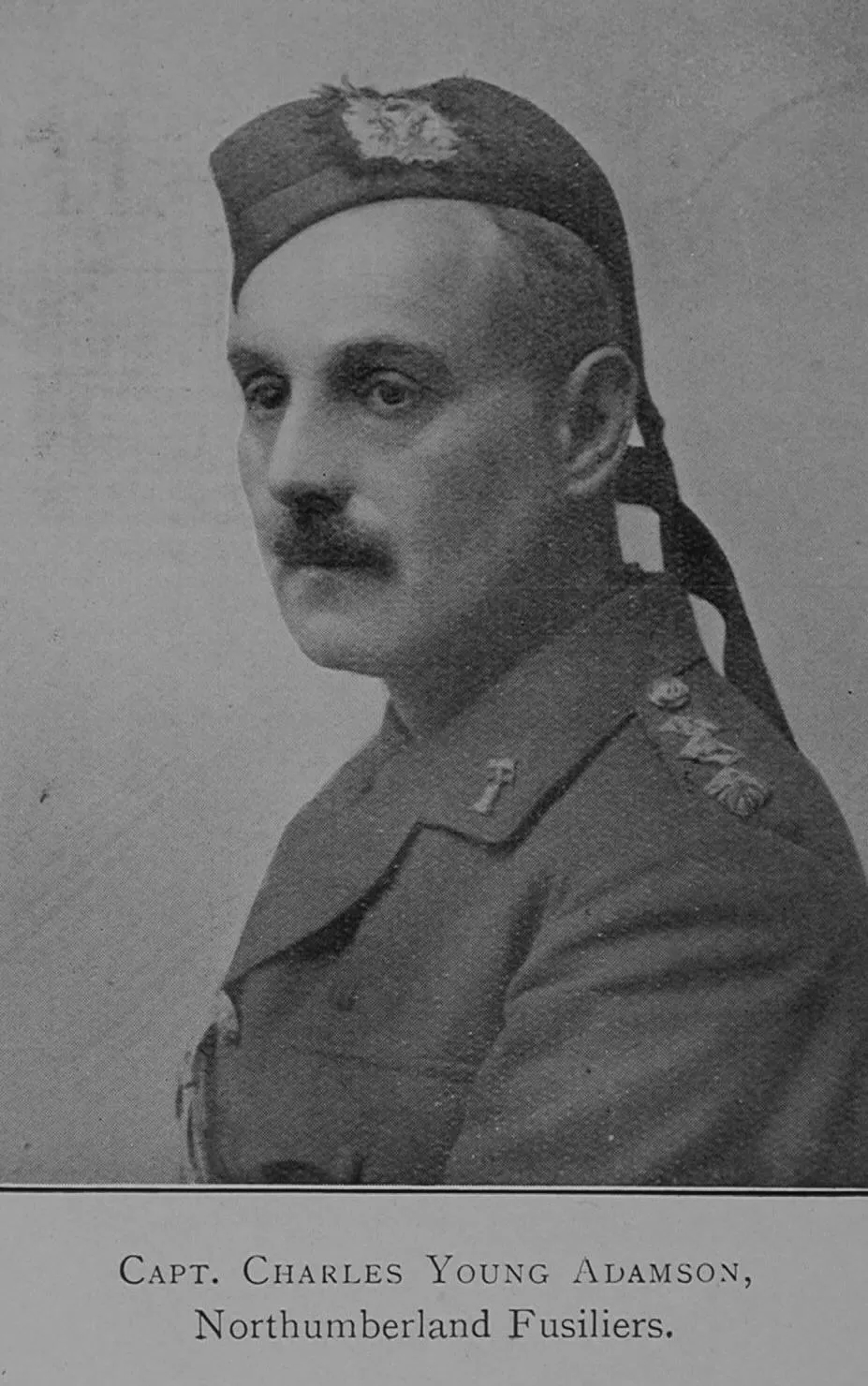
Adamson C Y Captain 8th Royal Scots Fusiliers

Adamson C Y Captain 8th Royal Scots Fusiliers


Captain and Quartermaster CHARLES YOUNG ADAMSON,

Northumberland Fusiliers, the second son of J. Adamson, Esq., Durham, was born in 1875, and entered the School as a Day Boy in January, 1887. He played in the XI., of which he was Captain, from 1890 to 1893, and in the XV. from 1890 to 1892. He was a Monitor, and left in 1893. As a cricketer and footballer he represented his County for many years, and played for the North XV. v. the South on three occasions. In 1899 he was a member of the English XV. which toured Australia, and while there joined the Queensland Volunteers, with which force he saw much fighting in the South African War. Subsequently he paid a second visit to Australia, and while there played cricket for Queensland against South Australia.

When the war broke out Captain Adamson was in partnership with his father as a Stock and Share Broker. He soon obtained a commission as Quartermaster to the 23rd (Tyneside Scottish) Northumberland Fusiliers. At the beginning of 1918 he went to Salonika, and was attached to a Battallion of the Royal Scots Fusiliers. He was serving with that Regiment when he was killed in action in September, 1918.

He took the keenest interest in the School football and cricket, and the teams of later generations owed much to his enthusiastic coaching and help.

Capt. Adamson married Miss Lodge, daughter of the late Rev. J. A. Lodge, Vicar of Haverton Hill, and leaves two sons.

Source : The War Record Of Old Dunelmians 1914-1919

Adamson R Pte 40982 1st Royal Scots Fusiliers

ADAMSON, ROBERT, Private, No. 40982, 1st Battn. (21st Foot) The Royal Scots Fusiliers, s. of James Adamson, of Dombristle, co. Fife, by his wife, Margaret, dau. of Benjamin Dick; b. Govanhill, co. Lanark, 12 Dec. 1881; educ. Moss Green School, Crossgates; was a Gamekeeper; joined the 3rd Ayrshire Yeomanry 4 July, 1916; transferred to the 1st Royal Scots Fusiliers; served with the Expeditionary Force in France and Flanders from Dec. 1916, being employed as a Stretcher-Bearer for eight months, and was killed in action near Cambrai 4 Oct. 1918. Buried where he fell. His Commanding Officer wrote: “I have heard nothing but good regarding his soldierly qualities, and his bearing in action,” and the Chaplain: “He was highly esteemed, not only as a soldier, but also as a man. When the news of his death became known there were many sad hearts.” He m. at Kirkcaldy, 4 Oct. 1910, Jane Drummond (Ruchland Cottages, Prestonkirk), dau. of Alexander McGregor, and had two children: James Alexander, b. 15 Jan. 1916, and Sarah Thomson, b. 15 Nov. 1912.

Source : De Ruvigny’s Roll Of Honour Vol 5

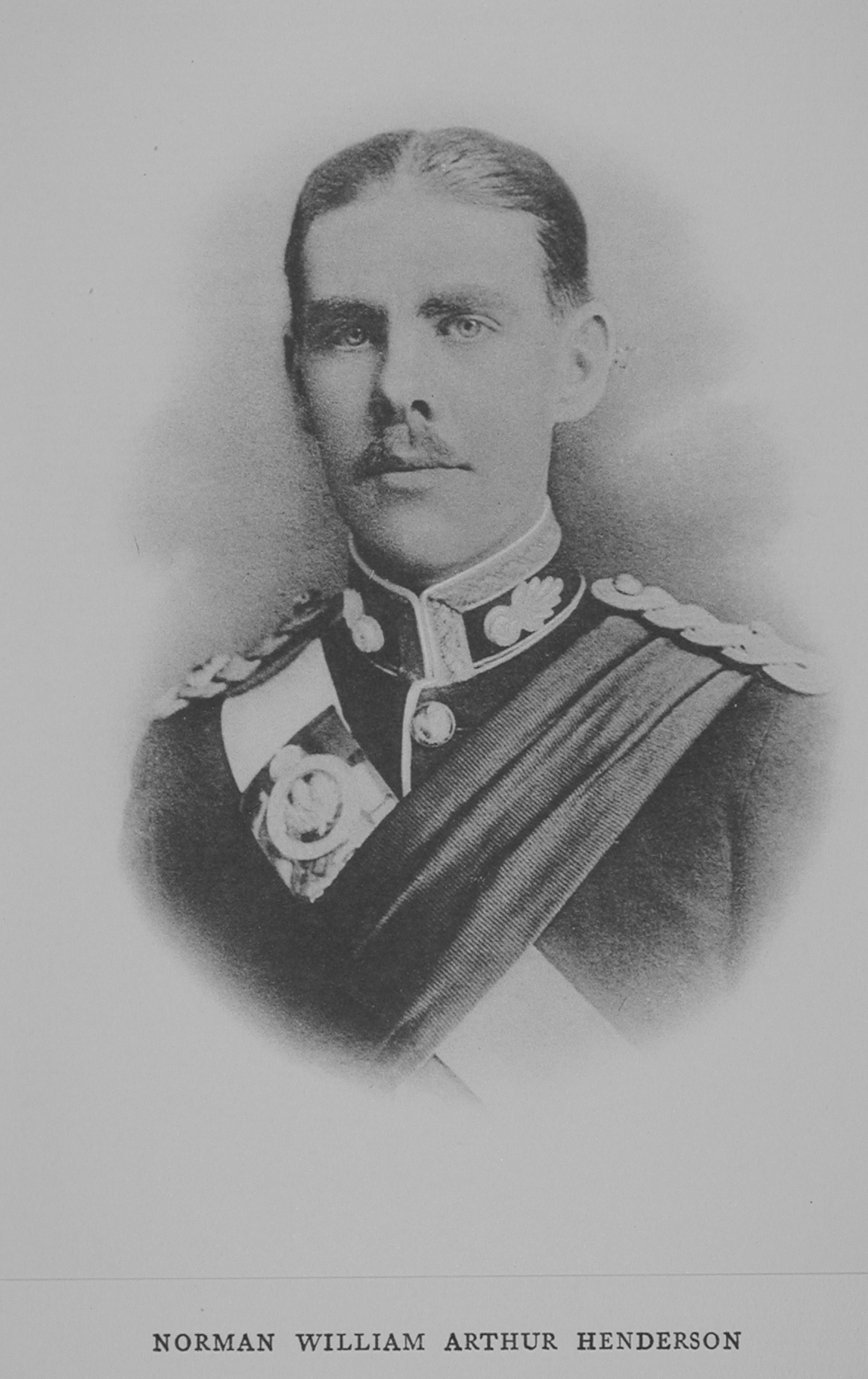
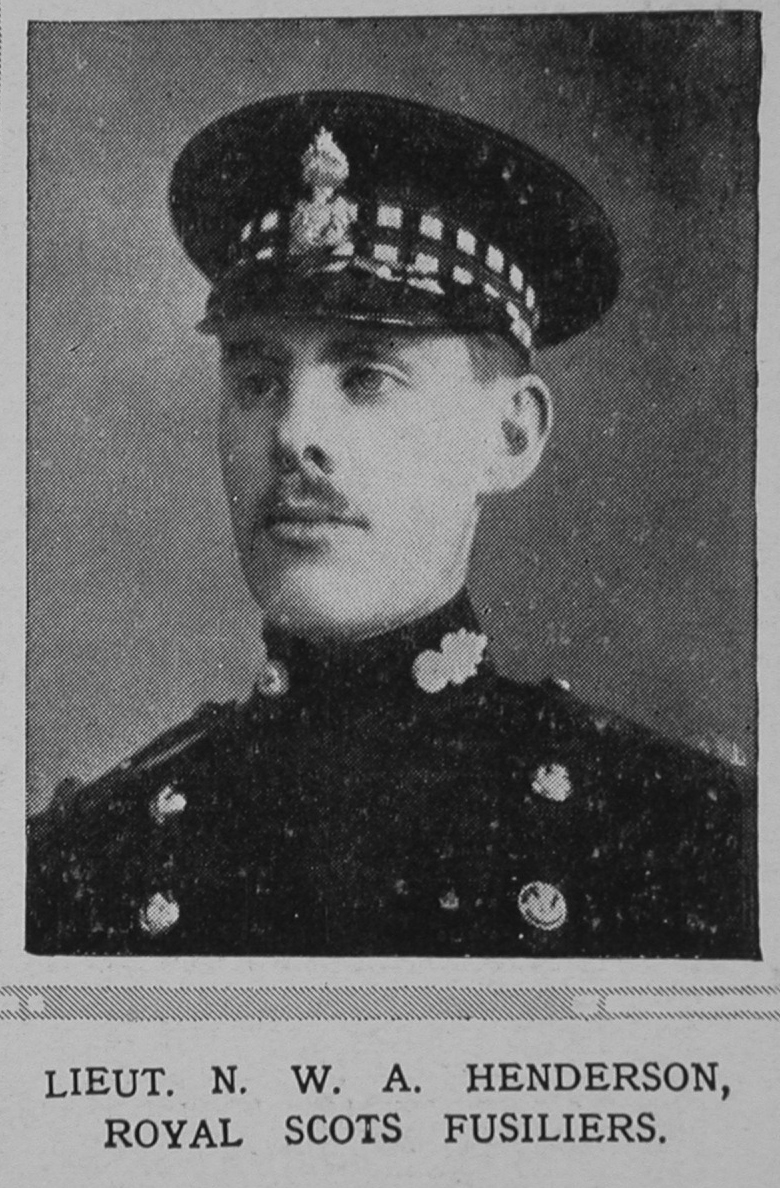
Henderson N W A Lt 1st Royal Scots Fusiliers

Henderson N W A Lt 1st Royal Sots Fusiliers

LIEUTENANT N. W. A. HENDERSON

IST BATTALION THE ROYAL SCOTS FUSILIERS

NORMAN WILLIAM ARTHUR HENDERSON was the eldest son of Arthur Henderson and Gareth his wife, eldest daughter of James O’Shaughnessy, of County Limerick, Ireland.

He entered the School in 1906. He left in 1907, went to the R.M.C., Sandhurst, in January, 1911, and served with his Regiment in South Africa from 1912 to February, 1914, when they returned to England.

He went to the Front in August of the same year and was present at the Retreat from Mons and in the Battles of the Marne and the Aisne.

In the first Battle at Ypres, during the attack by the Prussian Guards, some of our trenches were taken, and in the counter attack to retake these Lieutenant Henderson was killed, in the wood round Heventhage Château, four miles east of Ypres, on November 10th, 1914. Age 23. He was buried near the Château with nine other officers of the Regiment. The few who survived bore testimony to his splendid, soldierly qualities.

Source : Memorials Of Rugbeians Who Fell In The Great War Vol 1
Henderson N W A Lt Royal Scots Fusiliers

Source : The Illustrated London News 26th Dec 1918

Sterling R W Lt 3rd Attd 1st Royal Scots Fusiliers

Sterling R W Lt 3rd Attd 1st Royal Scots Fusiliers

Sterling R W Lt 3rd Attd 1st Royal Scots Fusiliers

Source : For Remembrance – Soldier Poets Who Have Fallen In The War

STERLING, ROBERT WILLIAM, Lieut.,

3rd, attd. 1st, Battn. Royal Scots Fusiliers, elder s. of John Lockhart Sterling, of 30, Ashton Gardens, Glasgow, by his wife, Clara Frances, dau. of James Lowe, of Lancashire; b. Glasgow, 19 Nov. 1903; educ. Glasgow Academy; Sedbergh School, and Pembroke College, Oxford (scholar), where he took a second in Honour Mods., and had just completed his second year when war was declared in Aug. 1914; volunteered for foreign service and was given a 2nd Lieutenancy in the Royal Scots Fusiliers, 15 Aug. 1914, and promoted Lieut. March, 1915; took a draft of his regt. to France in the middle of Feb. 1915; was attd. to the 1st Battn., and was killed in action near Ypres, 23 April, 1915; unm. Buried in the Military Cemetery, Dickebusche. His commanding officer wrote: “He was in command of a trench which was of the utmost importance, and had held it most gallantly all day. He was killed about 8 p.m. I cannot tell you how much the Scots Fusiliers mourn his loss. He was quite one of my best.” In 1914 he wrote the Newdigate prize poem on the Burial of Sophocles, which he read at the Encaenia in the June of that year. His younger brother, 2nd Lieut. John Lockhart Sterling, 3rd Battn. R.S.F., attd. 2nd Battn. R.S.F., was killed on 28 Sept. 1915, before Hulluch, France. Two editions of The Poems of Robert Sterling were published by Oxford friends in 1916.

Source : De Ruvigny’s Roll Of Honour Vol 1