Buchanan A Pte 16834 Scots Guards

BUCHANAN, ALEXANDER, Private, No. 16834, Scots Guards, eldest s. of the late John Buchanan, by his wife, Margaret (Tarlum. Benbecula), dau. of Donald M’Rury; b. Tarlum, Benbecula, South Uist. co. Inverness, 9 July, 1884: edue. Public School there; enlisted in the Special Reserve Cameron Highlanders in April, 1904; served several years with the Colours, and joined the Reserve: was called up on mobilization 4 Aug. 1914; was transferred to the Scots Guards in May, 1916; served with the Expeditionary Force in France and Flanders from Dec. 1917, and was killed in action at St. Quentin 12 Oct. 1918. Buried in St. Quentin Cemetery. The Chaplain wrote: He was acting as Stretcher-Bearer, and while helping to carry one of our men from the field was struck by a sniper’s bullet and killed immediately. Two of our officers were wounded at the same time. both of whom spoke to me of your son’s devotion and gallantry.” Unm.

Source : De Ruvigny’s Roll Of Honour Vol 5

Banks J Pte 16867 1st Scots Guards

BANKS, JAMES, Private, No. 16867, 1st Battn. Scots Guards, s. of the late Archibald Banks, of Musselburgh, by his wife. Margaret (Hyvots Bank, Liberton, Midlothian), dau. of James Chisholm: b. Newbigging, Musselburgh, Midlothian. 27 Dec. 1892; educ. Public School there was a Pottery Worker; enlisted in the Scots Guards 6 June, 1917: served with the Expeditionary Force in France and Flanders from 20 Sept., and was killed in action at Villers Pol 4 Nov. following. Buried in Villers Pol Communal Cemetery Extension, six miles south-east of Valenciennes; unm.

Source : De Ruvigny’s Roll Of Honour Vol 5

Avery P Pte 13087 2nd Scots Guards

Avery P Pte 13087 2nd Scots Guards

AVERY, PERCY Private, No. 13087, 2nd Battn. Scots Guards, yst. s. of the late Robert Avery, by his wife, Mary (74, Cleveland Street, Birkenhead), dau. of the late William Lamden Ufton, of Reading, co. Berks; b. Garston, near Liverpool, 8 Jan. 1882; educ. there; was employed as a Fireman on the L. and N. W. Railway; enlisted 12 Jan. 1915; served with the Expeditionary Force in France and Flanders from 18 May, 1916, and was killed in action at the Battle of the Somme 20 July following. An officer wrote: “He was killed instantly and suffered no pain. He was a most popular fellow and well liked by everyone, both officers and men, and his loss will be a real one to the battalion.” Unm.

Source : De Ruvigny’s Roll Of Honour Vol 5

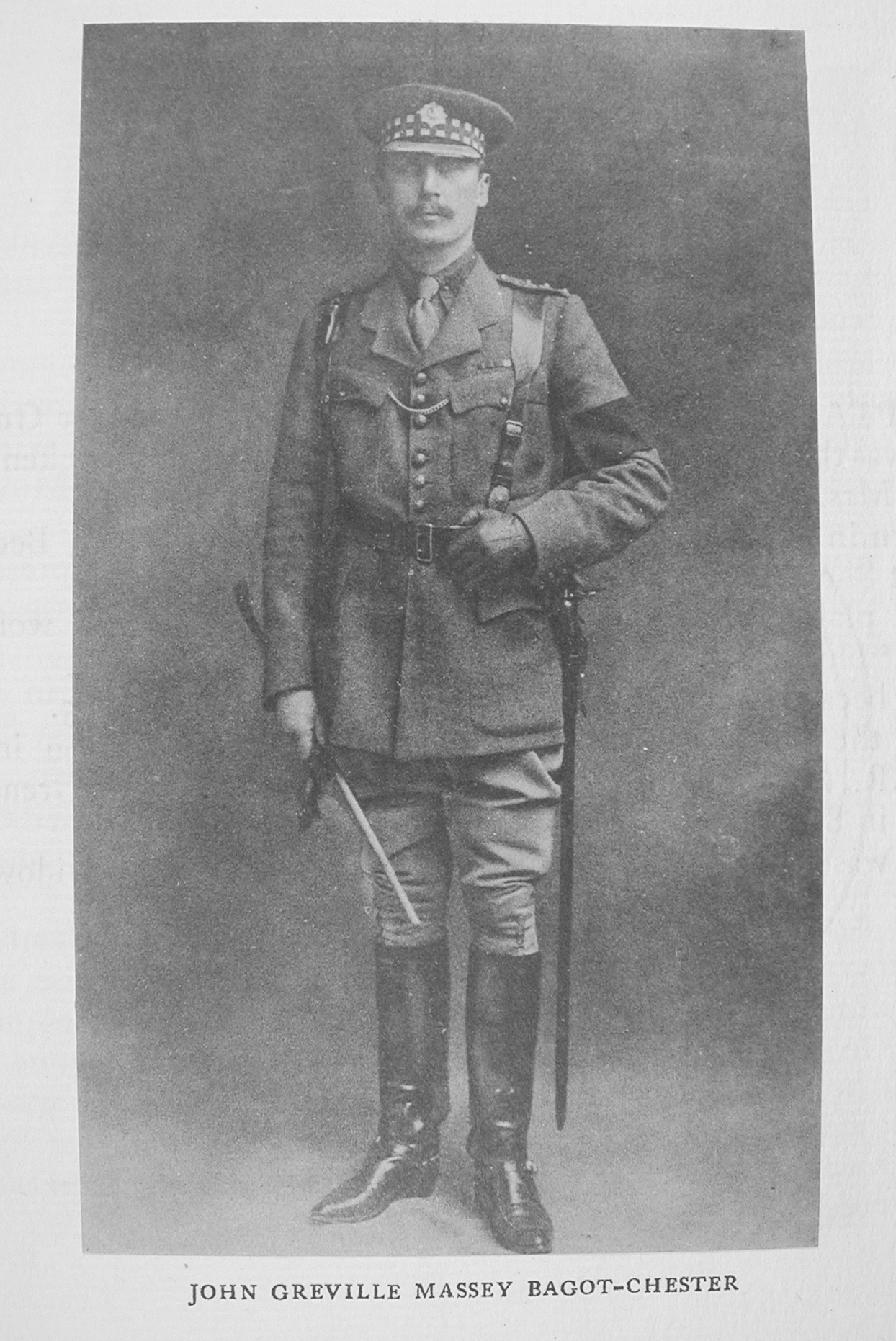
Abercrombie J F Pte MM 8764 1st Scots Guards

Abercrombie J F Pte MM 1st Scots Guards

ABERCROMBIE JOHN FERGUS, M.M., Private, No. 8764, 1st Battn. Scots Guards, 2nd s. of John Abercrombie, of 201, Kent Road, Glasgow, W., by his wife, Julia, dau, of John Fergus; b. Glasgow, 25 June, 1897; educ. Balshagray School, Partick, Glasgow; enlisted in the Scots Guards 11 Nov. 1913; served with the Expeditionary Force in France and Flanders from Sept. 1914; was three times wounded, and was killed in action at Bourlon Wood 27 Sept. 1918. Buried in the region of Canal du Nord, near Bourlon Wood. He was awarded the Military Medal for gallant and distinguished service in the field; unm.

Source : De Ruvigny’s Roll Of Honour Vol 5

Hanbury-Tracy F C H Lt The Hon Scots Guards

Hanbury-Tracy F C H Lt The Hon Scots Guards

Hanbury-Tracy F C H Lt The Hon Scots Guards

LIEUTENANT THE HON. F. C. H. HANBURY-TRACY Scots Guards

Aged 32

THIRD Son of Charles, 4th Baron Sudeley, and Ada, only daughter of the Hon. Frederick Tollemache.

Passed 2nd into R.M.C., Sandhurst.

Married Madeleine Llewellen, only daughter of Colonel George Llewellen Palmer, of Lackham, Lacock, Wilts, and leaves two sons.

Lieutenant Hanbury-Tracy was gazetted to the Scots Guards in 1903. He resigned his commission in 1907, and joined the Reserve of Officers. On the outbreak of the War he rejoined, and went to France with his Regiment in November, 1914. He was slightly wounded in the leg when he left the trenches for an attack, near Fromelles, on December 18th, 1914, and was again wounded in the thigh on reaching the German trenches, and was unable to move. One of his Sergeants who was also slightly wounded in the head wanted to help him back, but he told him to leave him where he was, and to go, as quickly as possible, to get reinforcements which were badly needed. He must have known that in doing this he was sacrificing his life. He was shortly after taken prisoner by the Germans, and died of his wounds in their hands the next day.

One of his Commanding Officers wrote:-

“T- told me Felix was lying in front of the German trench, and some men wanted to carry him back, but Felix said ‘No.’ . . . It was a very gallant thing to do.”

Another officer wrote :-

“Poor Felix, as you have probably heard, has been killed. He led a charge against the German trenches and they got in. He was shot through both legs getting there, and most gallantly refused (so a kiddie Sergeant told me) to be bound up or moved till it was all over. I am sorry. I knew he would play the game to the end, and he did.”

Source : Harrow Memorials Of The Great War 1914-1918 Vol 1

Hanbury-Tracy F Captain The Hon Scots Guards

Source : The Illustrated London News 9th Jane 1915

Hanbury-Tracey F C H Lt 2nd Scots Guards

HANBURY-TRACEY, HON. FELIX CHARLES HUBERT, Lieut., 2nd Battn. Scots Guards, yst. s. of Charles Douglas Richard, 4th Baron Sudeley, P.C., by his wife, Ada Maria Katherine, dau. of the Hon. Frederick James Tollemache; b. Buckingham Gate, S. W., 27 July, 1882; educ. Harrow and the Royal Military College, Sandhurst; gazetted 2nd Lieut., Scots Guards, 8 May, 1901, and promoted Lieut., 16 Nov. 1907; retired in 1907 and joined the Reserve of Officers; gazetted to the 3rd Battn. of his regt. on the outbreak of war, 5 Aug. 1914; went to France, 7 Nov., and died of wounds received in an attack on the German trenches near Fromelles, on the night of 18-19 Dec. 1914. He was wounded slightly at the commencement of the attack, but still led his men. When again wounded fatally on the parapet of the German trench, some of his men attempted to carry him back to safety, but he ordered them to leave him where he was and to go on, as he did not wish them to risk their lives in saving him. The Germans shortly afterwards re-took their trench, and he died a few hours later in their hands, and was buried by them.

He m. at Lacock, Wiltshire, 11 June, 1908, Madeline Llewellyn (13, Queen’s Gate Place, S. W.), only dau. of Col. George Llewellyn Palmer, of Lackham, Lacock, Wilts, and had two sons: Michael David Charles, b. 29 March, 1909; and Ninian John Frederick, b. 7 Dec. 1910.

Source : De Ruvigny’s Roll Of Honour Vol 1
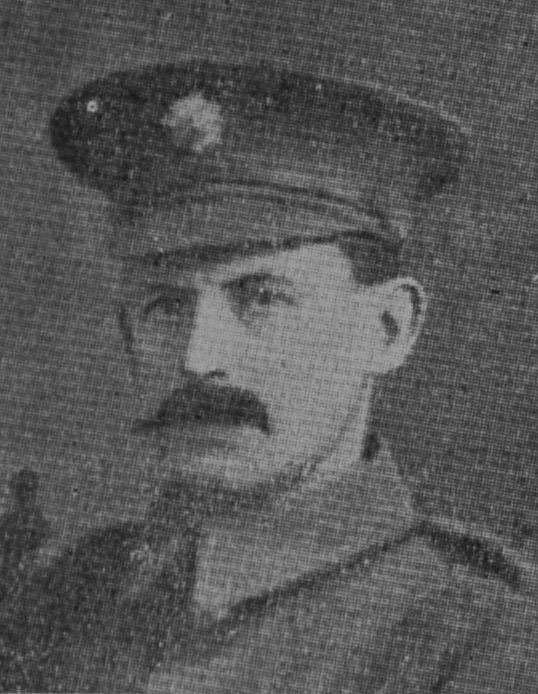
Barrow T W Pte 4645 2nd Scots Guards

Barrow T Pte 2nd Scots Guards

Barrow Thomas William Pte 4645 2nd Scots Guards

Of Leytonstone

Source : The Vivid 3rd Apr 1915

Born 1st Apr 1889.

Enlisted in Scots Guards 1st Nov 1902

Married Elizabeth Henrietta Kemp on 25th Dec 1908 at Leytonstone, Essex.

Transferred to Army Reserve 31st Oct 1910

Mobilised 7th Aug 1914

To France 7th Oct 1914

Reported to Be Prisoner Of War 19th Nov 1914

Princess Mary’s Gift Box POW list, 1914. Address 4 Chandos Road, Stratford, London.

Released Prisoner of War from Germany, arrived in England . Report date 8th Feb 1919.

1939 Register – Address 2 Chandos Road, West Ham, Essex. Occupation : Signal Telegraphy LNER

Died Oct 1948 Age 59.

Thomson A L/Cpl 6378 2nd Scots Guards

THOMSON, ALEXANDER, L.-Corpl., No. 6378, 2nd Battn. Scots Guards; b. Strickey, co. Aberdeen; enlisted 6 Jan. 1906; served with the Expeditionary Force in France, etc.; killed in action, 20-26 Oct. 1914. He m. Jennie (51, Esslemont Avenue, Aberdeen), dau. of (-) Anderson, and had two daus. : Mary Anderson, b. 20 April, 1910, and Joan, b. 25 June, 1915.

Source : De Ruvigny’s Roll Of Honour Vol 1
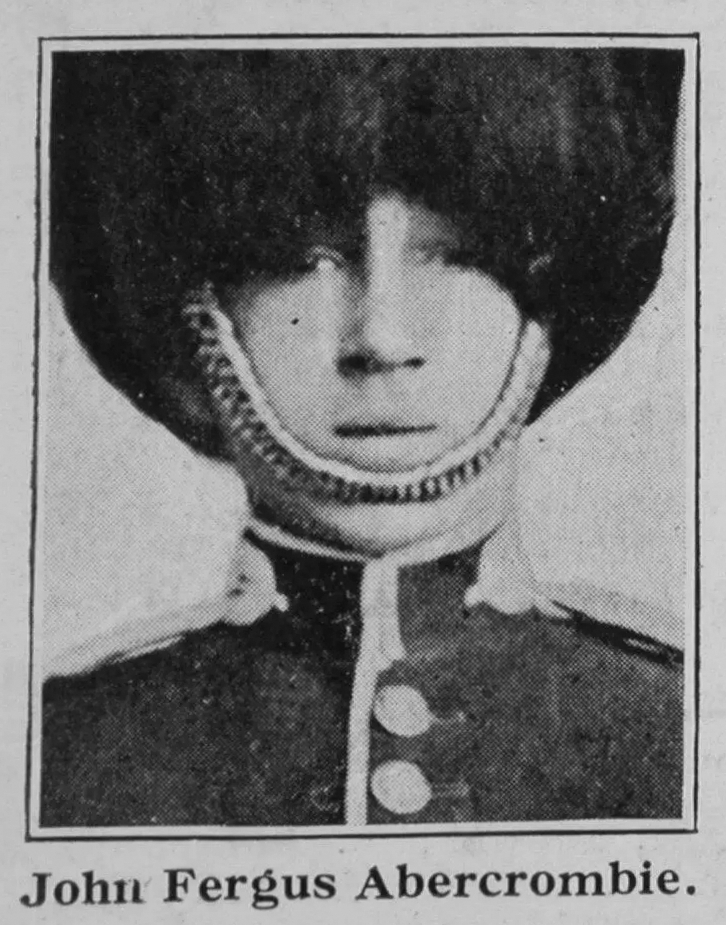
Bagot-Chester G J M Major 2nd Scots Guards

Bagot-Chester G J M Major 2nd Scots Guards

MAJOR JOHN GREVILLE MASSEY BAGOT-CHESTER, Scots Guards, was born in 1868, the eldest son of Colonel Heneage Bagot-Chester, at Henstead Hall, Suffolk. He was educated at Elstree and afterwards went to Brackenbury’s, the Army coach at Wimbledon, from there entering the 2nd Bat

talion, Scots Guards.

He was a fine athlete and won many running and jumping competitions, and once for a £100 bet he rode, ran, and walked a mile in under twenty minutes. He was very well-known with the Belvoir and Quorn Foxhounds and hunted from Melton Mowbray for several seasons.

He was all through the South African War and was present at the following engagements: Belmont, Modder River, Graspan, and Magersfontein.

On the Stock Exchange, where he became a member in 1910, he was connected for some years with the firm of Linton Clarke and Co., and later on with Lionel Robinson, Clark and Co.

He was the senior Major in the Brigade of Guards, with over twenty years’ service, when he retired. He rejoined the moment the war broke out.

His death took place in the course of the battle for Cambrai in November 1917, which opened with the famous surprise attack with tanks. He was hit by a shell and is buried near Flesquières. A letter from a brother officer said: “Poor Bubbles has gone. His loss will be felt throughout the Brigade of Guards, for he was ever a brave, gallant, and very popular officer, and we shall one and all mourn his loss.” Another officer wrote: “He was a gallant officer, true friend, and knew no fear.”

Source : The Stock Exchange War Memorial 1914-1918

Ambler E S Lt 2nd Scots Guards

Ambler E S Lt 2nd Scots Guards

LIEUT. EDWARD SHARP AMBLER,

SCOTS GUARDS (S.R.), ATTD. 2ND BATTN.

ACCIDENTALLY KILLED ON NIGHT PATROL NEAR WARLINCOURT, MAY 8TH, 1918.

AGED 20.

At the School 1912-15 (Ferox Hall).

Lieut. E. S. Ambler was the eldest son of Mr. and Mrs. Sam Ambler, of Hoyle Court, Baildon, Yorks. Entering the School in September, 1912, from Horton School, Biggleswade, he coxed the School Four in 1914 and 1915 and had become a Lance-Corporal in the O.T.C. On leaving School at Christmas, 1915, he went to Jeremiah Ambler & Sons, Ltd., Midland Mills, Bradford, to learn the business. In September, 1916, as soon as he was old enough, he joined an Officer Cadet Battalion at Trinity College, Cambridge, in which he did very well, and also distinguished himself by winning the five-mile cross-country race by 1 minutes out of a field of 200. He received his commission in the Scots Guards (S.R.) December 19th, 1916, and joined his Battalion at Wellington Barracks. Going out to France on June 9th, 1917, he saw much fighting in Bourlon Wood and elsewhere in the course of the next eleven months. The Quartermaster of the Battalion tells how he seemed to bear a charmed life, and had indeed, “pointing to his shell-torn clothes,” exclaimed, “You see, they cannot hurt me!” Nor did the enemy succeed in doing so, for he eventually fell a victim, on the night of May 8th, 1918, to one of those tragic accidents which no precautions can render impossible. The officer who was in command of the Battalion at the time wrote:-

“He was going the rounds at night of our forward posts, missed his way, and came upon the post from the direction in which they expected the Germans. His party did not hear the challenge, and the sentries, who had been warned to use the utmost vigilance, fired. The nights have been terribly dark, the line is very difficult and tricky. I really cannot blame anybody. He had done a first-rate bit of scouting work the night before. . . . He was one of our most promising future Company Commanders. I have been nigh three years continuously with this Battalion in France, so I have seen. many young officers. I have never seen one more cool-headed in action or more dependable. . . . His men all knew and recognised him as a right good officer.”

The Chaplain wrote:-

“We older men feel that we have lost a younger brother of whom we were both proud and very fond,” and told how on the previous night, the night on which he had been out scouting, Lieut. Ambler had narrowly escaped a similar accident. He had been fired on by a Lewis gun post and ran in and ” asked in his bright way if they were the people who had tried to shoot him,” and then told them that they had done quite right. It was, he said, the unanimous opinion of the men that Lieut. Ambler fell a victim to his own keen regard for their safety, for he had impressed upon them that they were to take no risks but to shoot at once if any one approached from the enemy side in the dark. He was buried in the British cemetery at Warlincourt Halte on the Doulens-Arras Road. His Company Commander wrote :-

“I was very fond of him; he was such a nice. boy and such a good officer, too, quite the best subaltern I had. He was doing splendidly too;” and, after alluding to his smallness, tells how the big guardsmen used to call him The Nipper ” a sure sign of their affection for him. His servant, after testifying to his popularity, described him as a grand soldier who had no fear of anything.” The C.O. of the Battalion, who was not in the lines at the time, wrote:-

“Your son was one of the best boys in my Battalion and was liked by all. He was a great soldier and always gave me confidence, while his keenness in work and play was an example to all.” The Colonel of the Regiment wrote:- “I have had nothing but the most excellent reports of your boy. He was much liked by all ranks and did his work so splendidly. He will be much missed both as an excellent and most promising officer and also as a cheery and bright companion and brother officer.”

Source : Tonbridge School And The Great War Of 1914-1919