Banks J Pte 16867 1st Scots Guards

BANKS, JAMES, Private, No. 16867, 1st Battn. Scots Guards, s. of the late Archibald Banks, of Musselburgh, by his wife. Margaret (Hyvots Bank, Liberton, Midlothian), dau. of James Chisholm: b. Newbigging, Musselburgh, Midlothian. 27 Dec. 1892; educ. Public School there was a Pottery Worker; enlisted in the Scots Guards 6 June, 1917: served with the Expeditionary Force in France and Flanders from 20 Sept., and was killed in action at Villers Pol 4 Nov. following. Buried in Villers Pol Communal Cemetery Extension, six miles south-east of Valenciennes; unm.

Source : De Ruvigny’s Roll Of Honour Vol 5

Banks F E Sergt 9544 1st Northumberland Fusiliers

BANKS, FREDERICK EDWIN, Sergt., No. 9544, 1st Battn. (5th Foot) The Northumberland Fusiliers, s. of Frederick Banks, of 154, Thorney Hedge Road. Chiswick, W., Commercial Traveller; b. Knightsbridge, London, S.W., 24 April. 1879; served in the South African War, 1899-1902 (King’s and Queen’s Medals): on the conclusion of the war joined the Reserve; rejoined his old regiment 5 Oct. 1914; trained at Scott’s Camp, Newcastle; served with the Expeditionary Force in France and Flanders from 26 May, 1917, and was killed in action 24 Sept. following. He m. at Hammersmith, London, W., Ada Alice (7. Dean’s Road, Hanwell), dau. of Henry Edward Bacon, and had a son, Frederick, b. 15 Sept. 1910.

Source : De Ruvigny’s Roll Of Honour Vol 5
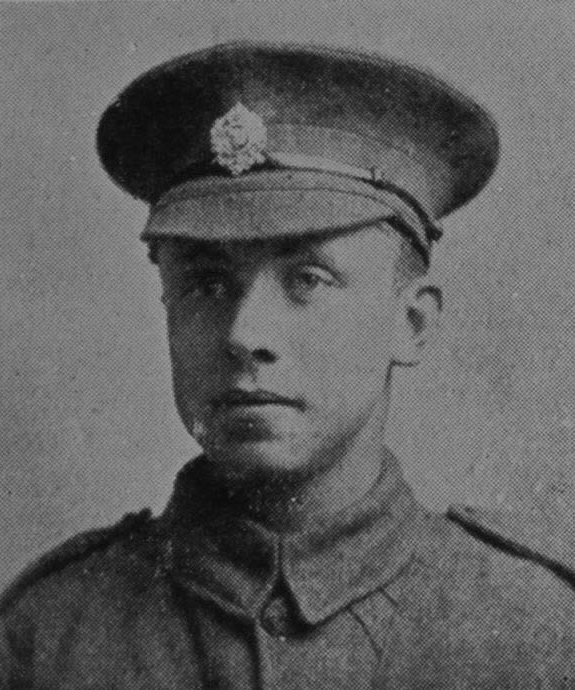
Banister W H Pte 2nd Middlesex Regiment

Banister W H Pte 2nd Middlesex Regiment

BANISTER, WILLIAM HODSON, Private, No. 57380, 2nd Battn. (77th Foot) The Duke of Cambridge’s (Middlesex Regt.), yr. s. of William Banister, of 2, Henry Road, Finsbury Park, N., by his wife, Fanny, dau. of Robert Harvey, of Finsbury Park, London, N.; b. 23 Feb. 1899; educ. at St. John’s College, Green Lanes, Finsbury Park, N., and Caterham Congregational School, co. Surrey, where he was school captain, also captain of the football and hockey team, and played in the First XI. in cricket; he attested under the Derby scheme, and was called up while he was at Caterham School 24 March, 1917, and placed in the 103rd Training Corps; he tried for a commission, but was rejected on account of slight deafness; was transferred to the 2nd Middlesex Regt., and served with the Expeditionary Force in France from 1 April, 1918; was taken prisoner during the fighting at Villers Bretonneux on the 24th of the same month, and died a prisoner of war at Morchingen Hospital, Alsace-Lorraine, 22 July, 1918, of cardiac weakness and pneumonia, Buried in the cemetery there. A comrade wrote: “He was one of the most cheerful of the prisoners, and had a smile for everyone. Among them he was called ‘Captain, because of his knowledge of German. as he was able to translate the men’s complaints to those in command,” and another comrade wrote of his high Christian character. His former Head Master wrote: “William was exceedingly popular with everyone at school, and his life was of the best. I valued him and his influence more than I can tell you. His very gentleness was an asset.”

Source : De Ruvigny’s Roll Of Honour Vol 5

Bamber J F Coy Sergt Maj 305408 8th King’s Liverpool Regiment

BAMBER, JOHN FREDERICK, Coy. Sergt.-Major, No. (-), 1/8th (Territorial) Battn. (Irish) The King’s (Liverpool Regt.), eldest s. of the late Samuel Bamber, of Bebington, Decorator; b. Manchester, 23 Aug. 1873; educ. Lower Bebington Schools; joined the Navy, and served 22 years; served in the South African War, 1899-1902, with the Red Cross; was offered the post of Swimming Instructor for the Municipal Authorities in Johannesburg on the termination of hostilities, which he accepted and held for some time: returned to England, and volunteered for foreign service on the outbreak of the European War in Aug. 1914, being subsequently appointed Instructor for a few months; served with the Expeditionary Force in France and Flanders from April, 1915; was wounded in the Second Battle of Ypres and invalided home; returned to France, and was reported missing after the fighting at Guillemont 8 Aug. 1916, and is now assumed to have been killed in action on that date. He m. at Liverpool, 13 Feb. 1910, Mary (9, King Street, Rock Ferry, Birkenhead), dau. of John Arrowsmith, and had three children: John, b. 1 Jan. 1912; Thomas, b. 29 Dec. 1913, and Ernest, b. 26 Aug. 1914. He was awarded the Royal Humane Society’s medal for saving life.

Source : De Ruvigny’s Roll Of Honour Vol 5

Balls E L/Cpl 10/2077 1st Wellington Rifles New Zealand Expeditionary Force

BALLS, EDMUND, L.-Corpl., No. 10/2077, 1st Battn. Wellington Rifles, New Zealand Expeditionary Force, s. of the late Henry Sykes Balls, by his wife, Rhoda Ann, dau. of William Sandry; b. Stratton, co. Cornwall, 19 Aug. 1880; educ. Newton Abbot Grammar School; went to New Zealand in 1905, and settled at Wellington as a Farmer; volunteered for foreign service, and enlisted in the Wellington Rifles in Feb. 1915; served with the Mediterranean Expeditionary Force at Gallipoli; subsequently proceeded to France, and was killed in action at Belle Vue Farm on the Selle, 12 Oct. 1918. Buried in Briastre Cemetery; unm.

Source : De Ruvigny’s Roll Of Honour Vol 5

Ballam R C Cpl 22977 9th Royal Irish Fusiliers

Ballam R C Cpl 9th Royal Irish Fusiliers

BALLAM, RICHARD CECIL, Corpl., No. 22977, 9th (Service) Battn. Princess Victoria’s (Royal Irish Fusiliers), yst. s. of Richard Ballam, of Richardstown, Dunleer, Coachman, by his wife, Sarah, dau. of Henry Shore Carlow, of Crettyard, Ireland; b. Salt Hill, co. Galway, 4 April, 1898; educ. Gortbratten Fornham; volunteered for active service, and enlisted in the Royal Irish Fusiliers 4 Nov. 1915; served with the Expeditionary Force in France and Flanders from May, 1917, until severely wounded at the Battle of Ypres 16 Aug. 1917, being employed as a First Class Signaller; returned to France in Sept. 1918, where he served with great gallantry until the armistice was signed, and died at No. 10 Stationary Hospital, Arnike, 5 Dec. following, of influenza. Buried in Turcoing Civilian Cemetery; unm.

Source : De Ruvigny’s Roll Of Honour Vol 5

Ball W T Pte 5633 1st Leinster Regiment

Ball W T Pte 5633 1st Leinster Regiment

BALL, WALTER THOMAS, Private, No. 5633, 1st Battn. (100th Foot) The Prince of Wales’s Leinster Regt. (Royal Canadians), s. of the late George Ball; b. London, S.E., 5 July, 1882; educ. Leo Street C.C. School there; enlisted in the Leinster Regt. 26 April, 1916; served with the Egyptian Expeditionary Force in Egypt from 2 Feb. 1917, and died at Alexandria 24 Nov. 1918, of malaria and bronchitis, contracted while on active service. Buried in the English Cemetery there. His Commanding Officer wrote: “Private W. T. Ball was a most excellent soldier, and always carried out his duties well and cheerfully. He is a great miss to the company, and I and many others are very sorry he was not spared to go home after such a long and creditable service.” He m. at Nunhead Baptist Chapel, 7 Oct. 1916, Florence Mary (33, Edric Road, New Cross, S.E.), dau. of Charles Papsworth, of Brighton; s.p.

Source : De Ruvigny’s Roll Of Honour Vol 5

Ball T Rfn 15th 41592 Royal Irish Rifles

BALL, THOMAS, Rifleman, No. 41592, 15th (Service) Battn. The Royal Irish Rifles, s. of the late John Ball, of Ringstead; b. Ringstead, co. Northampton, 29 Dec. 1878; educ. Wesleyan Day Schools, Raunds; volunteered for active service, and enlisted in the Royal Irish Rifles 23 Oct. 1916; served with the Expeditionary Force in France and Flanders, and was killed in action by the explosion of a shell, at Gullinghem, near Courtrai, 15 Oct. 1918. Buried there. The Chaplain (whose servant he had been) wrote: “I was very fond of your husband, and he was very good to me. He was a most upright man, and a man of good principles. We were good friends, and he went with me everywhere I went. One day we got into a very tight corner, where there was a lot of heavy shelling; we got out safely in the end, but during it all Tom never lost his nerve, and was as brave and steady as he could be. That incident showed me his worth.”

He m. at the Parish Church, Keystone, 1 Jan. 1901, Charlotte (London Road, Wollaston), dau. of Thomas Cade, and had three sons: Harold, Leonard and Rowland.

Source : De Ruvigny’s Roll Of Honour Vol 5

Baldwin W F Lt DCM MC Royal Engineers

Baldwin W F Lt DCM MC Royal Engineers

BALDWIN, WILLIAM FREDERICK, D.C.M., M.C., Temp. Lieut. (Acting Major), Royal Engineers, third s. of the late Harry Baldwin, of Colvestone Crescent, Dalston, London, N., and eldest s. of Ada Mary Baldwin, of Wharfedale, Albert Terrace, Margate: b. 3 Jan. 1895; was educ. at Margate College. He enlisted as a Sapper in the Royal Engineers 2 Sept. 1914, and served in France and Flanders with the Expeditionary Force from the following July, and was wounded in the Battle of Loos. He was gazetted 2nd Lieut., 7th Field Coy., Royal Engineers, in Dec. 1915; promoted Lieut. in Oct. 1917, Capt. in March, 1918, and made Acting Major 18 April, and was killed in action at the Battle of the Aisne on 27 May following. His Colonel wrote: “His loss is deeply regretted by his company, in which he served a considerable time in the field and with which he did most brilliant work.” He was awarded the Croix de Guerre by the French Government for distinguished service in the Battle of Loos [London Gazette, 25 Feb. 1916], and also received the Distinguished Conduct Medal [London Gazette, 14 Jan. 1916]. Major Baldwin was also awarded the Military Cross [London Gazette, 21 Sept. 1918], “For conspicuous gallantry and devotion to duty in handling his company at short notice, and with limited means at his disposal, he successfully completed a long line of posts during the night and held them until fully manned by other troops. His coolness and gallant conduct in action was most marked. Though often working with tired troops he invariably got a great deal of work done, and was always ready to deal efficiently with changing situations.”

Source : De Ruvigny’s Roll Of Honour Vol 5

Baldwin E L Cpl MM 241590 5th East Lancs Regiment

BALDWIN, ERNEST, M.M., L.-Corpl., No. 241590, 1/5th (Territorial) Battn. The East Lancashire Regt., s. of Bolton Baldwin, of 44, Grey Street, Burnley, by his wife, Ada, dau. of Henry Riley; b. Burnley, co. Lancaster, 6 May, 1897; educ. St. Andrew’s School: was a Carter and Butcher’s Man; volunteered for active service, and joined the 5th East Lancashire Regt. 20 June, 1915; served with the Egyptian Expeditionary Force in Egypt from March, 1916; proceeded to France with his battalion in Feb. 1917, and was killed in action at Hautmont 8 Nov. 1918. Buried in Hautmont Communal Cemetery. He was awarded the Military Medal, for conspicuous bravery and devotion to duty at Nieuport 5 Nov. 1917; unm.

Source : De Ruvigny’s Roll Of Honour Vol 5