North K C Lt 4th Hussars

North K C Lt 4th Hussars

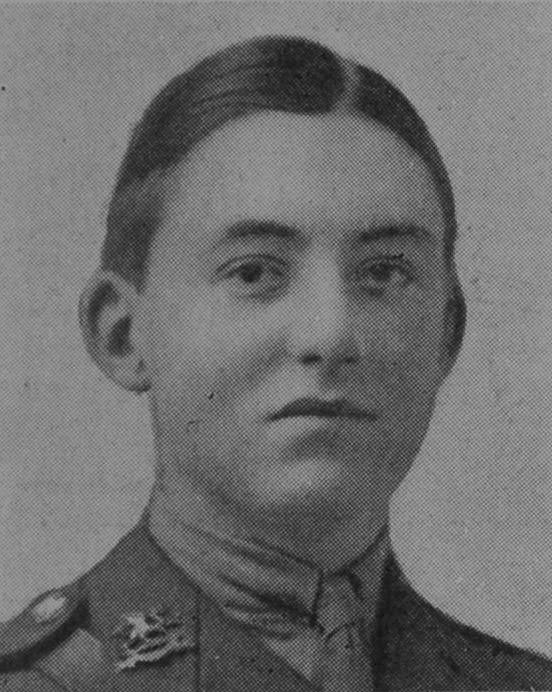
LIEUTENANT K. C. NORTH

4TH (QUEEN’S OWN) HUSSARS

KENNETH CROFT NORTH was the eldest son of Arthur North, The Close, Knaresborough.

He entered the School in 1901, and was in the Running VIII in 1905 and 1906. In 1906 he passed into the R.M.C., Sandhurst, from which he joined his Regiment in South Africa in 1907. He was promoted Lieutenant in 1910.

He commandod the machine guns of the 4th Hussars from the commencement of the War. While defending the crossing of the Hollebeke Canal near Ypres, he was twice hit by shell, and, mortally wounded, died on October 31st, 1914. Age 27.

He was mentioned in Despatches of October 8th, 1914, and a second time in those of January 14th, 1915.

Brigadier-General P. Howell, c.м.о., wrote as follows:- “I want to record that, in my opinion, your husband was the best Officer of his rank with whom I have ever had to deal, and certainly the most gallant. During the period we have been out here, I had learnt to place absolute confidence in his commonsense and judgment. Nothing seemed to upset him, and I could always feel confident that the Maxim guns required no orders, because they were invariably employed in the best possible way to suit the circumstances of the moment. Though all our Officers have done well, and many brilliantly, when it came to choosing one name for the D.S.O. I had no hesitation whatever in selecting that of K.C. Half a dozen different acts of gallantry entitled him to more than that.”

(a). On August 25th he remained behind his Brigade to right a waggon which had been overturned. Under heavy shell fire he succeeded in bringing it away.

(b). On September 1st, during a rearguard action, Lieut. Col. Hogg, D.S.O., was wounded in the rear fighting line, during wood fighting. Lieut. North took back his waggon, when the Germans were at short range, and brought Lieut.-Col. Hogg into Haramont village.

(c). On his own initiative, on October 17th, the day after the 4th Hussars had driven the Germans out of Bas Warneton, Lieut. North returned there, climbed the church tower, and made a sketch of the German trenches on the south. This sketch was forwarded by the 2nd Cavalry Division for the use of the Artillery.

“d). At Hollebeke, on October 30th, when other troops had retired, Lieut. North was left isolated with his Maxim gun detachment. He obtained a wheelbarrow and got both of his guns away, the men of his detachment covering the retirement themselves for over a mile.

(e). On October 31st, at the canal bridge, north of Hollebeke, one Squadron of the 4th Hussars and the Maxim gun detachment were shelled by guns of all calibres and attacked by Infantry. The enemy were unable to reach the bridge, largely owing to Lieut. North’s handling of his machine guns. One of these was knocked to bits and Lieut. North was killed. The bridge remained in our possession till the 4th Hussars were relieved.

“The above constitute but a part of the exceptional work of this Officer.”

He married in December, 1911, Frances Evelyn, second daughter of Henry Berry, of Donisthorpe House, Moor Allerton, Leeds.

Source : Memorials Of Rugbeians Who Fell In The Great War Vol 1
 

Munby E J 2nd Lt Royal Engineers

Munby E J 2nd Lt Royal Engineers

SECOND LIEUTENANT E. J. MUNBY

EAST ANGLIAN FIELD COMPANY, ROYAL ENGINEERS, T.F.

ERNEST JOHN MUNBY was the second son of the Rev. G. F. W. Munby (O.R., 1846), Rector of Turvey, Bedfordshire.

He entered the School in 1888, and after leaving went to America, where he took his degree as a Mechanical Engineer. He worked as a Mining Engineer in Colorado and Borneo, and on the tunnels under the Hudson River at New York.

He obtained a Commission in the Royal Engineers, in October, 1914, went to the Front at Christmas, was killed on January 31st, near Bethune, and was buried in the cemetery of Le Touret. His section was working at night. They had finished work, and had gone into an old farm building, when a bullet crashed through the wall and caused his instantaneous death. Age 40.

One who knew him in civilian life wrote:- “The thing that struck me most was the fact that whenever there was work involving much danger, he always took the dangerous place, rather than allow the men to take it, and this seems to have been the keynote of his life, self-sacrifice for the good of others.”

Another wrote “He always had the truest spirit of self-sacrifice, and his death seemed a fitting end to a life that was always full of courage and enthusiasm.”

He married in 1905 Emily Louisa Ann, widow of Captain Herbert Turner Turner-Emery, R.A., of Baddow Park, Essex, only daughter of Charles Henry Coxhead.

Source : Memorials Of Rugbeians Who Fell In The Great War Vol 1


Munby E J 2nd Lt Royal Engineers

Source : The Illustrated London News 13th Feb 1915

MUNBY, ERNEST JOHN, 2nd Lieut., 1st East Anglian Field Coy., R.E. (T.F.), 2nd s. of the late Rev. George Frederick Woodhouse Munby, Rector of Turvey, Bedford (1869-1905), by his wife, Harriet Louisa, dau, of the Rev. Canon Linton; b. Turvey Rectory, 19 May, 1875; educ. Rugby and Stevens Institute, Hoboken, New Jersey, U.S.A., where he took his degree as Mechanical Engineer, and became M.Am. S.M.E. and A.I.M. and M. As a Mining Engineer, he worked in Colorado and Borneo, and was subsequently engaged with Lord Cowdray (then Sir Weetman Pearson) in constructing the tunnel under the Hudson River to New York. He was afterwards employed by the Gardner Electric Drill and Hammer Company, and had latterly been engaged at the St. John’s Mine, Montezuma, Colorado. On the outbreak of war he returned to England and applied for a commission. He was gazetted 2nd Lieut. to the 1st East Anglian Coy., R.E., 14 Sept. 1914; went to France at the end of Dec., and was killed in action near Bethune, 31 Jan. 1915, being buried at Le Touret. He m. at Croydon, 7 Nov. 1905, Emily Louisa Ann, widow of Capt. Herbert Turner Turner Emery, of Baddow Park, Essex, and dau. of Charles Henry Coxhead; s.p.

Source : De Ruvigny’s Roll Of Honour Vol 1

Miller G L 2nd Lt Royal Engineers

Miller G L 2nd Lt Royal Engineers

SECOND LIEUTENANT G. L. MILLER

ROYAL ENGINEERS

GODFREY LYALL MILLER, born at Cawnpore, was the eldest surviving son of Sir John O. Miller, K C.S.I., of the Indian Civil Service, at one time Chief Commissioner of the Central Provinces, and Member of the Governor-General’s Council, and of Mary Evelina, daughter of the Right Honble. Sir

Alfred Lyall, C.C.I.E., K.C.B. He entered the School in 1906, became a Cadet Officer of the School O.T.C., and left for the R.M.A., Woolwich, in 1911, passing in 12th.

In December, 1912, he passed 1st out of Woolwich and entered the Royal Engineers. At Woolwich he gained the King’s and Pollock Gold Medals, besides other prizes, and later, at Chatham, a Haynes Memorial Medal for Field Engineering.

At the outbreak of War, August 4th, 1914, he was appointed to the 11th Field Co. R.E., forming part of the 2nd Division.

He was killed on September 14th, 1914, at Pont Arcy, on the Aisne, 14 miles east of Soissons. Age 21. On this day he was in charge of a damaged bridge over a canal, in rear of the pontoon bridge at Pont Arcy. The 2nd Division had crossed the canal and river bridges on the evening of the 13th and morning of the 14th. In the afternoon of the latter day an ammunition train returning from the north of the river attracted the German fire to the bridge, where Lieut. Miller and one Sapper were killed, and ten others severely wounded, some of them succumbing later. His Commanding Officer wrote:-

“He was held in high esteem by the Officers, Non-Commissioned Officers and men of the Company, and we all liked him. From the moment he joined me on mobilisation at Aldershot, he showed signs that he would make a good Officer, and the more I knew him the better I liked and put confidence in him. I now miss him very much, and am extremely grieved that such a promising young life has been cut short.”

Several men of his Company spoke warmly of his thoughtfulness and kindness, and their regret at losing “a fine and brave Officer, and a thorough gentleman,”

Source : Memorials Of Rugbeians Who Fell In The Great War Vol 1

MILLER, GODFREY LYALL, 2nd Lieut., Royal Engineers, elder s. of Sir John Ontario Miller, of Rowley Lodge, Arkley, Herts, K.C.S.I., late Indian Civil Service, by his wife, Mary Evelina, dau. of the late Sir Alfred Lyall; b. Cawnpore, India, 14 Feb. 1893; educ. Warden House School, Deal, Rugby, and Woolwich, where he gained the King’s Gold Medal; was gazetted 2nd Lieut., R.E., 20 Dec. 1912; visited Germany twice during leave to study the language was appointed on mobilisation to the 11th Field Coy. R.E. attd. to the 2nd Division, with which he left for France on 15 Aug. 1914, and was killed in action while in charge of a bridge over a canal at Pont Arcy, 14 Sept. 1914, during the crossing of the Aisne: unm. Buried where he fell.

Source : De Ruvigny’s Roll Of Honour Vol 1

Michell J C Captain 12th Lancers

Michell J C Captain 12th Lancers

CAPTAIN J. C. MICHELL

12TH (PRINCE OF WALES’S ROYAL) LANCERS

JOHN COLLORYAN MICHELL was the eldest son of John Michell, 1.s.O., Consul-General at Petrograd.

He entered the School in 1886. He joined the Militia in the Duke of Cornwall’s Light Infantry in 1889, and resumed his Commission in 1894 as a Captain.

He served in the Matabele Rebellion in 1896 as a Lieutenant in the Maxim Gun Section. In the South African War, 1899-1902, he joined the Salisbury Contingent, which formed part of Colonel Plumer’s Column, and with it took part in the Relief of Mafeking, and was present at the Battle of Eland’s River. He was mentioned in Despatches, and received the Queen’s Medal with four Clasps, and the King’s Medal with two.

He went to the Front with the First Expeditionary Force and took part in the Retreat from Mons. He was killed at Moy (Aisne) while gallantly leading his Squadron in what proved to be a most successful charge against German Cavalry on August 28th, 1914. Age 43-

He married, in 1910, Ella, eldest daughter of Alfred Macnaghten, but left no children.

Source : Memorials Of Rugbeians Who Fell In The Great War Vol 1

Meiklejohn K F Lt 1st Cameron Highlanders

Meiklejohn K F Lt 1st Cameron Highlanders

LIEUTENANT K. F. MEIKLEJOHN

IST BATTALION THE QUEEN’S OWN CAMERON HIGHLANDERS

KENNETH FORBES MEIKLEJOHN Was the second son of Lieutenant-Colonel John Forbes Meiklejohn, late R.H.A., and of Edith Mary his wife. He entered the School in 1899, passed 3rd into the R.M.C., Sandhurst, was gazetted to the Ist Battalion Cameron Highlanders in February, 1904, became Adjutant of the Battalion in 1913, and left for the Front on August 12th, 1914.

He had qualified as Ist Class Interpreter in Russian and French.

He was killed on September 25th, 1914, at the Battle of the Aisne, near Verneuil, by a shell which fell on the cave used for the time being as Head-quarters and caused the roof to fall in. Age 29.

He married, in 1914, Sybil Maud, only daughter of J. C. Stewart, of Kinlochmoidart, Inverness-shire, and left a son, born in January, 1915.

Source : Memorials Of Rugbeians Who Fell In The Great War Vol 1

Meiklejohn K F Lt Cameron Highlanders

Source : he Sphere 24th Oct 1914

McDougall D A H 2nd Lt 1st Seaforth Highlanders

McDougall D A H 2nd Lt 1st Seaforth Highlanders

SECOND LIEUTENANT D. A. H. MCDOUGALL

IST BATTALION SEAFORTH HIGHLANDERS (ROSS-SHIRE BUFFS, THE DUKE OF ALBANY’S)

DUNCAN ALBERT HERBERT MCDOUGALL was the elder son of Duncan and Amelia Florence McDougall, of Storthholme, Ranmoor, Sheffield. He entered the School in 1911, and went to the R.M.C., Sandhurst, on the outbreak of War, in August, 1914.

He received his Commission in December, and went to France in the following March. He fell while gallantly leading his Platoon in an attack on the German trenches at Rue du Bois, near Neuve Chapelle, on the early morning of May 9th, 1915. Age 18.

His Colonel wrote:- “He was a very capable boy and a brave one too, and, although he had only been a short time here, showed great promise.”

And a Private said:- “Mr. McDougall died a heroic death. Although wounded in the leg he still continued to lead and encourage his men to the last.”

Source : Memorials Of Rugbeians Who Fell In The Great War Vol 1


McDougall D A H 2nd Lt Seaforth Highlanders

Source : The Illustrated London News 29th May 1915

Macarthur-Onslow A W Captain 16th Lancers

Macarthur-Onslow A W Captain 16th Lancers

CAPTAIN A. W. MACARTHUR-ONSLOW

16TH (THE QUEEN’S) LANCERS

ARTHUR WILLIAM MACARTHUR-ONSLOW was the fourth son of Captain Alexander Arthur Walton Onslow, R.N., Camden Park, New South Wales.

He entered the School in 1892, and was in the XV in 1895. He went to Magdalen College, Oxford, in 1896, and gained a Third Class in the Law School in 1899.

He was gazetted to the 16th Lancers in 1900, and became Captain in 1904. He served through the South African War, and was slightly wounded. He received the Queen’s Medal with three Clasps, and the King’s Medal with two Clasps. He was appointed Instruction Officer at Cambridge in connection with the Territorial Army scheme, in 1910, and was lent to the New Zealand Government 1911-14, serving as Brigade Major and Instruc-tional Officer of Mounted Troops.

He was killed by a shell in the trenches, near Ypres, on November 5th, 1914. Age 36. He was mentioned in Despatches of January 14th, 1915.

General Hubert Gough, c.s., wrote:-

“During the time he was out here, he had done very well, and commanded his Squadron so well that Vaughan (now commanding the 3rd Brigade) has especially mentioned him for the way he handled it in the attack on Warneton.”

He married, in 1911, Christabel, elder daughter of Colonel R. J. Beech, of Brandon Hall, Coventry.

Source : Memorials Of Rugbeians Who Fell In The Great War Vol 1

Lowe H S Lt 2nd Worcestershire Regiment

Lowe H S Lt 2nd Worcestershire Regiment

LIEUTENANT H. S. LOWE

2ND BATTALION THE WORCESTERSHIRE REGIMENT

HENRY STANLEY Lowe was the youngest son of the Rev. Edward Lowe, Vicar of Hallingborough, Lincolnshire, and of Elizabeth his wife.

He entered the School in 1904 and passed into the R.M.C., Sandhurst, in 1908. He went out to India in 1910, was promoted Lieutenant in 1913, and returned with his Regiment in the same year.

He went to the Front with the First Expeditionary Force, was present at the Retreat from Mons and in the Battles of the Marne and of the Aisne. He was wounded in the last of these, on September 20th, and died of his wounds, in Paris, on October 21st, 1914. Age 24.

Source : Memorials Of Rugbeians Who Fell In The Great War Vol 1

LOWE, HENRY STANLEY, Lieut., 2nd Battn. The Worcestershire Regt., yst. s. of the late Rev. Edward Jackson Lowe, Vicar of Stallingborough, and only s. by his 2nd wife; b. Stallingborough, co. Lincoln, 7 Feb. 1891; educ. Glengarth Preparatory School, Cheltenham; Bilton Grange, near Rugby; Rugby, and in Sandhurst Company at Woolwich; gazetted 2nd Lieut., Northamptonshire Regt., 6 Nov. 1909, and promoted Lieut. 5 March, 1913; joined his regt. in Jhansi, India, in Jan. 1910; returned to Aldershot in 1913; went to France, and died at Paris, 21 Oct. following, of wounds received in action during the Battle of the Aisne, 20 Sept.; unm. Buried at St. Germain-en-Laye.

Source : De Ruvigny’s Roll Of Honour Vol 1


Lomax S H Lt Gen CB General Staff

Lomax S H Lt Gen CB General Staff

LIEUTENANT-GENERAL S. H. LOMAX, C.B.

HEADQUARTER’S STAFF

SAMUEL HOLT LOMAX, C.B., was the third son of Thomas Lomax, of Grove Park, Yoxford, Suffolk.

He entered the School in 1869, was in the School XX in 1872, and joined the Army in 1874, being gazetted to the old 90th Regiment, which subsequently became the and Battalion of the Cameronians (Scottish Rifles). He served in the South African Wars of 1877-8-9, taking part in both the Kaffir and Zulu campaigns, and was present at the battles of Kambula and Ulundi.

The whole of his Regimental career was spent with the Cameronians, and he became Lieutenant-Colonel of the 1st Battalion in 1897. In 1908 he became Major-General, and just before the War broke out was in command at Aldershot of the 1st Division.

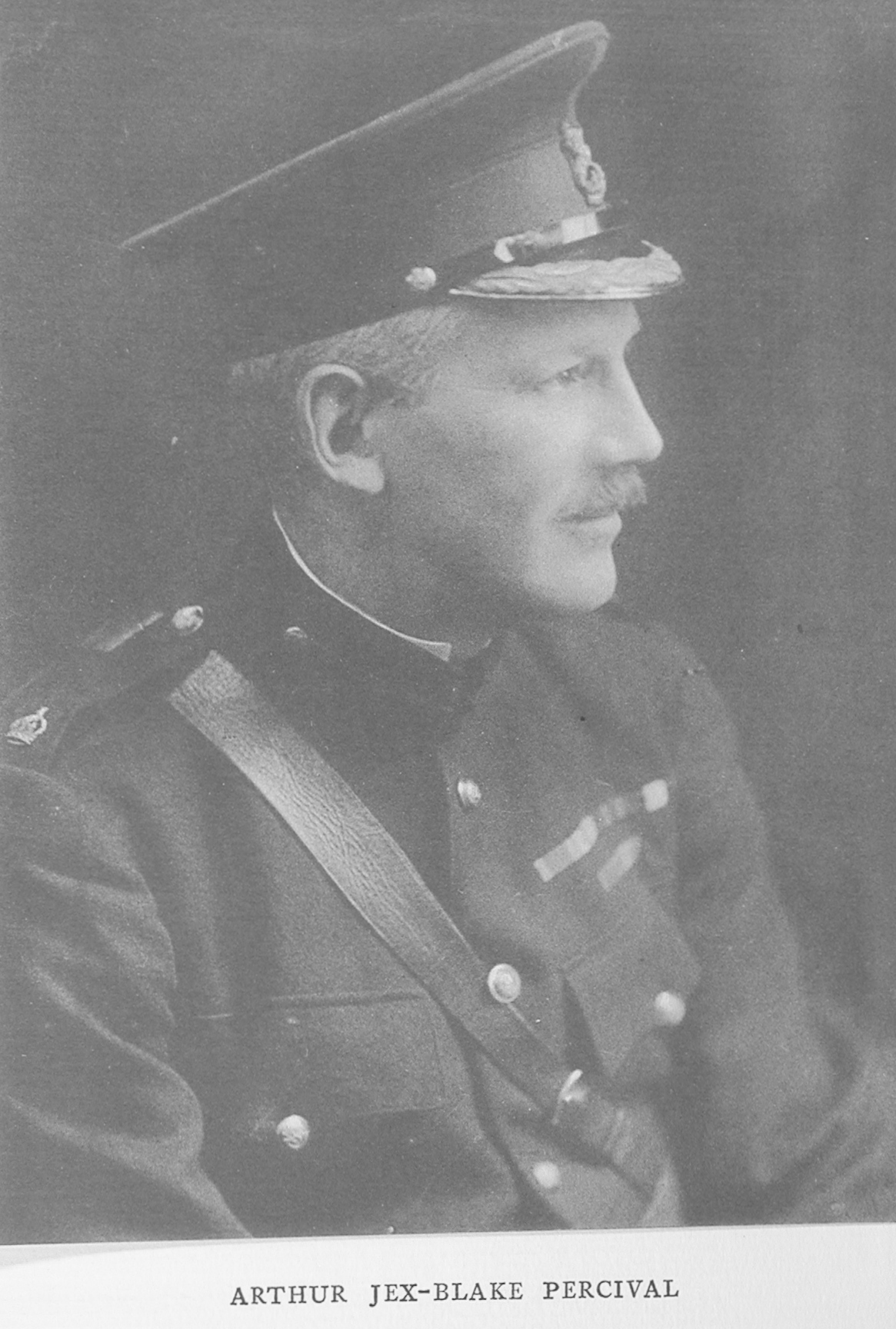
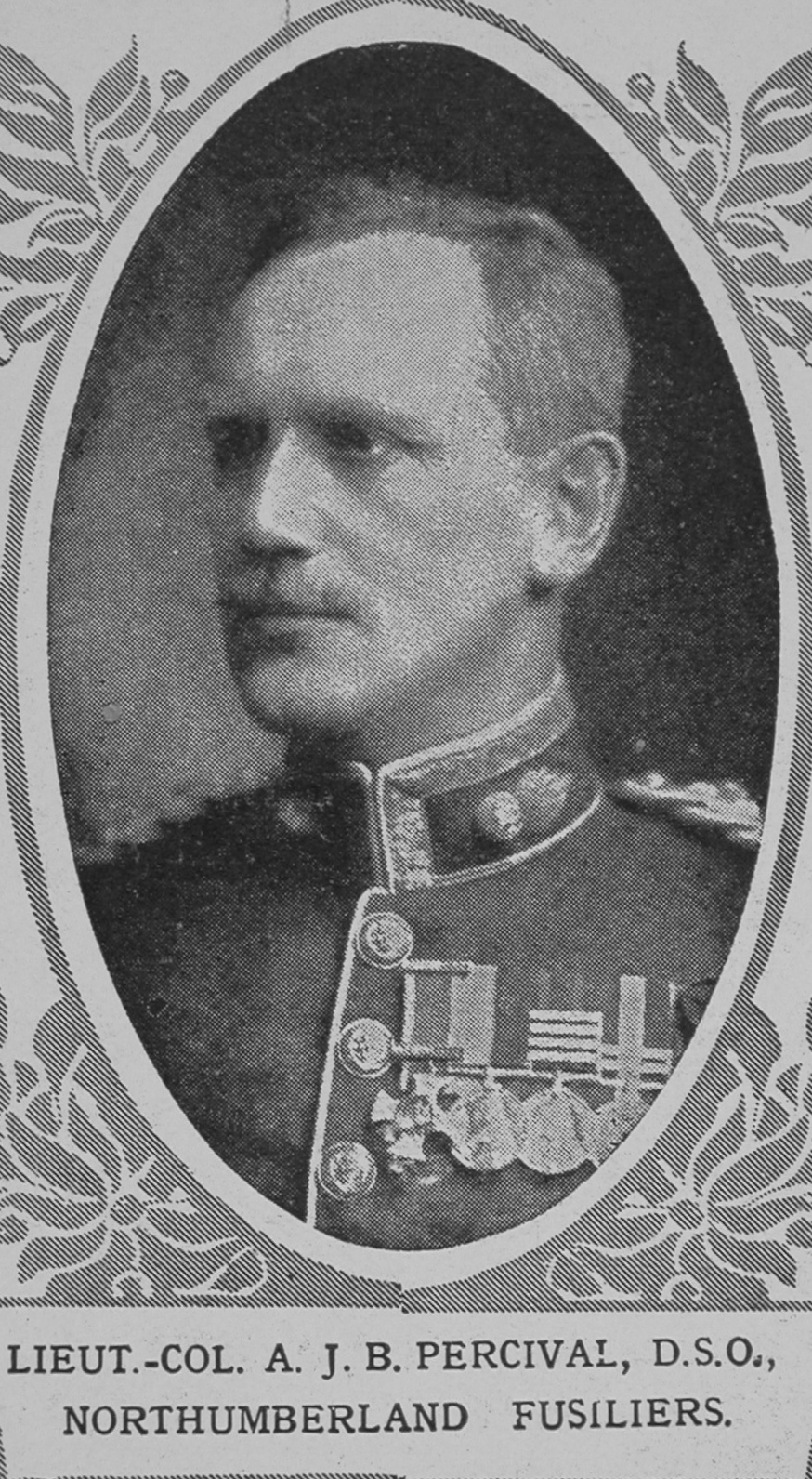
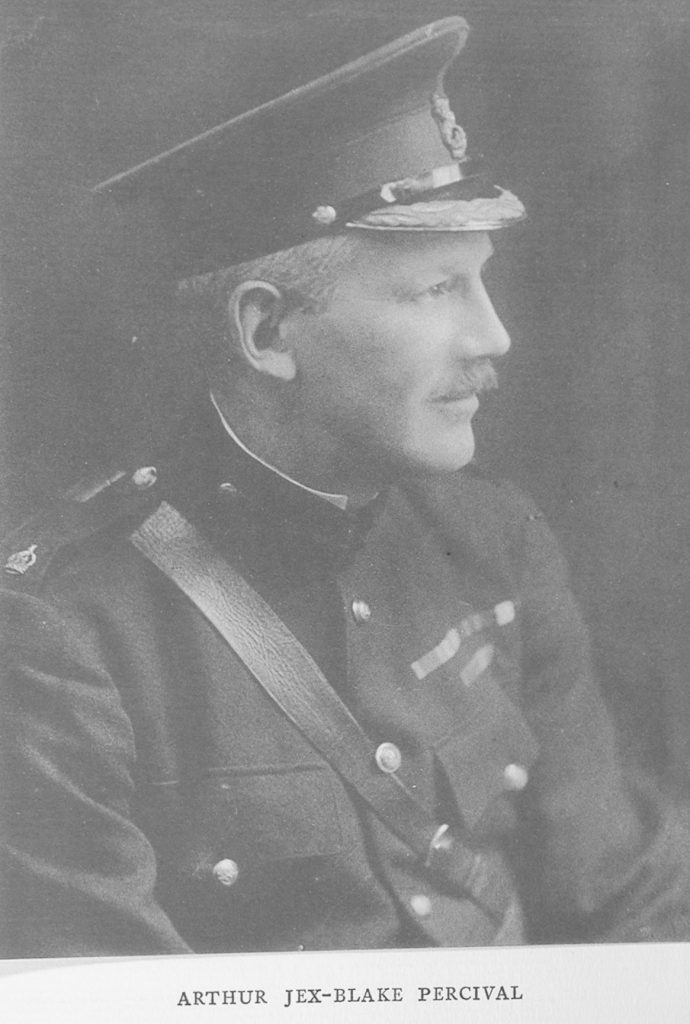
On the outbreak of War he was given a Division which he commanded during the Retreat from Mons and the critical days round Ypres at the end of October, 1974, on the 31st day of which month he was wounded. For his services during these trying times he was mentioned in Despatches, promoted Lieutenant-General “for distinguished service in the field,” and awarded a C.B.

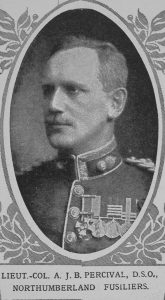
He was wounded by a shell which fell in the midst of a group of Staff Officers, killing five of them (one being Lieut.-Col. Arthur Percival, O.R.), and was invalided home. The ultimate cause of his death, on April 10th, 1915, was an operation for appendicitis, the result of shock at the time of his wounds. Age 59.

He married in 1884 Mary Helen, only daughter of John P. Alston, of Mineburn, Strathaven, Lanarkshire, by whom he had two children.

Source : Memorials Of Rugbeians Who Fell In The Great War Vol 1


Leigh-Pemberton T E G Lt 13th London Regiment

Leigh-Pemberton T E G Lt 13th London Regiment

LIEUTENANT T. E. G. LEIGH-PEMBERTON

13TH (COUNTY OF LONDON) PRINCESS LOUISE’S KENSINGTON BATTALION, THE LONDON REGIMENT, T.F.

THOMAS EDWARD GEOFFREY LEIGH-PEMBERTON was the only son of Wilfred and Alice Augusta Leigh-Pemberton, of Wrinstead Court, Sittingbourne.

He entered the School in 1907. He left in 1911 and went to Christ Church, Oxford, for about a year and a half, and then entered the firm of Anthony Gibbs and Sons to learn business.

He received his Commission in May, 1914, was promoted Lieutenant on September 1st, 1914, and went to the Front in November. He was shot while doing duty in a very exposed part of the trenches near Laventie, N. France, on January 11th, 1915. Age 21.

The Officer Commanding the 25th Infantry Brigade, 8th Division, wrote:-

“It will be a comfort to you to know how highly he was esteemed as an Officer in this Brigade. He had done excellent work in stimulating the energy of his men; his loss is a genuine one to his Regiment and Country.”

Source : Memorials Of Rugbeians Who Fell In The Great War Vol 1

LEIGH-PEMBERTON, THOMAS EDWARD GEOFFREY, Lieut., 13th Battn. (Princess Louise’s Kensington) The London Regt. (T.F.), only s. of Wilfred Leigh-Pemberton, of Wrinsted Court, Sittingbourne, Barrister-at-Law, by his wife, Alice Augusta, dau. of the late Capt. David Rolland Erskine, 92nd Highlanders [2nd s. of Sir David Erskine, of Cambo, 1st Bart.], and grandson of Sir Edward Leigh-Pemberton, of Torry Hill and Wrinsted, co. Kent, K.C.B.; b. Wrinsted Court aforesaid, 15 Nov. 1893; educ. Rugby and Christ Church, Oxford, where he was in the O.T.C.; was, at the outbreak of war, learning business with the firm of Antony Gibbs & Sons; appointed 2nd Lieut. in the Kensingtons, 12 May, 1914, and promoted Lieut. 1 Sept. following; volunteered for foreign service on the outbreak of war in Aug.; went to France at the beginning of Nov., and was killed in action near Laventie, 11 Jan. 1915; unm. Buried at Estaires. His commanding officer, Lieut. Col. F. G. Lewis, wrote: “I feel I must write and tell you how all my officers will mourn his loss most deeply. His capacity and his popularity made everybody ike him; he was a real good fellow in everyway, and he has made a gap which we can never quite fill. I am sorrier than I can say”; and Major-Gen. Sir A. Turner:
“He was a most excellent and conscientious young officer, and a great loss to his battn., in which he was a great favourite.” Capt. Thompson also wrote: “He was a really good officer, always cheerful, and of the very greatest assistance to me in the trying work of the trenches. The battn. has lost a good officer and all the officers a valued friend”; and Sergt. Stiles: “Lieut. Leigh-Pemberton was very much liked and respected by every man he came in touch with. One of our bravest officers; he considered his men; in fact, he used to take four hours duty whilst his sergeant slept, and the sergeant used to take two hours’ duty whilst he (the Lieut.) slept. He would at any time carry the pack of any man who was knocked up. I’m sure any of our men would have followed him through fire and water. His death was a great shock to the whole battn.” He was fond of sports of all kinds and hunted a small pack of harriers of his own.

Source : De Ruvigny’s Roll Of Honour Vol 1