Verge A Captain Australian Army Medical Corps Attd 6th Australian Light Horse

Verge A Captain Australian Army Medical Corps Attd 6th Australian Light Horse

VERGE, ARTHUR, Capt., A.A.M.C., attd. 6th Light Horse, Australian Imperial Force, 2nd s. of Austral Verge, of Kempsey, Macleay River, New South Wales, Grazier, by his wife, Matilda Jane, dau. of Henry Flavelle, of Hamilton Terrace, London; b. Kempsey, 12 Feb. 1880; educ. The King’s School, Parramatta, where he was Burton Exhibitioner in 1898, and St. Paul’s College within Sydney University, where he graduated M.B., Ch.M., in 1905; was for two years (1905-6) resident medical officer at Sydney Hospital; then proceeded to England, where he attended the leading London hospital skin departments, and took courses in Bacteriology and Vaccine Therapy. After a post graduate course at Edinburgh University he qualified F.R.C.S. there in 1908, and then visited Paris, Vienna, Prague and Berlin, and attended the skin clinics and took courses in the treatment of skin diseases under Sabarand, Brocq, Thebierge, Albaran (Paris), Finger, Rail, Oppenheim,Cape Sammer (Vienna), Blaschko, Josephs and Wasserman (Berlin). Returning to Edinburgh, he was appointed Clinical Assistant to the Skin Department for three months, and later non-resident house physician for one year (1909-10), at the Royal Infirmary, and while holding these positions had charge of the X-Ray department, and the radium treatment under Dr. Cranston Low. He took a six months’ course in Vaccine Therapy and Bacteriology of the Skin at the Royal College of Physicians, and in 1910 published in the “British Medical Journal” (31 Dec.) an article on “The Treatment and Diagnosis of Lupu Vulgaris by Tuberculin Ointment.” He then returned to Australia and practised as a skin specialist in Sydney, and in 1911 obtained the position of Hon. Assistant Physician for Diseases of the Skin at the Royal Prince Alfred Hospital there.  On the outbreak of war he volunteered for Imperial service, and was given a commission as Capt. A.A.M.C., 2 Oct. 1914 ; left Sydney as medical officer to the 6th Light Horse with the second reinforcements, and died in No. 17 General Hospital, Alexandria, 8 Sept. 1915, of dysentery contracted while on active service with his regt. at Anzac Cove; unm.

He represented both King’s School and St. Paul’s College in cricket, football, tennis and rowing. He played with the University Union Football Team, and was full-back for three seasons. He played full-back for New South Wales against Queensland in 1902 and 1904, and while in the old country played rugger with Blackheath and other Rugby clubs. Dr. Verge was also a capital all-round cricketer, and at one time was the most successful bowler at the University. He played in two matches against Melbourne University, scoring 10 and 2, and taking two for 22 and six for 20 in 1903; and scoring 4 and 5, and taking four for 70 and three for 69 in 1904. His yr. brother, Dr. C. A. Verge, is now with No. 32 General Hospital, Mesopotamia Expeditionary Force.

Source : De Ruvigny’s Roll Of Honour Vol 1

Turnbull W Pte 964 24th Australian Imperial Force

Turnbull W Pte 964 24th Australian Imperial Force

TURNBULL, WALTER, Private, No. 964, 24th Infantry Battn. Australian Imperial Force, s. of Thomas Edward Turnbull, of Hexham, Northumberland, Rope and Candle Manufacturer, by his wife, Ann, dau. of James Charlton; b. Hexham, 26 Jan. 1882; educ. North Eastern County School, Barnard Castle; went to Australia in May, 1912; joined the Australian Force in March, 1915, and died on board the hospital ship Guildford Castle, 21 Sept. 1915, of wounds received in action near Lone Pine, Gallipoli; buried at sea about 5 miles from Lemnos; unm.

Source : De Ruvigny’s Roll Of Honour Vol 1


Trineman C F Staff Sergt 62 18th Australian Imperial Force

Trineman C F Staff Sergt 62 18th Australian Imperial Force

TRINEMAN, CHARLES FREDERICK, Staff Sergt., No. 62, 18th Battn. 5th Infantry Brigade, Australian Imperial Force, s. of the late William Trineman, Gardener; b. Exeter, 28 March, 1882; educ. Seaton Council School; joined the 27th Devonshire Yeomanry, and served with them through the South African War, 1899-1902 (Queen’s medal with five clasps); afterwards went to Australia; joined the Australian Imperial Force on the outbreak of war; served in Egypt and at the Dardanelles, and was killed in action there, 21-25 Aug. 1915. He had, just previous to his death, given a cooking demonstration at Victoria Barracks, on one of the Travelling Kitchens to be used by the troops, and was then presented with a gold wristlet watch. For many years he was golf professional and groundsman at the Axe Cliff Golf Links. He m. at Seaton, Devon, 28 Jan. 1903, Amelia (Southfield, New Road, Water Orton, near Birmingham), dau. of John Harley Boddy, and had a dau.: Nora Amelia, b. 13 March, 1904.

Source : De Ruvigny’s Roll Of Honour Vol 1

Towner F A A Pte 148 7th Australian Imperial Force

TOWNER, FREDERICK ARTHUR ALBERT, Private, Signaller, No. 148, 7th Battn. Australian Imperial Force, s. of Horace Frederick Towner, of 22, Alfred Street, St. Leonards-on-Sea, Cabinet Maker, by his wife, Isabel, dau. of William McLeod; b. St. Leonards, 6 July, 1890; educ. Christ Church School there; went to sea in 1906 and was twice wrecked, first on the John Shelley, in Nov. 1907, and secondly with the sailing ship Enterprise, in the North Sea, Oct. 1908, being on this last occasion the sole survivor; in 1912 went to Australia and took up farming, but after the outbreak of war enlisted in the Commonwealth Expeditionary Force, 4 Sept. 1914, and was killed in action at the Dardanelles, 3 June, 1915; unm.

Source : De Ruvigny’s Roll Of Honour Vol 1

Tosh W L/Cpl 551 8th Australian Light Horse

TOSH, WILLIAM, L/Corpl., No. 551, 8th Australian Light Horse, only s. of James Tosh, of Third Part, Crail, Fife, by his wife, Jessie Christine (Mansefield, Anstruther), only dau. of Alexander Campbell Macandie; b. 30 Sept. 1885; educ. Clifton Bank School, St. Andrews, and afterwards learnt sheep-farming in one of the Border counties; then proceeded to Australia and acted as assistant to the owner of Barunah, one of the largest sheep-runs in the Colony of Victoria. After a short visit home in 1910, he returned to Australia and started farming on his own account, but on the outbreak of war disposed of his property and joined the Australian Light Horse. He was wounded in action at Anzac, Gallipoli, and died half an hour afterwards, 7 Aug. 1915, being buried in the 8th L.H. Burial Ground, on the beach; unm.

Major McLaurin wrote: “He was a splendid soldier and much beloved by the regt.”

Source : De Ruvigny’s Roll Of Honour Vol 1
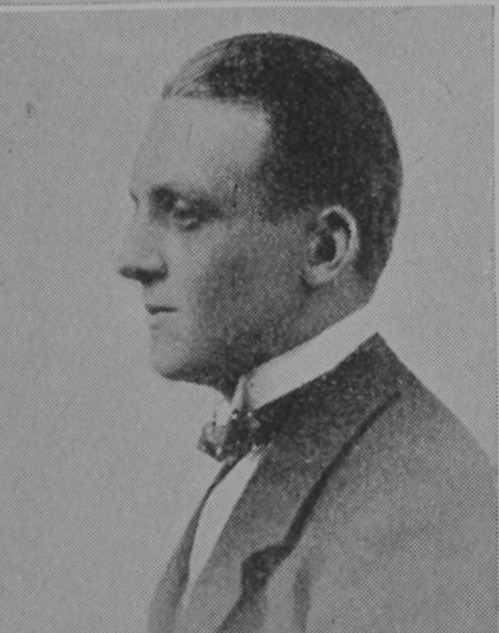
Tompkins E Pte 54 8th Australian Imperial Force

Tompkins E Pte 54 8th Australian Imperial Force

Tompkins E Pte 54 8th Australian Imperial Force

TOMPKINS, EDWIN, Private, No. 54, 8th Battn. Australian Imperial Force, eldest s. of Henry James Tompkins, of 133, St. James’ Road, Northampton, by his wife, Mary Anne, dau. of William Griffin; b. Great Houghton, co. Northampton, 30 March, 1894; educ. Kingsthorpe and Council School, St. James’ End; was an employee in Wolverton Carriage Works, and joined the Oxford and Bucks Territorials in May, 1913; emigrated to Australia in July, 1913, and settled in Victoria as a Farm Hand; joined the Australian Imperial Force after the outbreak of the European War, 1 Sept. 1914; left for Egypt, 19 Oct. 1914; took part in the landing at the Dardanelles, 25 April, and died in King’s College Hospital, London, 16 Aug. 1915, of wounds received in Gallipoli the previous May; unm.

Source : De Ruvigny’s Roll Of Honour Vol 1


Beauchamp S G J Sergt 16 Australian Machine Gun Corps

Beauchamp S G J Sergt 16 Australian Machine Gun Corps
Taken on 18th Oct 1916
Photo copied and cropped from The Past on Glass at Sutton Archives.
Photographer David Knights-Whittome. Shared under the Creative Commons Non Commercial

Beauchamp Samuel George Jubilee Sergt 16 Australian Machine Gun Corps

Born Sydney, New South Wales. Son of George Richard Mitchell Beauchamp and Anna Margrett Beauchamp, of Westward Ho, Boulin, Queensland.

Died Of Wounds (Mustard Gas)  15th Oct 1917

Buried at Nine Elms British Cemetery, Belgium.

Timbrell G Sergt 225 3rd Australian Light Horse

Timbrell G Sergt 225 3rd Australian Light Horse

TIMBRELL, GORDON, Sergt., No. 225, 3rd Light Horse, Australian Expeditionary Force, 2nd s. of the late Samuel Timbrell, for many years Manager of the Central Station Hotel, Glasgow, by his wife, Charlotte Whyte (now wife of Anderson Rodger, of 59, Longridge Road, Earl’s Court, S. W.), dau. of George Gordon, of Aberdeen; b. Glasgow, 13 April, 1891; educ. Glasgow High School, and on leaving there in 1906 went to Stubbington House, Fareham, to be prepared for entrance in the Royal Navy as an Engineer Cadet. This idea had to be abandoned owing to the new age limit (12 years) coming into force, bringing Engineers under the same regulations as the Executive Cadets. Shortly afterwards he entered the office of a shipping firm in Stettin, with the purpose of learning the German language in combination with business training, and on leaving there, returned to Glasgow where he served a brief apprenticeship in a stockbroker’s office, and then went to Australia in 1910. He first took up sheep farming, but city life lured him, first to Melbourne, where he gained some experience in the wool trade, and then to Adelaide, where he managed the shipping department of Messrs. Bagot, Shakes & Lewis, Ltd. He had been with them three years when war broke out. He immediately volunteered and joined the Light Horse as a private, but being a fluent speaker of French and German, and a hard and fearless worker, he quickly won promotion and was appointed Sergt. early in March. He was killed in action at the Dardanelles, 1 July, 1915; unm.

In a letter from Sergt. Smith under date of 26 June, printed in the Glasgow High School Magazine, Dec. 1915, p. 37, is the following passage: “My outlook on the world and things in general just now is even brighter than usual. Timmy (Sergt Gordon Timbrell) is a wonderful boy and yesterday secured all manner of good things. We dined last night on turtle soup, thick mutton stew, pineapple, cakes, dates and coffee, and wound up with cigarettes. This morning for breakfast we had porridge and milk as a preliminary to what was in itself a splendid feed.’ When Timmy is purveyor we are sure to be all right. The hardships of war! They have not existed so far.” And in a later letter he wrote: “You will no doubt have heard of poor Timmy’s death. He was killed in the trench last Thursday evening. You don’t know how I miss him. We have been the best of pals all the time. He was as game as you make ’em.” The secretary of his firm wrote: “He was a courageous and chivalrous young fellow, and had done uncommonly well in our firm. We were only awaiting his return, and the return of something like normal conditions to give him that lift which he had so well earned.”

Source : De Ruvigny’s Roll Of Honour Vol 1

Thomson A C Sergt 1380 13th Australian Imperial Force

Thomson A C Sergt 1380 13th Australian Imperial Force

THOMSON, ALEXANDER CAMERON, Sergt., No. 1380, D Coy., 13th Battn. Australian Imperial Force, 6th s. of James Thomson, of 57, St. Andrew Road, Pollokshields, Glasgow, by his wife, Elizabeth, dau. of the late Alexander Cameron, of Rothes; b. Glasgow, 30 March, 1892; educ. Kinning Park Public School; was two years in the 7th S. R. Glasgow before going to Australia, 25 Nov. 1912; volunteered on the outbreak of war and joined the Commonwealth Expeditionary Force in Sydney, N.S.W., 26 Sept. 1914; left for Egypt about 24 Dec.; took part in the landing at the Dardanelles, 25 April, 1915, and after being promoted Corpl. and Sergt. was killed in action there, 3 May, 1915; unm. His Officer Commanding, Lieut. C. B. Hopkins, wrote: “Your son was killed on the night of 3 May, doing his duty in a most gallant manner, in a charge against some Turkish trenches.”

Source : De Ruvigny’s Roll Of Honour Vol 1


Theobald W G M Pte 792 14th Australian Imperial Force

Theobald W G M Pte 792 14th Australian Imperial Force

THEOBALD, WILLIAM GEORGE MORLEY, Private, No. 792, No. 2 Coy. 14th Battn. 4th Infantry Brigade, Australian Imperial Force, eldest s. of George Theobald, of Littleport, Cambs, Superintendent of Fen Drainage, Littleport, and Downham District, by his wife, Hannah Jackson, dau. of James Hardwick, of Ipswich, Queensland, Australia; b. Little Downham, Isle of Ely, 12 Nov. 1894; educ. March (Cambs.) Grammar School; joined the Cambridgeshire Territorials in 1913; went to Australia, 18 April, 1914, and when war broke out volunteered and joined the Commonwealth Expeditionary Force at the end of Oct., 1914; left Melbourne for Egypt with the 2nd Reinforcements, 23 Dec. 1914; took part in the landing at Cape Helles, Gallipoli, 25 April, 1915, and was killed in action at 10 the same morning while out sniping with four others. He was unm. A comrade wrote: ” He was not out long before he was shot, but he did some good work before he was hit.” Another comrade wrote: “Every one of us was grieved when poor Tommy was killed, for all were agreed that Tommy was a gentleman.”

Source : De Ruvigny’s Roll Of Honour Vol 1