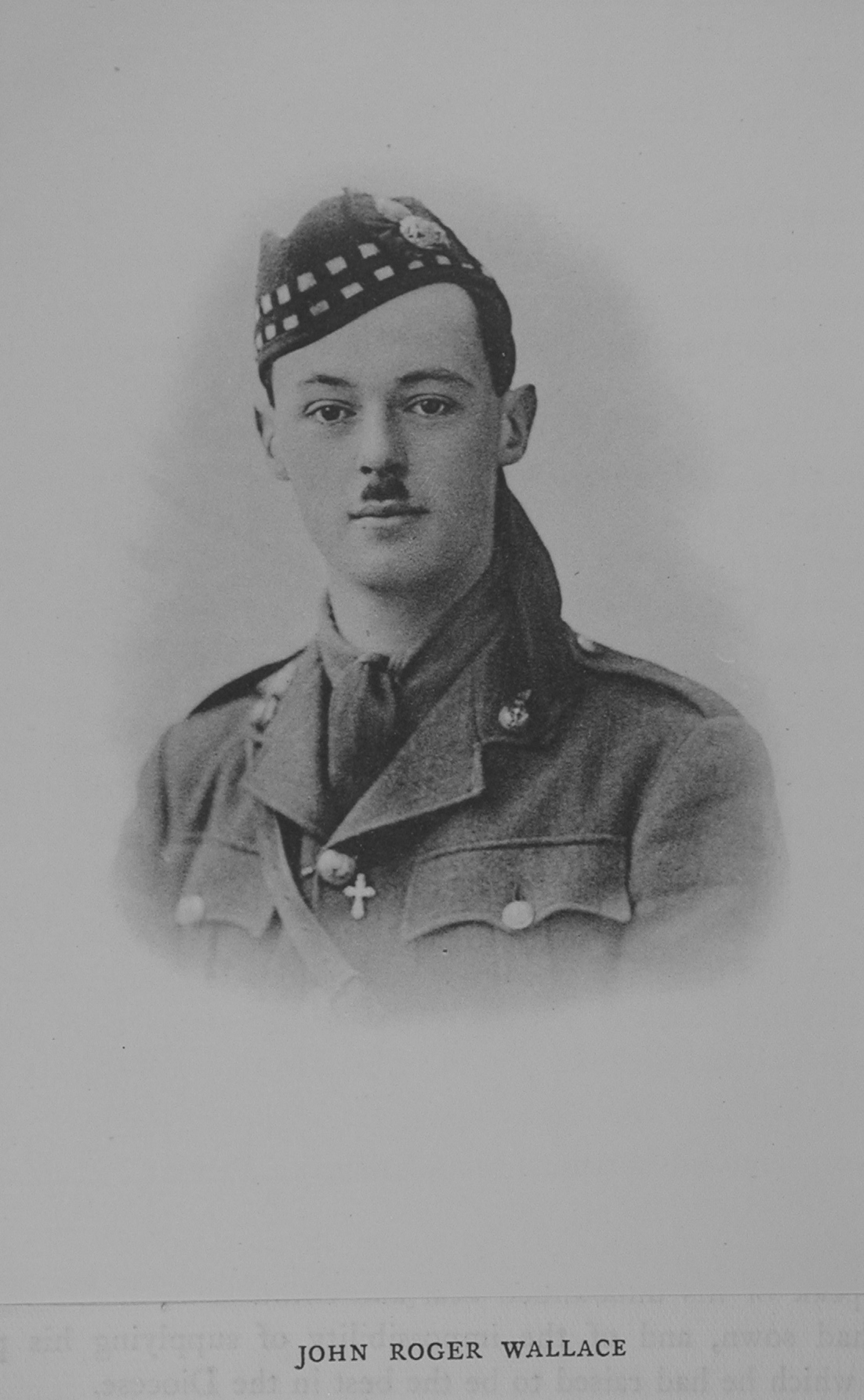
Wallace J R 2nd Lt 1st Royal Scots Fusiliers

Wallace J R 2nd Lt 1st Royal Scots Fusiliers

SECOND LIEUTENANT J. R. WALLACE

1ST BATTALION THE ROYAL SCOTS FUSILIERS

JOHN ROGER WALLACE was the younger son of Roger William Wallace, к.с., of 36, Campden Hill Gardens, London.

He entered the School in 1907, and left in 1912. He was a fine short-distance runner, and contributed largely to winning the Wrigley Cup for his House in 1912.

In 1913 he went up to Oriel College, Oxford. At the beginning of the War he joined the Artists’ Rifles and went with them to France, where he was given a Commission in the and Battalion of the Royal Scots Fusiliers. In December, 1914, he was invalided home after an attack of pleurisy, caught in the trenches. Early in 1915, after taking out a draft of men from Ayr, he was transferred to the 1st Battalion of the Regiment.

He was struck in an advanced trench near Ypres by a mortar bomb, but refused to be carried off until he had handed over the trench to his Commanding Officer. He was taken to a dressing station about a mile in the rear, but died there shortly afterwards, on April 22nd, 1915. Age 20. The following is an extract from a letter written by his Commanding Officer:-

“His pluck and unselfishness will always be remembered in the Scots Fusiliers. His one idea was that the men wounded at the same moment as himself should be cared for first. Both in his life and in his death he was a splendid example.”

“A braver man and a truer friend,” writes a Private, “I have never known.”

Source : Memorials Of Rugbeians Who Fell In The Great War Vol 1

Walford G H Major Suffolk Regiment

Walford G H Major Suffolk Regiment

MAJOR G. H. WALFORD

THE SUFFOLK REGIMENT

GEORGE HENRY WALFORD was the eldest son of Lieut. Colonel Henry Alexander Walford, Jr., 20th Hussars, of Foxborough Hall, Suffolk.

He entered the School in 1892, and was in the XI in 1896. In the same year he passed 7th into the R.M.C., Sandhurst. He passed out ist with honours, winning Queen Victoria’s Gold Medal and the Anson Memorial Sword, and was posted to the Suffolk Regiment in 1898. He served in the Somaliland War in 1903, entered the Staff College in 1911, and was appointed to the Staff, and gazetted Major, in 1914.

On the outbreak of War he was appointed General Staff Officer, 3rd Grade, of the Second Army, was shortly promoted to the and Grade, and appointed Brigade Major to the 84th Infantry Brigade, 28th Division. He went to the Front with this Division in January, 1915.

He was mentioned in Despatches of May 31st, 1915, for “gallant and distinguished Service in the Field.”

He was killed in action at Zonnebeke, on April 19th, 1915, and was buried in the Ramparts Cemetery at Ypres. Age 36.

General Sir H. L. Smith-Dorrien, G.C.B., D.s.o., wrote:-

“His loss is a great one to the cause, for he was a splendid Staff Officer, and a gallant soldier.’

Two other Generals said of him

“I have never met a Staff Officer in whom I had greater confidence, and I am sure he would have risen very high if his life had been spared.”

“It was a real joy to serve with him, and he is a gallant example to us all of a good friend, a good soldier, and a good man in every sense.”

Two brother Officers wrote:-

“If ever a man died doing his duty, it was he. He was too fearless, and never thought of himself at all.”

“He had done magnificent work out here, and all who came in contact with him loved him. His loss is deplored, not only by the Brigade, but by the whole Division. He was a brave man and a good man.”

One of his men wrote:-

We all loved him he was like a father to us.”

He married, in 1910, Inez, only daughter of Dr. Oliver Fereira Naylor Treadwell, Assistant Medical Inspector of the Prison Commission, and left one infant son.

Source : Memorials Of Rugbeians Who Fell In The Great War Vol 1

Vincent J T C 2nd Lt Welsh Regiment

Vincent J T C 2nd Lt Welsh Regiment

SECOND LIEUTENANT J. T. C. VINCENT

3RD BATTALION THE WELSH REGIMENT

JAMES TREVOR CRAWLEY VINCENT Was the only son of Hugh Corbet Vincent, of Bronwydd, Bangor, N. Wales, and of Bronwen Adelaide his wife.

He entered the School in 1909, left in 1913, and joined the 2nd Battalion of the Welsh Regiment, then quartered at Bordon, in February, 1914, there remaining till the declaration of War. Being too young to go with his Regiment to the Front he was sent to the Depot at Cardiff, where he was employed in training recruits for Lord Kitchener’s Army, until January, 1915, when he rejoined his Regiment at the Front.

He was killed near Ypres on May 9th, 1915, when leading his Platoon against the German trenches. His body was subsequently buried in the English Cemetery at Richebourg-St. Vaast, beside that of Lieutenant Willis, a brother officer, killed in the same action. Age 19.

The Officer Commanding the Regiment wrote:-

“We shall all miss him, and the Service has lost a very promising young officer.”

Source : Memorials Of Rugbeians Who Fell In The Great War Vol 1

Blake C Lt Royal Army Medical Corps

BLAKE, CECIL, Lieut., Royal Army Medical Corps, elder s. of the late John Blake, of Burghersdorp, South Africa, by his wife, Susan Margaret Van Renen (East London, South Africa); b. Burghersdorp, Cape Province, South Africa, 7 Oct. 1888; educ. privately, and at Rhodes College; was a Medical Practitioner; gazetted Lieut. Royal Army Medical Corps 15 Aug. 1918, and sent to the Prisoners of War Camp, Rugeley, co. Stafford, and died at Cannock Chase Military Hospital 30 Oct. following, of septic pneumonia, contracted while on duty. Buried in Cannock Chase Military Cemetery. He m. at Edinburgh, 18 May, 1918, Aline Jean (69, Merchiston Crescent, Edinburgh), only dau. of the late Rev. W. J. Macdonald, of Kirkcaldy; s.p.

Source : De Ruvigny’s Roll Of Honour Vol 5

Blake C E N Major MC Royal Field Artillery

Blake C E N Major MC Royal Field Artillery

BLAKE, CHARLES EDWIN NORMAN, M.C., Major, Royal Field Artillery, уг. 8. of Charles Blake, of Kingswood, Beckenham, Sheffield Steel Manufacturer, by his wife, Elizabeth, dau. of William Cundy, of Newry, co. Down; b. Camberwell, London, S.E., 4 April, 1886; educ. Cranleigh School, where he was a Cadet in the School Corps; having left school, joined the Artists’ Rifles Territorials in 1906, and served five years with that regiment; retired in 1913, but at once, on the outbreak of war in Aug. 1914, rejoined his old corps, and volunteered for active service in its Transport Section, serving with the Expeditionary Force in France and Flanders from Oct. 1914; obtained a commission in the Special Reserve, and was gazetted 2nd Lieut. R.F.A. 20 Aug, 1915, being promoted Lieut. May, 1917, Capt. Sept. 1917, and Major 18 June, 1918; during his four years in France he saw much fighting, and was killed in action near Soissons 30 July, 1918, when in command of his battery. Buried at Chazelle. His Commanding Officer, Col. G. B. Daubeny, wrote: “He was instantaneously killed by a shell, together with two other officers in the battery, which he has commanded with gallantry and distinction. In him I lose a good officer and a personal friend. He was one of the most popular officers in the brigade, all ranks of which will greatly feel his death.” He was awarded the Military Cross [London Gazette, 1 Jan. 1918], for an act of conspicuous bravery; unm.

Source : De Ruvigny’s Roll Of Honour Vol 5

Blackley J Pte R/423180 Army Service Corps

BLACKLEY, JOHN, Private, Remount Coy. Army Service Corps, eldest s. of the late William Blackley, of Patagonia, Argentine Republic, Rancher, by his wife, Frances, dau. of James Smith: b. Falkland Islands, 16 Jan. 1882; educ. Argentine; enlisted in the Army Service Corps 30 July, 1918, and died at Windyknowe Hospital, Blundellsands, 3 Jan. 1919, of pneumonia, contracted while on service. Buried at Carlaverock. He m. at Glasgow, 26 Sept. 1917, Mary Robson (20, Smith Street, Hillhead, Glasgow), dau. of George Miller, and had a son, William George, b. 13 June, 1918.

Source : De Ruvugny’s Roll Of Honour Vol 5


Black J E Captain MC Royal Army Medical Corps

Black J E Captain MC Royal Army Medical Corps

BLACK, JAMES ELLIOT, M.C., Capt., Royal Army Medical Corps, attd. 8th (Service) Battn. The Bedfordshire Regt., a. of the late Major Adam Elliot Black died 31 May, 1893), Officer Commanding Clyde Brigade of Royal Engineer Submarine Mines, by his wife, Mary Bruce Murray (Finglen Cottage, Campste Glen, co. Stirling), dau, of John Bruce Murray; b. 5. Bruce Street, Glasgow, W., 10 March, 1887; educ. Cargilfield; Fettes College; Glasgow University, and University College, London; was studying for a D.P.H., Cambridge University, when war broke out in Aug. 1914, after which he volunteered for foreign service, being gazetted Lieut. Royal Army Medical Corps (Special Reserve) on the 22nd of the following month, and promoted Capt. April, 1915; served with the Expeditionary Force in France and Flanders from 7 Nov. 1914, attached to No. 8 Casualty Clearing Station, near Bailleni, until 16 Feb. 1916, when he joined the 8th Bedfordshire Regt., and was killed in action near Loos 19 April, 1917. Buried in Philosophe British Cemetery, Mazingarbe.

Col. Lord Ampthill, Officer Commanding 8th Bedfordshire Regt., wrote: He established his Ald Post as near the fighting line as possible, and there he worked with unremitting zeal and devotion and without a thought of danger till the end. I can honestly tell you that no medical officer could have been more beloved in the battalion than he was. We all feel that we shall never see his like again. There is nobody in the battallon whose loss we could feel more keenly.” He was mentioned in Despatches [London Gazette, 1 Jan. 1916] by F.M. Sir John (now Lord) French, for gallant and distinguished service in the field, and was awarded the Military Cross London Gazette, Nov. 1916]: “For conspicuous gallantry and devotion to duty in action. He rendered valuable service when attending the wounded under heavy machine-gun and shell fire. Later he went out into No Man’s Land to succour the wounded.” Unm.

Source : De Ruvigny’s Roll Of Honour Vol 5

Black H C Pte 2nd Otago New Zealand Expeditionary Force

BLACK, HUGH CLARK, Private, No. 62913, 2nd Otago Battn. New Zealand Expeditionary Force, s. of Hugh Black, of Gortfad, Garvagh, co. Derry, by his wife, Mary Jane, dau. of John Wilson, of Ballymacilciw, co. Derry; b. Ballintemple, Garvagh aforesaid, 21 April, 1881; educ. Glenullin, co. Derry; went to New Zealand in Jan. 1913, and settled at Spreydon, Christchurch, as a Farmer and Pork Curer; enlisted 1 Sept. 1917; served with the Expeditionary Force in France and Flanders from April, 1918, and was killed in action at Avesnes, Bapaume, 24 Aug, following. Buried at Avesnes, near Bapaume; unm.

Source : De Ruvigny’s Roll Of Honour Vol 5

Bishop H G Pte 1st East Kent Regiment

BISHOP, HERBERT GEORGE, Private, No. 12895, 1st Battn. (3rd Foot) The Buffs (East Kent Regt.), s. of William James George Bishop, of 6, The Street, Old Shoreham, co. Sussex, Foreman Fruit Grower, by his wife, Ellen, dau. of the late James Duke; b. Old Shoreham aforesaid, 9 Oct. 1896; educ. Church School there joined the 6th (Territorial) Cyclist Battn. The Royal Sussex Regt. 9 Feb. 1916, and was subsequently transferred to the Buffs; served with the Expeditionary Force in France and Flanders from the following Sept., and was killed in action 16 Oct. 1917. Buried in the Corkscrew British Cemetery, Lievin; unm.

Source : De Ruvigny’s Roll Of Honour Vol 5
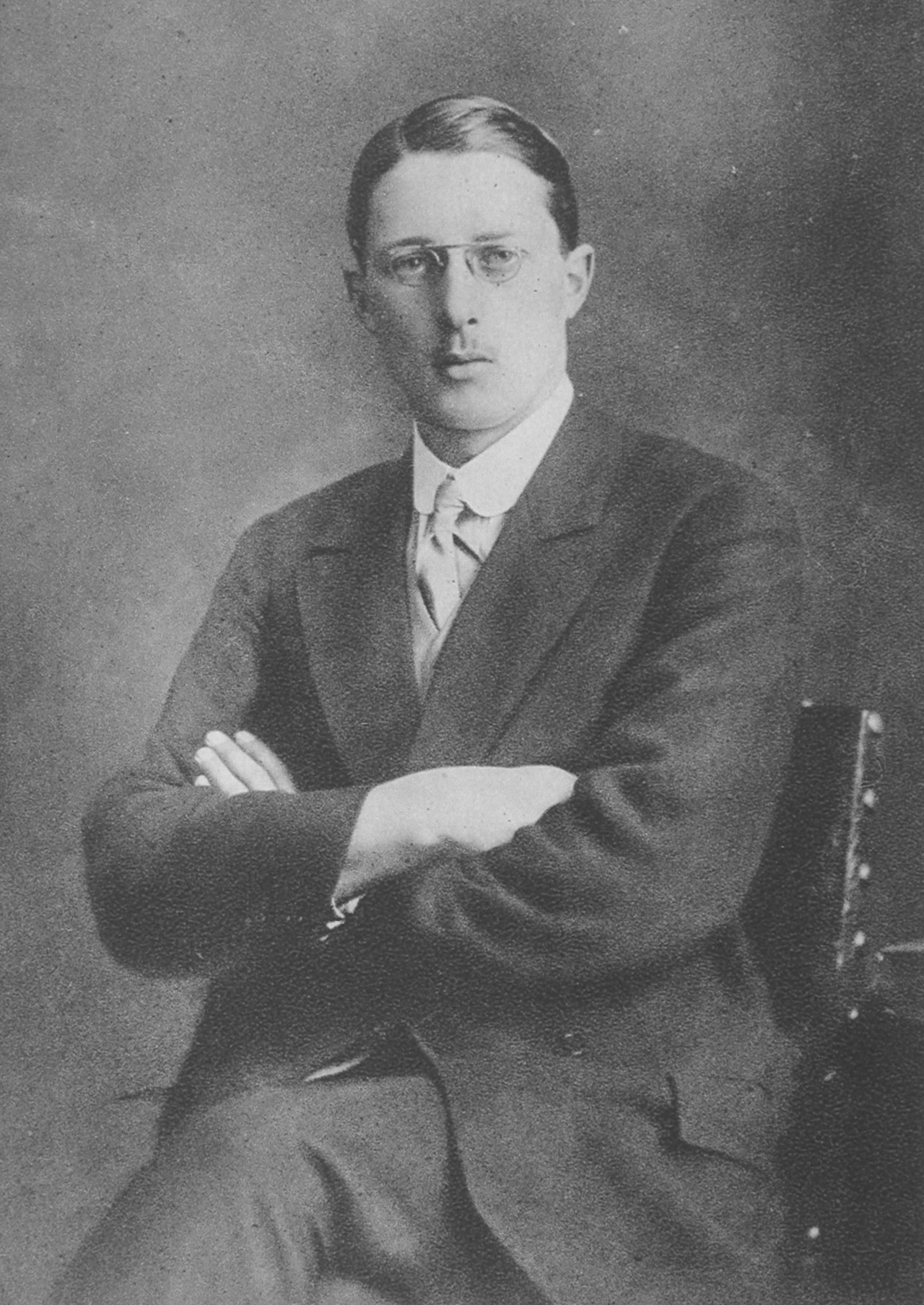
Biscoe A F Lt Army Service Corps

Biscoe A F Lt Army Service Corps

BISCOE, ARCHIBALD FAIRHEAD, Lieut., Motor Transport, Royal Army Service Corps, attd. 62nd Siege Battery, Royal Artillery, eldest s. of Henry Biscoe, of 48, Belvedere Road, Upper Norwood, by his wife, Kate, dau. of John (and Catherine) Mearns; b. Chatham, co. Kent, 15 Feb. 1881; educ. City of London School, and College of St. Armand, Ghent; was gazetted 2nd Lieut. Army Service Corps in May, 1916 : promoted Lieut. May 1917; served with the Expeditionary Force in France and Flanders from May, 1916; was attached to the 62nd Siege Battery, Royal Artillery, in June, 1917, and subsequently to the 406th Coy. Workshops, and died at No. 26 Casualty Clearing Station 22 Feb. 1919, of broncho-pneumonia, contracted while on active service. Buried in Cologne Cemetery. His Commanding Officer wrote: He was the most capable officer I have ever had.” He m. at Harrow, 20 Dec. 1916, Vyrnwy (Dee Bank, Corwen), dau. of the Rev. Owen Hughes, and had a son: Henry Edward Vaughan, b. 4 Sept. 1917.

Source : De Ruvigny’s Roll Of Honour Vol 5