Gatacre J K Major Indian Army

Gatacre J K Major Indian Army


11TH KING EDWARD’S OWN LANCERS (PROBYN’S HORSE)

JOHN KIRWAN GATACRE was the younger son of Major-General Sir William Forbes Gatacre, K.C.B., D.S.O., and grandson of Edward Lloyd Gatacre (O.R., 1818), of Gatacre, Shropshire.

He entered the School in 1898 and passed into the R.M.C., Sandhurst, in 1901. He was gazetted to his Regiment, then called the Prince of Wales’ Own Bengal Lancers, in 1902, and was promoted Captain in 1911. Не served various periods as Squadron Officer, Quartermaster, and Adjutant in his Regiment, and in 1912 was appointed for Special Duty in attendance on His Majesty King George, at the Delhi Durbar. In 1913 he qualified for the Staff College at Camberley.

He won many Cups for tent pegging and swordsmanship, and in 1913, the Kaidir Cup for pig-sticking, the Blue Ribbon of India. In the same year he was one of the four representatives of England in the Fencing Tournament in Paris, in which the English team gained the third prize.

On the outbreak of War he was attached to the 4th Hussars, crossed over to France on August 14th, 1914, and took part in the Retreat from Mons and the Battles of the Marne and of the Aisne. On September 20th he was promoted Major “for distinguished service in the field.” While reconnoitring a position, held in great strength by the enemy at the Monastery of Mont des Cats, near Godewaersvelde, a few miles from Hazebrouck, he was killed, on October 12th, 1914. Age 31.

He was mentioned in Despatches of October 8th, 1914, and was awarded the Cross of the Legion of Honour (Croix de Chevalier).

The following are extracts from a notice in the “Indiaman,” of October 31st, 1914:

“All those who knew Captain Gatacre will mourn one of the bravest spirits in the British Expeditionary Force fighting for their country’s honour. He was a born soldier. Fighting seemed to him, as he said in one of his most recent letters, the most natural thing in the world. He was absolutely fearless and was possessed of one of those iron constitutions which seem to be immune from fatigue. He was a fine rider and sportsman. He had won the Kaidir Cup and, as an experienced swordsman, he was very near winning the prize for the best Man-at-Arms in the Army at the Delhi Durbar. He had a sword made from his own design just before the War, and took it with him to the Front. How well he wielded it is known by his gallant exploits. It is said that on one occasion he engaged three Uhlans single-handed and killed them all.

“Whatever John Gatacre did, he did well. He possessed considerable talent as an artist in Water Colour, and the vivid actuality of his sketches at the Simla Fine Art Exhibition, where he was a Prize Winner, will be remembered by all Simla residents of the time. His pictures were, like himself, full of individuality, and distinctive by reason of their rugged and rare simplicity; but there is no doubt that his métier lay in War. It was there that his splendid, soldierly qualities found their fit expression, and now that he is dead death has scarcely ever seemed so nearly an empty name.”

Source : Memorials Of Rugbeians Who Fell In The Great War Vol 1


Gatacre J K Major Indian Army

Source : The Sphere 31st Oct 1914

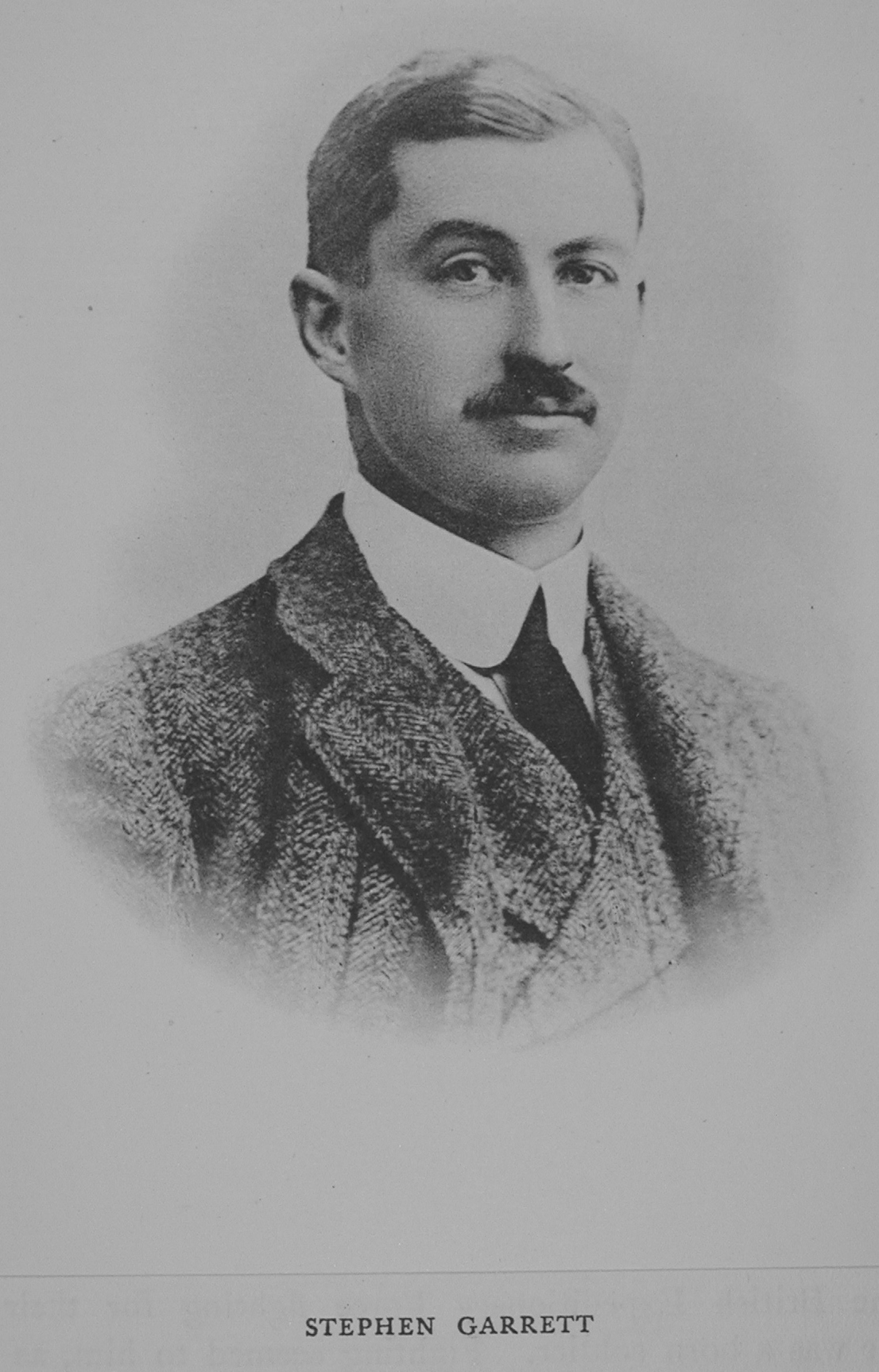
Garrett S Captain 4th Suffolk Regiment

Garrett S Captain 4th Suffolk Regiment

4TH BATTALION THE SUFFOLK REGIMENT, T.F.

STEPHEN GARRETT was the third son of Frank Garrett, J.P. (O.R., 1860), M. INST. C.E., and of Mary Anne his wife, of Aldringham House, Saxmundham, Suffolk.

He entered the School in 1892, was in the XV in 1896, and left in 1897.

He was at Trinity College, Cambridge, 1897-99, and studied at Düsseldorf, 1899-1900. In 1900 he went into the family business, Richard Garrett and Sons, Ltd., at Leiston, Suffolk, and became a valued Director in that Company. He joined the Territorial Force and rose to be Captain in the 4th Battalion of the Suffolk Regiment.

He was killed on March 12th, 1915, at the Battle of Neuve Chapelle, and was buried in the cemetery at Estaires, France. Age 36.

The Officer in command of his Regiment at the time, Major Cruddas, 41st Dogras, wrote:-

“He met his end like a true and gallant gentleman, at the head of his men. A life lost like this is a life gained in a cause such as we are fighting for.”

He married in 1905, and left a widow and four children.

Source : Memorials Of Rugbeians Who Fell In The Great War Vol 1

Fraser J H Lt 2nd Gordon Highlanders

Fraser J H Lt 2nd Gordon Highlanders

LIEUTENANT J. H. FRASER

2ND BATTALION THE GORDON HIGHLANDERS

JAMES HOWIE FRASER was the only son of Edward Cleather Fraser, C.M.G., Member of the Legislative Council of Mauritius, and of Mary Josephine his wife.

He entered the School in 1901, and went on to the Woolwich branch of the R.M.C., Sandhurst, in 1906, passing out with Prizes for Tactics and Military Engineering. He served with his Regiment in India and Cairo, and was promoted Lieutenant in 1909.

He went to the Front early in October, 1914. He was sent forward with some of his men to see if a farmhouse was held by the enemy, and in so doing was shot on October 30th, 1914, at Klein Zillebeke Farm, near Ypres. Age 26.

He was mentioned in Despatches of January 14th, 1915.

His Colonel wrote:-

“He was one of the very finest Officers I have ever met, absolutely fearless, a splendid leader, always cool, and every soul in the Battalion admired him for his splendid soldierly qualities, and loved him for his character, which was an ideal one. I cannot tell you what his loss is to me personally, and from a military point of view the Army has lost one of its very best Officers.”

And one of his men said:-

“He was a grand gentleman. All the men loved him, and he was one of our best Officers.”

Source : Memorials Of Rugbeians Who Fell In The Great War Vol 1


Fraser J H Lt 2nd Gordon Highlanders

FRASER, JAMES HOWIE, Lieut., 2nd Battn. Gordon Highlanders, only s. of Edward Cleather Fraser, C.M.G., Member of the Council of Government, Mauritius, and a Partner in the firm of Ireland, Fraser & Co., of Port Louis, by his wife, Mary Josephine, dau. of the late Thomas Howie, and gdson. of the late James Fraser, of Newfield, Blackheath Park; b. Blackheath, London, 4 April, 1888; educ. Summerfields, near Oxford, Rugby and the Royal Military Academy, Woolwich, out of which he passed first in Summer Term 1907, with prizes for Tactics and Military Engineer-ing; gazetted 2nd Lieut. to the Gordon High-landers, 9 Oct. 1907, and promoted Lieut. 20 March, 1909; joined the 2nd Battn. in India, and served with it there and in Egypt, and with the Expeditionary Force in France and Flanders, and was killed in action 30 Oct. 1914, in the attack on Zillebeke Farm House. He was unm., and was buried at Klein Zillebeke. Lieut. Fraser was mentioned in F.M. Sir John (now Lord) French’s Despatch of 14 Jan. [London Gazette, 17 Feb.] 1915, for gallant and distinguished service in the field.

Source : De Ruvigny’s Roll Of Honour Vol 1


Francis B H 2nd Lt 3rd Royal Scots

Francis B H 2nd Lt 3rd Royal Scots

SECOND LIEUTENANT B. H. FRANCIS

BATTALION THE ROYAL SCOTS (LOTHIAN REGIMENT)

BASIL HUGH FRANCIS was the only surviving son of Captain Harold Hugh Francis, The Royal Scots, of Manor House, Long Stratton, Norfolk.

He entered the School in 1909, was admitted to University College, Oxford, in March, 1914, and received his Commission in the 3rd Battalion The Royal Scuts in August of the same year.

He was shot, in the trenches, near La Bassée, on February 4th, 1915, and was buried in the grounds of the Château of Gorre, near Béthune. Age 19.

His Colonel and other Officers wrote in the warmest terms of the impression he had made during his short time with the Regiment, and the following extract from a letter, written by one of his Company, without the least idea that it would ever be seen by his relatives or friends, shows the feelings of his men:”We lost,” it says, “our Company Lieutenant last week by a German sniper. He was called Francis, and he was an awful nice man. He was a true Tommy Atkins’ friend. He was too good to live, and too brave to lose. All my platoon are sorry to lose such a good Officer.”

Source : Memorials Of Rugbeians Who Fell In The Great War Vol 1

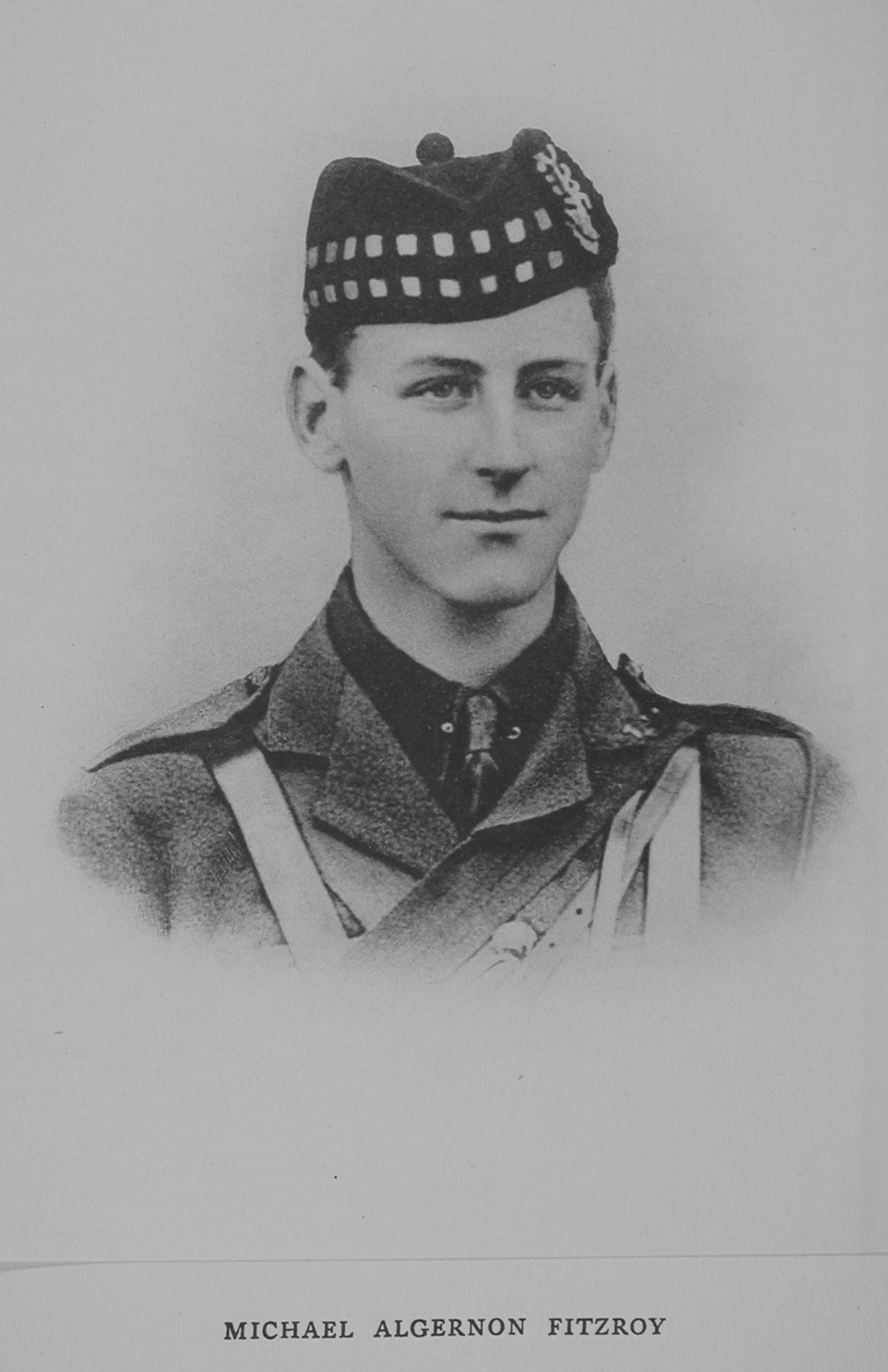
Fitzroy M A Captain 4th Seaforth Highlanders

Fitzroy M A Captain 4th Seaforth Highlanders

CAPTAIN M. A. FITZROY

4TH (ROSS HIGHLAND) BATTALION SEAFORTH HIGHLANDERS

(ROSS-SHIRE BUFFS, THE DUKE OF ALBANY’S), T.F.

MICHAEL ALGERNON FITZROY was the second son of Captain the Hon. E. A. FitzRoy, M.P., late Ist Life Guards, of Fox Hill, West Haddon, Northamptonshire. He entered the School in 1909, and left in 1913 for Oriel College, Oxford.

At the outbreak of the War he was at Rheims, and on returning to England he joined the 4th Battalion Seaforth Highlanders and obtained a Commission as Second Lieutenant, September, 1914.

In November, 1914, he went to the Front with his Regiment and took part in the Battle of Neuve Chapelle, in which the Seaforth Highlanders distinguished themselves. On this occasion he was slightly wounded in the shoulder, but was able to carry on. He was promoted Captain on March 11th, and was killed on April 16th, 1915, near Neuve Chapelle, while working at an advanced listening post. He was improving this post to ensure the safety of the men who occupied it, as it was exposed to enfilade and cross fire. Age 19.

Many letters received from Officers and men alike testify, not only to his popularity with all ranks, but to his ability as a leader, and power as a disciplinarian, of which his rapid promotion at so early an age furnishes an additional proof, while his high character had made a marked impression upon those who had come into contact with him during the year he had spent at Oxford.

Source : Memorials Of Rugbeians Who Fell In The Great War Vol 1


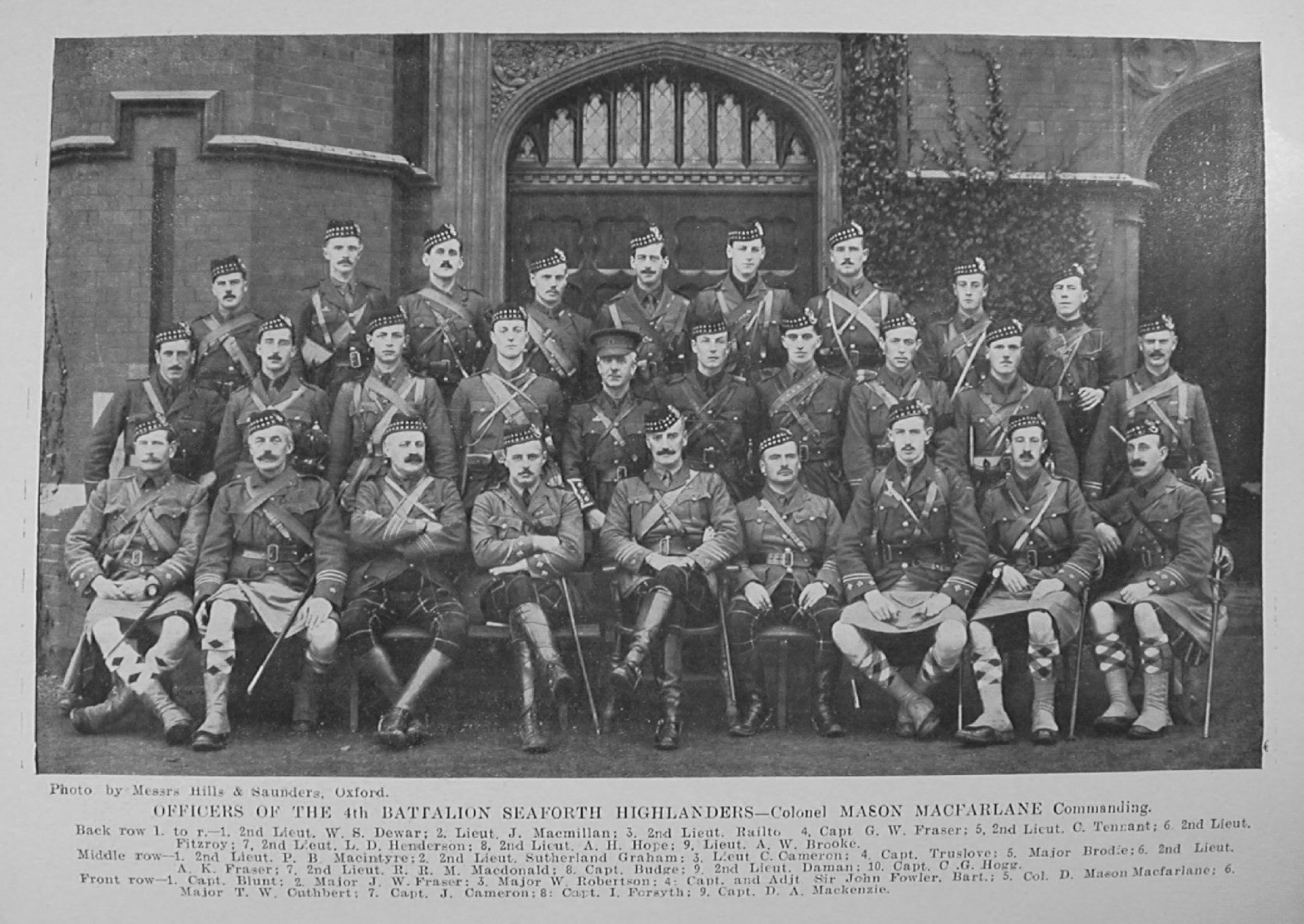
Seaforth Highlanders Officers Of The 4th Btn

Source : The Sword Of The North Highland Memories Of The Great War-Dugald MacEchern

Fargus F B A Lt 9th London Regiment

Fargus F B A Lt 9th London Regiment

LIEUTENANT F. B. A. FARGUS

9ти (COUNTY OF LONDON) BATTALION, THE LONDON REGIMENT (QUEEN VICTORIA’S RIFLES), T.F.

FREDERICK BRIAN ARTHUR FARGUS was the younger son of Henry Robert Fargus, to Lancaster Place, Strand, and of Milton House, Strawberry Hill, Middlesex.

He entered the School in 1901, and left in 1904.

Having been articled to his father he was admitted to the Roll of Solicitors in 1911. He was gazetted Second Lieutenant in the 9th Battalion of the London Regiment in 1911, and Lieutenant in 1912. He proceeded with his Battalion to the Front on November 4th, 1914, as Senior Subaltern in command of the Machine Gun Section.

He was shot in the forehead by a German sniper on January 1st, 1915, at La Petite Douve, Wolverghem, Flanders. Age 27.

The Officer Commanding his Battalion wrote:-

“One and all of us will miss his cheerful, bright presence, and his devotion to his duties has been a bright example to us all, and as for his gun team, they absolutely loved him, in fact worshipped him. He was so devoid of fear that he was invaluable in patrolling and reconnoitring.”

A Non-Commissioned Officer of his section wrote:-

“He was absolutely a man after our own hearts, and we are proud to know that he died in wandering about among his Infantry, putting courage into them under shell fire.”

And another soldier said:-

“Not only have we lost a man who was an ideal Officer and a good soldier, but we have lost a personal friend, for he was never so happy as when he was with the section or doing something for us.”

Source : Memorials Of Rugbeians Who Fell In The Great War Vol 1

Evelegh R C Captain Oxford And Bucks Light Infantry

Evelegh R C Captain 2nd Oxford And Bucks Light Infantry

CAPTAIN R. C. EVELEGH

2ND BATTALION THE OXFORDSHIRE AND BUCKINGHAMSHIRE LIGHT INFANTRY

ROSSLYN CURZON EVELEGH was the elder son of Col. Frederick John Evelegh, of the Oxfordshire Light Infantry, and of Moriet Frances his wife.

He entered the School in 1899, and left for the R.M.C., Sandhurst, in 1902.

He was gazetted to the 2nd Battalion Oxfordshire and Buckinghamshire Light Infantry, and joined them on their return from India in November, 1903. He was A.D.C. to his uncle, Major-General Creagh, in Mauritius, 1906-08. After returning home invalided from Mauritius, he joined his Regiment in England in 1909, and was promoted Captain in April, 1914.

He went to France in 1914 with the First Expeditionary Force, and fought in the Retreat from Mons and the battles of the Marne and the Aisne. He was wounded on September 16th, but continued on duty, and was killed at Soupir, near Vailly, on the Aisne, on September 19th, being struck over the heart by a piece of shell while seeing his men into shelter in a cave. Age 29.

His brother Officers all spoke of his “splendid courage, and of his disregard of danger and neglect of self in caring for his men.” Two days before he was first wounded he saved sixteen wounded Germans from being burnt alive in a farmhouse which had been set on fire by German shells. The danger was so great that leave was refused for more than two or three of his own men to accompany him.

His Colonel wrote:-

“He had set a splendid example to men and Officers by his great courage and devotion to duty, especially in continuing to command his Company and look after his men, when wounded in five places. The Battalion lost in him one of its most useful Officers and a dear comrade and friend.”

Source : Memorials Of Rugbeians Who Fell In The Great War Vol 1


Evelegh R C Captain Oxford And Bucks Light Infantry

CAPTAIN ROSSLYN CURZON EVELEGH,

OF THE 52nd (OXFORDSHIRE & BUCKINGHAMSHIRE) LIGHT INFANTRY.

HERO in the highest sense of the word was Captain Rosslyn Curzon Evelegh, of the 52nd (Oxfordshire and Buckinghamshire) Light Infantry, for at the imminent peril of his life he obeyed that most difficult command “love your enemies.”  In all the history of the world it is certain that no war has been conducted in a manner more opposed to the tenets nor only of Christianity but also of humanity, then that of which the Germans have been proved guilty since their legions burst upon devoted Belgium, in August 1914.

The world is aghast with horror at instances of War frightfulness which have been testified to by statesmen like Lord Bryce, formerly ambassador at Washington so appalling have been some of these acts that one might have partnered if not condoned the allied armies had they retaliated in kind and that abstinence does indeed we down to their eternal gloryIn all the history of the world it is certain that no war has been conducted in a manner more opposed to the tenets nor only of Christianity but also of humanity then that of which the Germans have been proved guilty since their legions burst upon devoted Belgians in August 1914 the world is aghast with horror at instances of War frightfulness which have been testified to by statesmen like Lord Bryce formerly ambassador at Washington. So appalling have been some of these acts that one might have pardoned, if not condoned, the allied armies, had they retaliated in kind and their abstention does, indeed, redound to their eternal glory.

To the high spirit of humanity with which Captain Evelegh and five of his Company were imbued, no fewer than sixteen of the enemy owe their lives. It was a few days before his death that Captain Evelegh, hearing the cries of wounded Germans who were imprisoned in a burning farm, entered the burning building with five of his men, and, at imminent risk of life, and with infinite pain, contrived to save sixteen lives. Surely there is no finer example extant of the heroism which counts no cost.

The Eveleghs have ever been a fighting race, and for five generations have served their country with distinction and renown. Captain Evelegh’s great-great-grandfather, General John Evelegh, served through the Siege of Gibraltar during the Napoleonic wars; while his son, General Henry Evelegh, of the Royal Horse Artillery, was with Sir John Moore during that great soldier’s Homeric Retreat upon Corunna, and received the Peninsular medal with the Benvenuto clasp. Distinguished indeed was the career of Captain Evelegh’s grandfather, who served both in the Crimea and the Mutiny, being three times thanked by Parliament and awarded the C.B. and the Legion of Honour.

Captain Evelegh was born at Eccles, Manchester, on May 13th, 1885, and was the elder son of the late Colonel Frederick John Evelegh, of the 52nd (Oxfordshire) Light Infantry, by Moriet Frances, his wife, niece of Field-Marshal Garnet Joseph Viscount Wolseley, K.P., G.C.B., G.C.M.G. From a preparatory school at Wellingborough, Captain Evelegh went to Rugby and thence to Sandhurst, being appointed a Second-Lieutenant in his father’s old regiment in 1905, joining at Chatham on the day it arrived back from India, whence he had gone with it seventeen years before.

In 1906 he was appointed A.D.C. to his uncle, General Arthur Gethin Creagh, C.B., commanding in Mauritius, and here he remained until 1909, when he was invalided home.

A fine sportsman, Captain Evelegh was an excellent polo player, and he also won many races in Mauritius on his own ponies. He was a keen man to hounds, swam well and played a good game at Rugby. He was fond of travel, and, in addition to his journeys to India and Mauritius, had also visited France, Germany, Malta and Tunis.

The Oxfordshire Light Infantry were among the first units of the Expeditionary Force to leave England, and they figured heroically during the retreat from Mons, and in the great battles of Le Cateau, the Marne and the Aisne.

It was in this latter protracted engagement that Captain Evelegh met his death-a death as heroic as his life.

On September 16th, 1914, he was wounded, and might, with honour, have retired to hospital. But his sense of duty triumphed over his physical ills and he refused to leave the trench, continuing to direct and care for his men, until, together with two brother-officers, he was killed by shell fire on September 19th.

“By continuing after being wounded,” wrote his Colonel, “he set an example of courage and devotion to duty of great value to Officers and men.”

He was buried in the churchyard of Soupir, near Vailly, close to the battlefield upon which he laid down his life for his country.

Evelegh R C Captain Oxford Bucks Light Infantry

Source : The Illustrated London News 24th Oct 1914
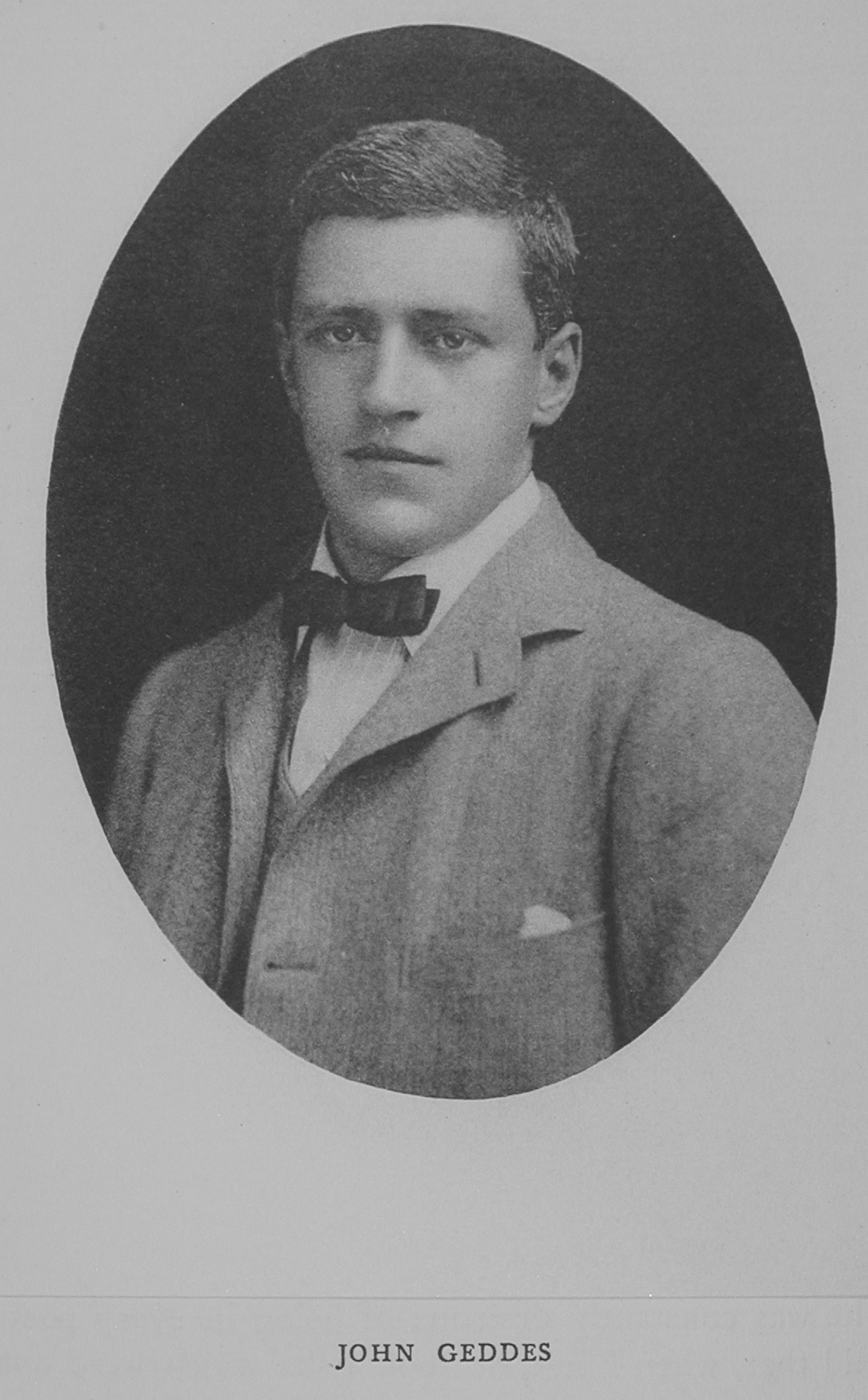
Egerton C C Lt 2nd West Riding Regiment

Egerton C C Lt 2nd West Riding Regiment

LIEUTENANT C. C. EGERTON

2ND BATTALION THE DUKE OF WELLINGTON’S (WEST RIDING REGIMENT)

CHARLES CALEDON EGERTON was the third and youngest son of General Sir Charles Comyn Egerton, G.C.B., D.S.O., and of Anna Wellwood, daughter of James Lawson Hill, Writer to the Signet, of Edinburgh.

He entered the School in 1900, and passed on to the R.M.C., Sandhurst, in 1904; was appointed Second Lieutenant in the Duke of Wellington’s West Riding Regiment, August, 1905, promoted Lieutenant in 1908, and was Adjutant of the Regiment from 1911 to 1914.

On the outbreak of War, though still a Subaltern, he was selected as Staff Captain of the 13th Brigade, 5th Division, to which the Regiment belonged, and in that capacity proceeded with the Brigade to Flanders, in August, 1914, and was present with it during the Retreat from Mons, at Le Cateau, Crépy-en-Valois, the Battles of the Marne and the Aisne, at La Bassée and the defence of Ypres, at St. Eloi, and at Hill 60, where he was killed by a fragment of shell striking him in the forehead. The 13th Brigade, which had captured the Hill, was under very heavy shell fire at the time. He fell on April 18th, 1915, and was buried in a cemetery on the ramparts of Ypres, adjoining the Lille gate of the town. Age 30.

He was three times mentioned in Despatches.

The General Officer Commanding the 2nd Army Corps wrote:-

“He was as gallant a soldier as ever walked, and we all shall mourn and miss him greatly.”

He married, in 1914, Madeleine, daughter of E. M. Clayton, of Cleagh-more, Ballinasloe, Co. Galway.

Source : Memorials Of Rugbeians Who Fell In The Great War Vol 1

Dixon C M Major 16th (Queens) Lancers

Dixon C M Major 16th Lancers

MAJOR C. M. DIXON

Bowden-Smith

16TH (THE QUEEN’S) LANCERS

CLIVE MACDONNELL DIXON, of Chapelgarth, Stokesley, Yorkshire, was the eldest son of Sir Raylton Dixon, Ship Builder, of Gunnergate Hall, near Middlesborough, and of Lady Dixon, daughter of Robert Walker, M. D.

He entered the School in 1884, left in 1887, and was gazetted to the 16th Lancers, then stationed at Lucknow, in 1890.

He saw service in the Chitral Campaign of 1895, receiving the Medal with Clasp, and went with the Indian Contingent to South Africa, on the outbreak of War in 1899. During the siege of Ladysmith he was A.D.C. to Sir George White, and Camp Commandant. He served through the whole War, was awarded the Brevet rank of Major, and received the two Medals with eight Clasps.

When this War was over he resigned his Commission, but immediately on the outbreak of War with Germany, Colonel MacEwen applied for Major Dixon to be his Second in Command, and he crossed to France with the Regiment in August, 1914.

He took part in the Retreat from Mons, and the Battles of the Marne and of the Aisne. He was mortally wounded when in temporary command of the 16th Lancers, who were gallantly holding their own in the trenches, against the enemy’s attacks, near Ypres, on November 5th, 1914. Age 45.

He was mentioned in Despatches of January 14th, 1915.

The following are extracts from letters from the General Commanding the Brigade, his Colonel and brother Officers :—

“It was a grand and gallant action, and gave one more proof of his splendid spirit. I never can tell you what good work he has done here, both in his skill and capacity in handling troops and in his grand constancy and cheerfulness in our moments of anxiety.”

“I sent in his name for gallantry, on the second day of the Mons Battle, for carrying out of action, under a heavy shell fire, a man of the 18th Hussars, whose horse was shot-a typical act on his part.”

“He was adored by everyone, Officers and men. One of the finest characters I ever came across.  He was a very fine soldier and did not know the meaning of fear.”

“He was acting most gallantly at the time he was shot, rallying some French who were next to us, and behaving in the splendid way that always stamped him as the very best. The example set is one that all might envy.”

And one of the men of the Regiment, writing home to his mother, said :-

“Major Dixon ran along the trench, telling us to stick it out and show what we were made of, and, as all of us were very fond of him, we did stick it out.”

He was a keen sportsman and, also, a successful artist. He exhibited several large pictures at the Royal Academy.

He married, in 1898, Lilian, daughter of John Bell, of Rushpool Hall, Saltburn, and Algiers, and had six children.

Source : Memorials Of Rugbeians Who Fell In The Great War Vol 1

Dixon C M Major 16th Lancers.

Source : The Illustrated London News 12th Dec 1914