Alexander G R 2nd Lt 13th East Surrey Regiment

Alexander G R 2nd Lt 13th East Surrey Regiment

SECOND LIEUT. GORDON REUBEN ALEXANDER, Royal Sussex Regiment attached 13th East Surreys, as  born in 1885 and educated at Harrow. He became a member of the Stock Exchange, and of his father’s firm, J. M. Alexander and Co. in 1908. A keen all-round sportsman, he was a member of the Corinthian Yacht Club, the Felixstowe and Coombe Golf Clubs, and the Sword Club. He won several trophies on the links, was Amateur Foils Champion of Great Britain, and took part in the Olympic Games.

Immediately on the outbreak of war he enlisted in the 10th (Stock Exchange) Battalion of the Royal Fusiliers, refused the commission that was offered to him in that regiment, and went to France with them in 1915 as a N.C.O. In the following year he accepted a commission in the 10th East Surreys, was transferred to the Royal Sussex and afterwards attached to the 13th East Surreys.

He was killed on 24 April, 1917, in an attack on Villers Plouich, north of Peronne. His death is thus described by a sergeant in his Company: “Everything went very well in the attack, and we captured the first machine gun and many prisoners. After the objective was gained and the men were digging in under his supervision, one was badly hit and Lieutenant Alexander told a man to go to his assistance, but went himself instead as there was a lot of shelling, and while bandaging the man they were both killed by a heavy shell.”

The same sergeant relates how on one occasion when he went round the Company for volunteers for a risky enterprise, the men volunteered “too freely” on learning that Alexander was in charge. “He happened to overhear some of it and told me afterwards that it was the greatest satisfaction he got out of the war-it paid him for everything.

“He died the death of a hero,” wrote a brother-officer,” and deserved the V.C. He was a man absolutely without fear and commanded the respect and affections of his Company to such an extent that I think every man would have cheerfully died for him.”

The Padre of his battalion wrote to his father: “We all loved him, and the camaraderie that existed between him and the other officers was really extraordinary. It was just like him to give his life in looking after one of his men.”

“He was a very gallant officer and liked by all,” wrote his Commanding Officer. Second Lieutenant Alexander was mentioned in Dispatches “for gallant and distinguished service in the Field.”

Source : The Stock Exchange War Memorial 1914-1918

Abrahams M N Major 16th Rifle Brigade

Abrahams M N Major 16th Rifle Brigade

Abrahams M N Major 16th Rifle Brigade

M AJOR MONTAGUE NATHAN ABRAHAMS, Rifle Brigade, was the son of Louis Abrahams of Northgate House, Regent’s Park. Born in 1875, he was educated at University College School. He entered his father’s business and in 1909 became a member of the Stock Exchange. He married in 1902 Annette, daughter of the late Sir Joseph Duveen.

On the outbreak of war he enlisted in the Old Boys’ Corps and became a platoon-commander. In April 1915 he was granted a commission as Captain, and with Lieut.-Colonel H. F. Darrell was mainly responsible for raising the 16th Battalion, Rifle Brigade. After training at Winchester and Aldershot, he was promoted Major before the battalion went to France in March 1916, in time to take part in much of the heaviest fighting of the Somme battle.

He was killed while leading his men in the assault on Beaumont Hamel on 3 September 1916, being then forty-one years of age. His Commanding Officer (Lieut.-Colonel Darrell, D.S.O.) wrote: “Every day Monty became dearer to me as a friend and more valuable as an officer. . . . When I say that he was unequalled as a Company Commander in the New Armies, I am not using terms of exaggerated praise but stating an absolute fact that was recognised by all who came into contact with him, from generals downwards. His men absolutely adored him, as well they might, and not only the officers of this regiment loved him but all the officers of the Brigade who had the honour of knowing him.”

Source : The Stock Exchange War Memorial 1914-1918

Steuart A J Sergt 43209 Royal Canadian Engineers

Steuart A J Sergt 43209 Royal Canadian Engineers

STEUART, ALAN JOHN, Sergt., No. 43209, Royal Canadian Engineers, 3rd Field Coy., Canadian Expeditionary Force, 5th s. of the late Capt. Robert Steuart, of Westwood, Linlithgowshire, H.E.I.C.S., J.P., D.L. (died March, 1913), by his wife, Alice Mary (Westwood, West Calder), dau. of Patrick W. V. Dudgeon, and grandson of Robert Steuart, of Carfin and Westwood; b. Westwood House, co. Linlithgow, 6 May, 1888; educ. Blairlodge School, Stirling, and Bromsgrove, co. Worcester; was an Electrical Engineer; went to British Columbia in 1912, and settled at Vancouver, but on the outbreak of war in Aug. 1914 at once enlisted in the Canadian Engineers, was promoted L.-Corpl. in Nov. 1914, and Sergt. in Jan. 1915; came over with the first contingent in Oct.; went to France in Feb. 1915, and was killed in action at Vlamertinghe, 24 April following, during the gas attack by the Germans at the second Battle of Ypres, when the Canadian Engineers (who were in the 3rd Infantry Brigade, establishing contact with the Allies, at the terminus to the north-west of Ypres) were ordered forward to dig protection trenches in front of the oncoming enemy; unm. Buried in Vlamertinghe Cemetery. His commanding officer wrote: “He was a very keen, good soldier, of untiring effort and unfailing cheerfulness. the officers.” As popular with the men as with the officers.

Source : De Ruvigny’s Roll Of Honour Vol 1

Stern L H 2nd Lt 13th London Regiment

Stern L H 2nd Lt 13th London Regiment

SEC.-LIEUT. LEONARD H. STERN, OF THE 13th LONDON REGIMENT.

A brilliant student, as well as a fine and promising Officer, was lost to the country by the death in action at the Battle of Fromelles, Flanders, of Second-Lieutenant Leonard H. Stern.

Born at Synagogue House, Stepney, September 12th, 1891, Second-Lieutenant Stern was the elder son of the Rev. J. F. Stern, the minister of the East London Synagogue, Stepney, and Mrs. Stern.

He was educated at the Preparatory School, Holly Hill, Hampstead, and University College School. Proceeding to Cambridge in 1910 as an Exhibitioner in Classics of Magdalene College, he was elected a Scholar of his College, in the following year. He also held the Cambridge Jewish Exhibition. In June, 1913, he graduated B.A.,taking a First Class in the Classical Tripos in that year, and in the following year a Second Class in the History Tripos.

An athlete as well as a scholar, he obtained his College Football Colours in 1912, and in the same year played for his College against Magdalene College, Oxford. He was a member of his school Cadet Corps, and subsequently joined the Cambridge O. T. C. He was also a member of the Cambridge Union Society.

During the whole time that he was at the University, Second-Lieutenant Stern took an active part in the affairs of the Cambridge Hebrew Congregation, and held in succession the several Synagogue offices. He was an occasional speaker at the Union, and read several papers at College Societies.

A young man always keenly interested in the welfare of others, he devoted a considerable part of his vacations to social work in East London, and was a manager of the Stepney Jewish Lads’ Club and the Oxford and St. George’s Jewish Lads’ Club. He also took a great interest in the Boy Scouts’ movement, and became a Scout Master of the seventh Stepney Troop, B. P. Scouts.

When war broke out he co-operated with other Toynbee Hall workers in the organisation of the East London Scouts for public service in the Metropolis. He enlisted as a private in the 13th County of London (Kensington) Regiment, and, a thorough soldier from the first, was not long before he was promoted to the rank of Sergeant.

In February, 1915, he obtained his Commission, and went to the front in the following month. On Sunday, May 9th, this young soldier, who, had his life been spared, would assuredly have accomplished much noble and useful work, met his heroic death. The Battle of Fromelles, which is the subject of a graphic letter contributed to the “Times” of June 19th, 1915, by an Officer who took part in the engagement, and which appears under the headlines “Kensingtons in Action,” “Imperishable Glory,” and “A famous Sunday described,” will live for ever in history, and though the bitterest sorrow must have been experienced by those who mourn the loss of the gallant men who fell that day, they must also have felt intense pride at the thought of the manner in which they fell.

A Service in memory of Lieutenant Stern was held on May 30th at the East London Synagogue, of which his father has been minister for more than a quarter of a century, when an eloquent tribute to the life and character of his “Son of the Sanctuary” was paid by the Rev. S. Levy, M.A., Minister of the New Synagogue, Stamford Hill, who had known him from his childhood.

How greatly Lieutenant Stern’s courage was admired, and how much he was loved by Officers and men of his Regiment alike, is shown by the following extracts from letters received after his death by his parents.

Col. Fred W. Lewis wrote:-

“You can indeed take consolation in the way your son met his death- he fell gallantly. He had a dangerous job, but he went through with it, setting a fine example to his men. I grieve to think it cost him his life. We have lost a promising Officer.”

Major H. G. Stafford wrote:-

“It may be some small consolation to you to know that he met his death leading his men in the true British way. Although he had only been with us a short time he had already won the esteem of his brother-officers, and gave great promise as an Officer. He was put in charge of the bombers and he showed zeal and initiative in his work. Col. Lewis… desires me to express his great regret at the loss of so promising an Officer.”

And from Captain Kimber, D.S.O., the following frank and sincere tribute was received:

“What splendid work he did with Knight. He was probably coming to tell me what had happened, but as he was hit just before he reached me, of course he had no opportunity…. He was a brave and splendid lad.”

Private Robert Knight, in a letter to his own parents, thus describes the last heroic deed by which Lieutenant Stern met his death:

“The scrap started at 5 a.m. on Sunday and I was a bomber. There was a forty minutes bombardment of their trenches, and then the mine which had been dug under their trench was let off. That was the signal for us to be up and doing. Over the parapet we went, right through their first line and then their second. Alas! they got their machine guns working and then the poor Kensingtons went down like chaff. We got to the third line of German trenches and our job was to bomb them out by walking along the trench. I was carrying the bombs and one bullet amongst them would have meant picking up the pieces. They were in a bag on my back. We got into a trench and could see the heads of five Germans coming along towards us. Mr. Stern (he is the Officer) handed me a bomb and then lit it. I threw it and it went up with four and a half Germans with it, but the other half accounted for me.. As we passed, Mr. Stern yelled, ‘look out,’ and shot off his revolver. This German had got up on his elbow and fired at my back. Mr. Stern’s shot was a fraction of a second earlier and so spoilt his aim. The bullet slid between the bag of bombs from the middle of my back along my ribs, out at my shoulder blade, and then through my left arm. It felt as though someone had hit me with a big stick. Mr. Stern took the bombs and went on alone. Poor fellow, he was seriously wounded further on and was unable to move. We took and held the third line, but supports could not get up in time. Of all the Kensingtons there are but forty-seven left unharmed. Poor 16th Platoon led the charge and were all wiped out. It was terrible. It took me seven hours to crawl out The swines of German snipers were potting at any wounded they saw move.”

The following very short extract, taken from a letter written by Private J. R. Lansberg, sums up, in a few words, the true character of this gallant

English-Jew, who so willingly gave his life for his Country :-

“He was wounded several times and died a hero’s death, thinking of others all the time.”

Source : The British Roll Of Honour Vol 1


Stern L H 2nd Lt 13th London Regiment

STERN, LEONARD HERMAN, 2nd Lieut. 13th Battn. (Princess Louise’s Kensington Battn.) The London Regt. (T.F.), elder s. of the Rev. Joseph Frederick Stern, Minister of the East London Synagogue, Stepney, since 1887; b. Synagogue House, Stepney, 12 Sept. 1891; educ. at The Preparatory School, Holly Hill, Hampstead, and University College School. Proceeding to Cambridge in 1910 as an Exhibitioner in Classics of Magdalene College, he was elected a Scholar of his College in the following year. He also held the Cambridge Jewish Exhibition. He graduated B.A. in 1913, taking a First-Class in the Honours Classical Tripos in that year. In the following year he gained Second-Class Honours in the History Tripos. He obtained his college football colours in 1912, in which year he played in the College team against Magdalen College, Oxford. He was a member of his school Cadet Corps, and subsequently joined the Cambridge O.T.C., in which he obtained the rank of Sergt. Throughout his stay at the University he took an active part in the affairs of the Cambridge Hebrew Congregation, holding in succession the several Synagogue offices. He was an occasional speaker at the Union Society, and read several papers at college societies. He devoted a considerable part of his vacations to social work in East London, being a manager of the Stepney Jewish Lads’ Club and the Oxford and St. George’s Lads’ Club. He also took a keen interest in the Boy Scouts movement, and became a scoutmaster of the 7th Stepney Troop B.P. Scouts.

On the outbreak of war he cooperated with other Toynbee Hall workers in the organisation of the East London Scouts for public service in the Metropolis. He enlisted in the ranks of the Kensington Battn. of The London Regt. with a number of the lads of his troop, and shortly after was made a sergt. of his company. He obtained his commission as 2nd Lieut. in the same regt. 6 Feb. 1915, and left for France on 7 March, was wounded several times, and was killed in action at the Battle of Fromelles, 9 May, 1915; unm. Col. Fred E. Lewis wrote: “He fell gallantly. He had a dangerous job, but he went through with it, setting a fine example to his men. I grieve to think it cost him his life. We have lost a promising officer.” And Major N. E. Stafford, in notifying his death to the Depot Officer of the regt., said: “He met his death leading his men in the true British way. Although he had only been with us a short time, he had already won the esteem of his brother officers, and gave great promise as an officer. He was put in charge of the bombers, and he showed zeal and initiative in his work. Col. Lewis, who has gone to hospital very ill, desires me to express his great regret at the loss of so promising an officer.”

Source : De Ruvigny’s Roll Of Honour Vol 1

Sterling W Pte 9097 1st West Yorkshire Regiment

STERLING, WILLIAM, Private No. 9097, West Yorkshire Regt., s. of William Sterling, of Hebburn, Joiner, by his wife, Isabella, dau. of James Turner; b. Hebburn New Town, co. Durham, 13 Feb. 1897; educ. there; enlisted on outbreak of war, 1914, and went with his regt. to France, 9 Jan. 1915. He died of wounds received while in action at Neuve Chapelle, 14 March, 1915. buried in Bailleul Cemetery; unm. A comrade wrote: “We fought hard all day, not having time to eat, and late at night we went about 50 of us to a billet to eat. Shortly afterwards the Germans shelled our place, and mostly all were either killed or wounded, Private W. Sterling being hit in the back with shrapnel and died two hours afterwards in a hospital near by.’

Source : De Ruvigny’s Roll Of Honour Vol 1

Sterling R W Lt 3rd Attd 1st Royal Scots Fusiliers

Sterling R W Lt 3rd Attd 1st Royal Scots Fusiliers

Sterling R W Lt 3rd Attd 1st Royal Scots Fusiliers

Source : For Remembrance – Soldier Poets Who Have Fallen In The War

STERLING, ROBERT WILLIAM, Lieut.,

3rd, attd. 1st, Battn. Royal Scots Fusiliers, elder s. of John Lockhart Sterling, of 30, Ashton Gardens, Glasgow, by his wife, Clara Frances, dau. of James Lowe, of Lancashire; b. Glasgow, 19 Nov. 1903; educ. Glasgow Academy; Sedbergh School, and Pembroke College, Oxford (scholar), where he took a second in Honour Mods., and had just completed his second year when war was declared in Aug. 1914; volunteered for foreign service and was given a 2nd Lieutenancy in the Royal Scots Fusiliers, 15 Aug. 1914, and promoted Lieut. March, 1915; took a draft of his regt. to France in the middle of Feb. 1915; was attd. to the 1st Battn., and was killed in action near Ypres, 23 April, 1915; unm. Buried in the Military Cemetery, Dickebusche. His commanding officer wrote: “He was in command of a trench which was of the utmost importance, and had held it most gallantly all day. He was killed about 8 p.m. I cannot tell you how much the Scots Fusiliers mourn his loss. He was quite one of my best.” In 1914 he wrote the Newdigate prize poem on the Burial of Sophocles, which he read at the Encaenia in the June of that year. His younger brother, 2nd Lieut. John Lockhart Sterling, 3rd Battn. R.S.F., attd. 2nd Battn. R.S.F., was killed on 28 Sept. 1915, before Hulluch, France. Two editions of The Poems of Robert Sterling were published by Oxford friends in 1916.

Source : De Ruvigny’s Roll Of Honour Vol 1
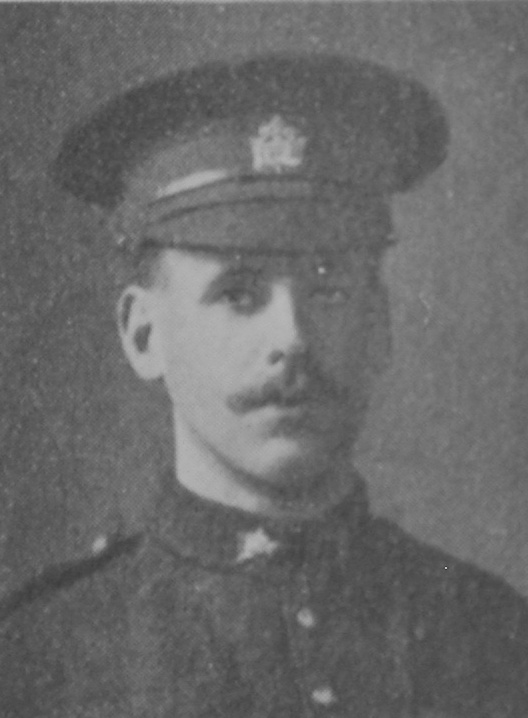
Stephenson H Pte 4020 10th King’s Liverpool Regiment

Stephenson H Pte 4020 10th Kings Liverpool Regiment

STEPHENSON, HAROLD, Private, No. 4020, 10th Battn. (Liverpool Scottish) King’s Liverpool Regt. (T.F.), 8. of John James Stephenson, of Shepstone Avenue, Walton, Liverpool, by his wife, Isabella, dau. of James Rigby; b. Liverpool, 7 March, 1893; educ. Venice Street School there; was a Pattern Maker; volunteered after the outbreak of war and joined the Liverpool Scottish, 2 Nov. 1914; went to France end of Jan., and was killed in action at Hooge, 16 June, 1915; unm.

Source : De Ruvigny’s Roll Of Honour Vol 1


Stenning L G Lt 6th Essex Regiment

STENNING, LESLIE GERALD, Lieut. and acting Capt., 6th Battn. The Essex Regt. (T.F.), yst. s. of Henry Stenning, of 16, Norfolk Road, Seven King’s, Civil Servant, by his wife, Selina, dau. of Richard Coleman; b. Ilford, co. Essex, 25 Feb. 1894; educ. County High School there; was a Bank Clerk; obtained a 2nd Lieutenancy in the Essex Territorials 1 Oct. 1913, and was promoted Lieut. 16 Oct. 1914; volunteered for Imperial service on the outbreak of war in Aug. 1914; went to the Dardanelles, 24 July, 1915; acted as Capt. from 3 Aug., and died on H.M. Hospital Ship Soudan on the 13th, from wounds received in action there; unm.

Source : De Ruvigny’s Roll Of Honour Vol 1

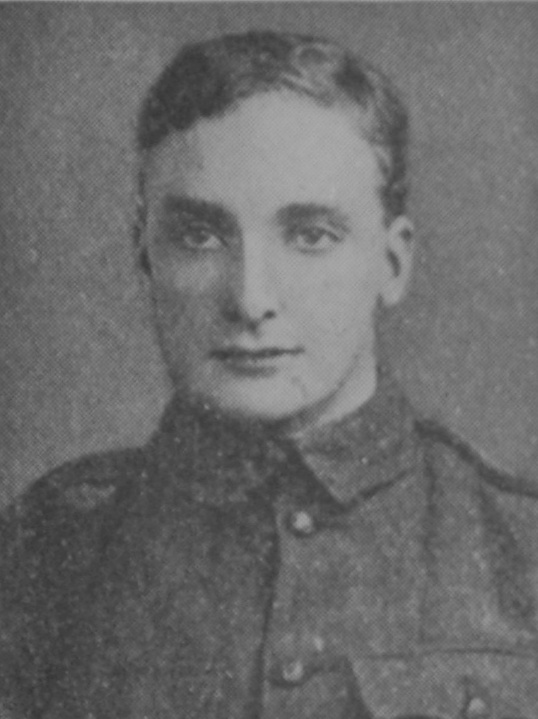
Binns R L 2nd Lt 8th Yorkshire Regiment

2nd Lieut. RAYMUND BINNS, 3rd Bn. (attached 8th Bn.) The Yorkshire Regt.

The letter written by Raymund Binns’ Colonel, announcing his death to his widow, described him as “a fine soldier,” who died “whilst assaulting the enemy’s position, which the battalion eventually captured.”

His death was instantaneous-a bullet through the head.

A brother officer, describing his bearing during the attack in which he met his death, on the evening of July 10th, 1916, said :-

He was perfectly splendid, and the men followed him wherever he went. The men of his platoon carried him back to Bécourt cemetery outside Albert and gave him a burial any soldier might be proud of. He was the bravest platoon commander I have had.

At the time when the bullet struck him he was leading the bombers of the battalion. His men had just captured the first trench. His soldier servant, who supplied these details, spoke feelingly of his affection for his officer and of the regard felt for him by all the men in his platoon.

At the outbreak of war Lieut. Binns, though married and successfully embarked on his career as an artist, unhesitatingly gave up his happy home and congenial work to join the Army. “I feel the times call for something a bit heroic,” he observed quietly to a near relative who was discussing the sacrifice he had made.

The artist friend, with whom he worked and who was much attached to him, wrote thus:-

When Fr. John Gerard sent Raymund Binns with a letter of introduction, his name was familiar to me as figuring very frequently among the winners of the drawing prizes at Stonyhurst; and it was a pleasure to pass him along from the uncongenial surroundings of an office in the city to the Art and Book Company.

Attendance at evening classes soon gave him greater facility in draughtsmanship, and when I moved into the country to work with stained glass in more pleasant surroundings, he very gladly joined me. He was at all times a well tried friend. He was keen in work or at play, clean-minded and cheery, a Catholic through and through, and an honour to the College of his upbringing.

I have not seen his equal in diving, and he was a fine swimmer and a capital forward at hockey.

The time came when his artistic ability had outrun the work I could lay before him. In London he was rapidly making a name for himself by the dignity and well-ordered balance of his designs and letterings. Not the least happy of these are the drawings which form the design still used for the cover of the Stonyhurst Magazine, and the delightful end papers of the book of views of Stonyhurst.

Lieut. Binns was born in 1884, and entered Stonyhurst in 1897. He was the son of the late Dr. Binns and of Mrs. Binns, of East Bergholt.

Source : Stonyhurst War Record

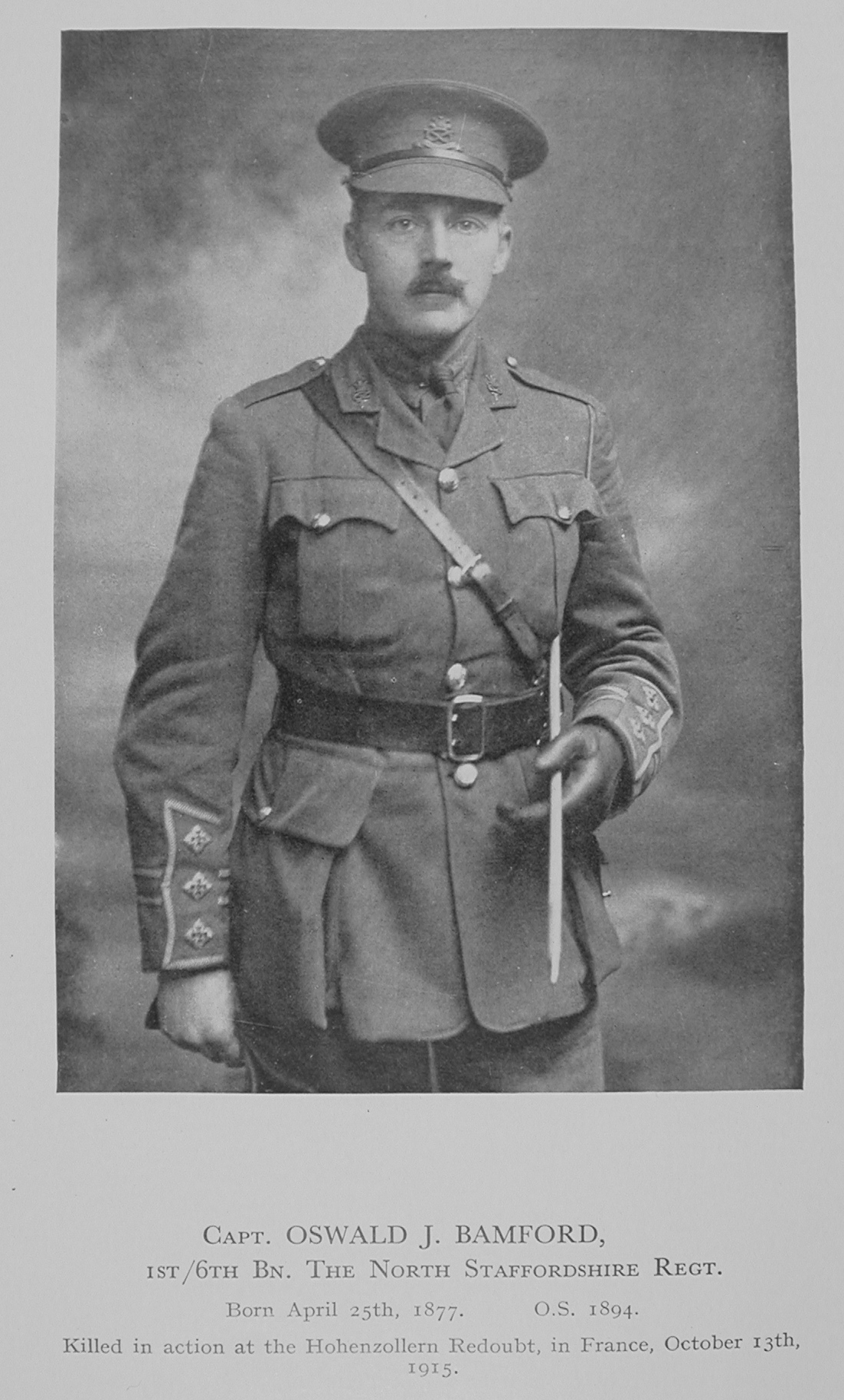
Bamford O J Captain 6th North Staffs Regiment


Bamford O J Captain 6th North Staffs Regiment

Capt. OSWALD J. BAMFORD, 1/6th The North Staffordshire Regt

Oswald Bamford came to Stonyhurst in 1894, at the age of 17, with his brother Julian, later a military Chaplain. His brother Henry had preceded him to Stonyhurst two years previously, and since their day the family has been well represented at the College by other relatives of the same name.

At school, Oswald is remembered as a serious-minded, sensible boy of determined character and genial disposition. He was just the sort of boy who would develop later into a shrewd manager of men – industrious, thoughtful and businesslike. He was the second son of Mr. S. B. Bamford, senior partner in the well known Uttoxeter firm of manufacturers of agricultural engineering implements, whose machines have a world-wide celebrity. Oswald had a natural bent for mechanical engineering, and on leaving College he entered with enthusiastic interest into the work of the firm and soon established his position as a valuable and influential partner in the business. With his elder brother Henry he had joined the Uttoxeter Territorial Company some years before the war, commanding the Company as Lieutenant on his brother’s retirement. In October, 1914, he was promoted Captain. He had been in France since August, 1915, in command of “B” Company, 1st/6th Bn. The North Staffordshire Regt., and had seen much service with them in the trenches during the two months which preceded the fight in which he fell at the head of his men.

He left a widow and two children. With his men, many of whom were his own employees in his ironworks, he was universally popular, and his senior officers had a high opinion of his military capacity. In a letter to his father, Mr. S. B. Bamford, his C.O., Col. R. F. Ratcliff, thus describes his death in front of the Hohenzollern Redoubt:- Oswald was a brave and plucky officer who did his duty really well. We had orders to advance against the German trenches, and were met by a fearful rifle and machine gun fire, which laid low so many of our men. The following extract from the Uttoxeter Advertiser describes in brief the circumstances of his gallant death on October 13th, 1915- “Letters from the front give glowing accounts of the heroic conduct of the late Capt. Oswald Bamford, commanding the Uttoxeter Company of the Burton Battalion, who so gallantly led his men in the face of a withering fire during the recent charge of the 6th North. On the order being given for the men to charge, Captain Bamford, leaping on to the parapet of the trenches, cried, “Come on, lads,” and dashed forward at the head of his men. He had not gone far, however, before he fell, and Corpl. J. Fradley, a Uttoxeter soldier, who saw service in the South African War, went to his assistance, but was himself shot down.” His popularity in his native county was well attested by the numerous Press notices in the local papers, which spoke of him in terms of high praise. The following, from the Burton Chronicle for October 28th, 1915, may be taken as an example :- “The sad news of the death of Capt. O. J. Bamford, who was killed in the recent British attack, will be received by his many friends. with deep sorrow and regret. He was educated at Stonyhurst, and like so many of his College friends, has fallen in the titanic struggle. He was the second son of Mr. S. B. Bamford, J.P., senior member of Messrs. Bamfords, agricultural engineers, Uttoxeter, in which firm he took an active part in the management of the works, particularly in the engineering branch. He became attached to the Territorials in 1909, and was gazetted Captain about twelve months ago. He went out to France in August last, when he took over the command of ‘B’ Company of the 1st/6th Bn. The North Staffordshire Regt., and was immensely popular. The many letters the family have received from the Colonel down to the men in the ranks are all in the same vein-he was a brave and plucky officer, and died a true soldier. He was highly esteemed by a wide circle of friends throughout the county. He was a prominent member of the Catholic congregation at Uttoxeter, and in the new church recently built in that town by his father, he leaves a lasting memorial in the form of a beautiful mosaic altar, the cost of which he and his brother, Mr. H. B. Bamford, contributed.”

A letter to his wife from a military Chaplain, dated October 17th, 1915, shows that Captain Bamford was well prepared to face death :-

In a little country church we assembled “to make our souls” and prepare in our Master’s company to face the danger. Capt. Bamford came forward and served my Mass that morning and went to his duties with many others. It was in the early phase of the attack that he fell shot, and died immediately. They afterwards recovered his body, and buried him with many of his companions. We had a little chat in the sacristy after Mass was over, and knowing the danger he was going into, he said: “If I am called this time, Padre, you have prepared me well; I trust all in God now.”

Source : Stonyhurst War Record