Thurlow A G 2nd Lt 8th West Riding Regiment

Thurlow A G 2nd Lt 8th West Riding Regiment

THURLOW, ARTHUR GEOFFREY, 2nd Lieut., 8th Battn. Duke of Wellington’s West Riding Regt., only s. of the late Arthur James Thurlow, of The Rookery, High Wycombe, Bucks, by his wife, Florence; b. High Wycombe, 8 Nov. 1891; educ. Norfolk House School, Beaconsfield; Felsted School, and won an open classical scholarship at Gonville, and Caius College, Cambridge (where he graduated B.A. with classical honours, June’ 1914); gazetted 2nd Lieut., 8th Duke of Wellington’s Regt., 9 Sept. 1914; left for the Dardanelles, 1 June, 1915; took part in the landing at Suvla Bay, 6 Aug.; was wounded 21 Aug., and died at Alexandria, 29 Aug. 1915, of his wounds; unm. Buried at Alexandria. He was a fine athlete; was Captain of his College football team, and a member of The Wanderers Club, and played hockey for the University.

Source : De Ruvigny’s Roll Of Honour Vol 1

Thornton E Pte 11817 3rd Coldstream Guards

THORNTON, EDWARD, Private, No. 11817, 3rd Battn. Coldstream Guards, s. of William Thornton, of 16, Berkeley Street, Lambeth; b. co. Surrey; served with the Expeditionary Force in France and Flanders; killed in action near Cambrin, 27 June, 1915; unm.

Source : De Ruvigny’s Roll Of Honour Vol 1
Thorburn W Sergt 101388 Army Service Corps Attd Motor Machine Gun Service

Thorburn W Sergt 101388 Army Service Corps Attd Motor Machine Gun Service

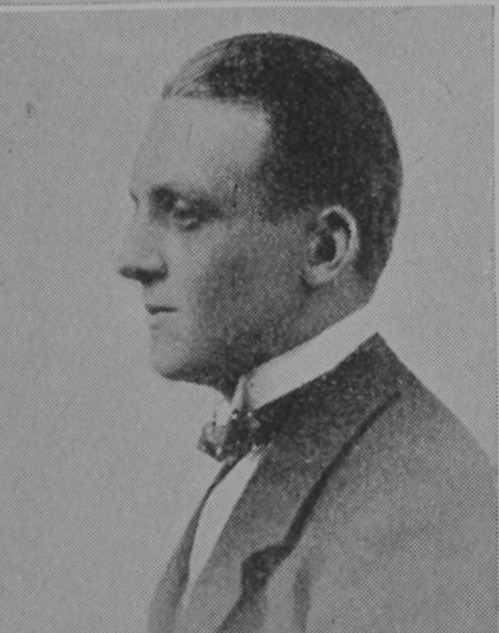
THORBURN, WILLIAM, Sergt.-Artificer, A.S.C., No. M./2, 101388, attd. to the 11th Battery, Motor Machine Gun Service, eldest s. of William Thorburn, of 110, Second Avenue, Clydebank, Linotype Operator, by his wife, Jessie Symington, 3rd dau. of the late Alexander Briton, Boot and Shoe Maker, Queen Street and Shawlands, Glasgow; b. Glasgow, 27 May, 1894; educ. at Dalmuir Public School, Clydebank; was employed by the Singer Manufacturing Company, Kilbowie, as an Engineer; enlisted 18 Nov. 1914; was promoted Corpl. and transferred to the Active Service Corps on Saturday, 29 May, 1915, being attd. to the 11th Battery, Motor Machine Guns, as Mechanic, and went to France on 7 July, 1915. He was employed at the time of his death in a blacksmith’s shop constructing an iron covering to bring a cycle and machine gun into action under cover, when one of the battery accidentally discharged a loaded revolver at 8 a.m. on Saturday, 7 Aug. 1915. The bullet entered his throat and travelled to his back and down the spine, and two and three-quarter hours later he died in hospital. He was buried in Chocques Military Cemetery, Pas de Calais, just outside Bethune; unm.

Source : De Ruvigny’s Roll Of Honour Vol 1

Thomson L Rfn 1877 16th London Regiment

Thomson L Rfn 1877 16th London Regiment

THOMSON, LESLIE, Rifleman, No. 1877, F Coy.1/16th Battn. (Queen’s Westminster Rifles) The London Regt. (T.F.), s. of Walter Thomson, of 18, Lorne Street, Reading, by his wife, Emma; b. Reading, co. Berks, 9 Feb. 1893; educ. Christ’s Hospital, West Horsham; volunteered and joined the Queen’s Westminsters, 5 Aug. 1914; went to France, 1 Nov. 1914, and was killed in action by a rifle grenade which burst just behind him in the trenches at Houplines, near Armentières, 18 March, 1915; unm.

Buried in the hospital cemetery, Rue Carnot, Houplines. Major Tyrwhitt wrote to his parents :  “Your son was always such a bright cheerful boy and such a good soldier,” and a letter signed by 42 men, including officers of his company (Sec. 11), also bore testimony to the respect in which he was held by all.

Source : De Ruvigny’s Roll Of Honour Vol 1


Thomson D T Pte 118 9th Highland Light Infantry

THOMSON, DUNCAN TURNER, Private, No. 118, 9th Battn. (Glasgow Highlanders) Highland Light Infantry (T.F.), s. of Alexander Thomson, of 8, Hamilton Park Terrace, Glasgow, M.B., C.M., Edinburgh, by his wife, Mary J. McKean, dau. of the Rev. Duncan Turner, M.A.; b. Huntly, co. Aberdeen, 23 Dec. 1888; educ. Glasgow Academy, and the Royal Technical College, Glasgow; was a fully qualified and diplomated architect, and was in the employment of Mr. P. Macgregor Chelmers, Glasgow; joined the 9th Highland L.I. Territorials in 1908; volunteered for active service on the outbreak of war; went to France in Oct. 1914, and died in the General Hospital, Northampton, 30 July, 1915, of wounds received in action on 19 June. He was shot by a sniper when on duty in the trenches at Vermelles; unm.

Capt. A. K. Reid wrote: “He was a man for whom I had the highest regard, especially since we came out here, and he was one of the most popular members of the company. His good humour even under the most trying circumstances caused him to be liked by all. He could be trusted at all times to do his duty as a soldier and as a man. I saw him in the Vermelles trenches a few minutes after he was hit, and he left us to walk back to the dressing station with a cheery good-bye to us all “; and one of his comrades, writing to a friend, said: “You doubtless have heard of Duncan Thomson’s death. Man! Why is it that all those splendid sportsmen get knocked out, and the rest of us go free. He was an awfully decent chap and I saw quite a lot of him in the G.H. at Dunfermline and in France. A more thorough, straighter, cleaner chap you could not meet. Five of the old 1st Battn.-friends of his-and myself carried the coffin into the Kirk, and then again to the grave. It wasn’t a military funeral (military honours having been paid when the body left Northampton), so we could only salute his grave, but if ever a man deserved honours at his graveside he did. We called him ‘Sniper’ out there, for the simple reason that he was so delightfully cool and casual. He never fired a shot at anything unless he was absolutely certain. If ever you wanted a hot drink, or anything to cheer yourself up with, you went to Duncan, and sure enough then you got it.”

Source : De Ruvigny’s Roll Of Honour Vol 1

Thomson A C Sergt 1380 13th Australian Imperial Force

Thomson A C Sergt 1380 13th Australian Imperial Force

THOMSON, ALEXANDER CAMERON, Sergt., No. 1380, D Coy., 13th Battn. Australian Imperial Force, 6th s. of James Thomson, of 57, St. Andrew Road, Pollokshields, Glasgow, by his wife, Elizabeth, dau. of the late Alexander Cameron, of Rothes; b. Glasgow, 30 March, 1892; educ. Kinning Park Public School; was two years in the 7th S. R. Glasgow before going to Australia, 25 Nov. 1912; volunteered on the outbreak of war and joined the Commonwealth Expeditionary Force in Sydney, N.S.W., 26 Sept. 1914; left for Egypt about 24 Dec.; took part in the landing at the Dardanelles, 25 April, 1915, and after being promoted Corpl. and Sergt. was killed in action there, 3 May, 1915; unm. His Officer Commanding, Lieut. C. B. Hopkins, wrote: “Your son was killed on the night of 3 May, doing his duty in a most gallant manner, in a charge against some Turkish trenches.”

Source : De Ruvigny’s Roll Of Honour Vol 1


Thomson A L/Cpl 6378 2nd Scots Guards

THOMSON, ALEXANDER, L.-Corpl., No. 6378, 2nd Battn. Scots Guards; b. Strickey, co. Aberdeen; enlisted 6 Jan. 1906; served with the Expeditionary Force in France, etc.; killed in action, 20-26 Oct. 1914. He m. Jennie (51, Esslemont Avenue, Aberdeen), dau. of (-) Anderson, and had two daus. : Mary Anderson, b. 20 April, 1910, and Joan, b. 25 June, 1915.

Source : De Ruvigny’s Roll Of Honour Vol 1

Thompson W D Pte 4843 2nd Coldstream Guards

THOMPSON, WALTER DARCY, Private, No. 4843, 2nd Battn. Coldstream Guards, s. of the late John Thompson, engineer: b. Elswick, Newcastle, 1883; educ. Southwick Board School; enlisted at Elswick, 26 Sept. 1902; left with the 1st Expeditionary Force for the Front on the outbreak of war, and was killed in action in France, 16 Sept. 1914. Private Thompson m. at Southwick, 21 Feb. 1906, Martha Alexandra, dau. of Robert Whyte, of Perth, and had two sons and one daughter: Vernon, b. 3 Nov. 1912; Walter Darcy, b. 11 Nov. 1914, and Edna, b. 21 April, 1909. His widow died 12 March, 1915, leaving the three infant children without any known relations. Capt. John Smith, of the Salvation Army at Southwick, took temporary charge of them, and Queen Alexandra hearing of the sad story wrote to Capt. Smith for particulars and expressed herself as anxious to assist in some way. The story was submitted to Her Majesty, and in reply a handsome money gift was sent for each child to be banked in trust for them.

Source : De Ruvigny’s Roll Of Honour Vol 1

Thompson J A M Lt 10th Canadian Expeditionary Force

Thompson J A M Lt 10th Canadian Expeditionary Force

THOMPSON, JOHN ALEXANDER MACKAY, Lieut., 10th Battn. Canadian Expeditionary Force, eldest s. of William Thomas Thompson, M.A., Sc. (McGill), M.Can. Soc. C.E., D.T.S., District Engineer, Grenfell, Saskatchewan, Canada, by his wife, Mary, eldest dau. of the late Rev. Alexander Mackay, M.A., and grandson of the late Lieut.-Col. John Hall Thompson, M.P.; b. Qu’Appelle, Saskatchewan, 6 Aug. 1890; educ. Qu’Appelle Schools and by tutors, afterwards by his father in Surveying and Engineering, and was acting as assistant to him when war broke out. In Dec. 1914, he was given a temporary Lieutenancy in the 16th Light Horse and, after qualifying at the Military Institute, Winnipeg, was gazetted Lieut. to the 32nd Battn. He left for England in Feb. 1915, and in April went with his company to reinforce the 10th Battn. in France, took part in the Second Battle of Ypres and was killed in the Battle of Festubert, leading his platoon in a night attack on the German position K. 5 (or Bexhill), 21 May following. He was unm., and was buried in a shell hole near K. 5. His men said that “he died like a hero, leading his men, on a rush attack right into a murderous fire,” and his commanding officer describing the attack on K. 5 wrote: “Lieut. Thompson in his quiet unassuming way led his platoon out to return no more-no better little soldier graced the 10th.” A brother officer wrote: “He was a soldier with few superiors, and a courage that knew no limits.”

Source : De Ruvigny’s Roll Of Honour Vol 1

Thompson G M Lt 1st Royal Scots

Thompson G M Lt 1st Royal Scots

THOMPSON, GEORGE MASTERMAN, Lieut., 1st Battn. The Royal Scots, attd. Gold Coast Regt. West African Frontier Force, only s. of the late Col. George William Thompson, formerly commanding 1st Battn. Royal Scots (who saw service in the Crimea, China, and India), by his wife, Agnes (Beechwood, Burley, co. Hants), dau. of Admiral John Russell; b. Etschowe, Zululand, 21 Feb. 1890; educ. Mr. Stanford’s Private School, St. Aubyns, Rottingdean; Wellington College, and Sandhurst; gazetted 2nd Lieut., 2nd Royal Scots, 18 Sept. 1909; transferred to 1st Battn. in Jan. 1910, and served three years in India; promoted Lieut. 13 Feb. 1913, and attd. to the Gold Coast Regt. West African Frontier Force, and was killed in action, 22 Aug. 1914, while gallantly leading an attack on a strongly entrenched position at Chra, Togoland: “a deed of extraordinary courage.” Buried at Chra; unm.

Lord Kitchener forwarded to his relatives an official letter from the Governor-General of French West Africa, saying: “That he had decided that the splendid behaviour on 22 Aug. 1914, in the affair of Chra, of Lieut. Thompson, of His Britannic Majesty’s Army, and of the detachment of French native troops commanded by that officer, deserved to be commemorated in a Special General Order, as an example to all the troops in the Colony”; and one from General Pienau, forwarding the Order: “and expressing his very deep admiration for the magnificent way in which this officer performed his duty as a soldier, when sacrificing his life.” The terms of the Order were: “Placed on 22 Aug. before the fight of Chra under the orders of Capt. Castaing of the Dahomey Brigade, he gave proof of supreme courage, of fine qualities of command in leading his Tirailleurs to the attack of German trenches vigorously defended-fifty metres from the enemy’s line he fell mortally wounded-his splendid example earned that almost the whole of the French Tirailleurs placed under his orders laid down their lives defending his body.” The Commanding Officer wrote: “His conduct during the action was particularly gallant. He was killed while attempting to storm the German trenches on the enemy’s left. He was an officer who was genuinely popular with all ranks and one whom we could ill afford to lose, and I wish to convey to you not only my own profound sympathy in your loss, which is also mine, but that of all ranks of the Togoland Field Force. His conduct was that of a gallant officer and gentleman.”

The Adjutant wrote: “I had more opportunities than anybody of realising your son’s sterling qualities as a soldier in peace times and his conspicuous gallantry in times of war. His loss is deeply felt by the whole force”; and a District Commissioner wrote: “His proficiency in the language and his influence over the natives, both soldiers and civilians, were astonishing, and great regret was evinced by all at Quittah, where the force of his personality had been very much felt during the short time he had been in command there, the chief asking leave to visit the grave at Chra.” Lieut. Thompson was a fine linguist, and besides speaking French and the native dialect fluently, had passed the higher standard in Hindustani and Persian. He was a keen sportsman and a good fencer and polo player.

Source : De Ruvigny’s Roll Of Honour Vol 1