Tipper G Pte 7730 3rd Coldstream Guards

Tipper G Pte 7730 3rd Coldstream Guards

TIPPER, GEORGE, Private, No. 7730, 3rd Battn. Coldstream Guards, only child of Fred Tipper, of 7, Back, 11, Blythe Street, Ladywood, Birmingham, Builder’s Labourer, by his wife, Ada, daughter of Isaac Morgan; b. Selly Oak, co. Worcester, 14 Feb. 1889; educ. St. Barnabas’ Church School, Ryland Street, Birmingham; enlisted, 4 March, 1908; went to France, Aug. 1914, and was killed at Givenchy, France, 16 April, 1915; unm. He was relieved from sentry duty in the trenches, at 6 a.m. that morning, and then went to attend a class for bomb throwing and at 11 a.m. a bomb exploded in his hand killing him and Lieut. Crawford. He was buried by the Bishop of Khartoum, just behind the firing-line.

Source : De Ruvigny’s Roll Of Honour Vol 1


Tinne E P J Lt HMS Hogue Royal Naval Reserve

TINNE, ERNEST PERCY JAMES, Lieut., R.N.R., 4th s. of John Ernest Tinne, of Liverpool, Merchant; b. Aigburth, Liverpool, 30 Dec. 1882; educ. Liverpool College, and H.M.S. Conway; joined the R.N.R., and became Lieut., Oct. 1909; joined H.M.S. Hogue at Chatham, 3 Aug. 1914, and was lost when that ship was torpedoed in the North Sea, 22 Sept. 1914. He m. at Paignton, South Devon, 4 May, 1907, Annie Amelia Kate, dau. of (-) Bartlett, and had three children: Maurice Herman James, b. 21 Feb. 1914; Hester Petronella, b. 26 Feb. 1908, and Margery Bertha Denise, b. 31 Oct. 1909.

Source : De Ruvigny’s Roll Of Honour Vol 1

Timbrell G Sergt 225 3rd Australian Light Horse

Timbrell G Sergt 225 3rd Australian Light Horse

TIMBRELL, GORDON, Sergt., No. 225, 3rd Light Horse, Australian Expeditionary Force, 2nd s. of the late Samuel Timbrell, for many years Manager of the Central Station Hotel, Glasgow, by his wife, Charlotte Whyte (now wife of Anderson Rodger, of 59, Longridge Road, Earl’s Court, S. W.), dau. of George Gordon, of Aberdeen; b. Glasgow, 13 April, 1891; educ. Glasgow High School, and on leaving there in 1906 went to Stubbington House, Fareham, to be prepared for entrance in the Royal Navy as an Engineer Cadet. This idea had to be abandoned owing to the new age limit (12 years) coming into force, bringing Engineers under the same regulations as the Executive Cadets. Shortly afterwards he entered the office of a shipping firm in Stettin, with the purpose of learning the German language in combination with business training, and on leaving there, returned to Glasgow where he served a brief apprenticeship in a stockbroker’s office, and then went to Australia in 1910. He first took up sheep farming, but city life lured him, first to Melbourne, where he gained some experience in the wool trade, and then to Adelaide, where he managed the shipping department of Messrs. Bagot, Shakes & Lewis, Ltd. He had been with them three years when war broke out. He immediately volunteered and joined the Light Horse as a private, but being a fluent speaker of French and German, and a hard and fearless worker, he quickly won promotion and was appointed Sergt. early in March. He was killed in action at the Dardanelles, 1 July, 1915; unm.

In a letter from Sergt. Smith under date of 26 June, printed in the Glasgow High School Magazine, Dec. 1915, p. 37, is the following passage: “My outlook on the world and things in general just now is even brighter than usual. Timmy (Sergt Gordon Timbrell) is a wonderful boy and yesterday secured all manner of good things. We dined last night on turtle soup, thick mutton stew, pineapple, cakes, dates and coffee, and wound up with cigarettes. This morning for breakfast we had porridge and milk as a preliminary to what was in itself a splendid feed.’ When Timmy is purveyor we are sure to be all right. The hardships of war! They have not existed so far.” And in a later letter he wrote: “You will no doubt have heard of poor Timmy’s death. He was killed in the trench last Thursday evening. You don’t know how I miss him. We have been the best of pals all the time. He was as game as you make ’em.” The secretary of his firm wrote: “He was a courageous and chivalrous young fellow, and had done uncommonly well in our firm. We were only awaiting his return, and the return of something like normal conditions to give him that lift which he had so well earned.”

Source : De Ruvigny’s Roll Of Honour Vol 1

Tibbo J J Pte 1017 1st Newfoundland Regiment

Tibbo J J Pte 1017 1st Newfoundland Regiment

TIBBO, JAMES JOSEPH, Private, No. 1017 James Joseph Tibbo. D Coy. 1st Newfoundland Regt., 2nd s. of Richard Tibbo, of 7, Lime Street, St. John’s, Newfoundland, Labourer, by his wife, Mary Ann, dau. of Richard Roach; b. St. John’s aforesaid, 12 Nov. 1894; educ. St. Patrick’s Hall and Holy Cross Christian Brothers’ Schools; was a Seaman; joined the Newfoundland Regt. 13 Jan. 1915; left for England, 20 March; went to the Dardanelles, and was killed in action there, 1 Dec. 1915, while gallantly assisting a stretcher bearer to remove the wounded: unm.

Source : De Ruvigny’s Roll Of Honour Vol 1
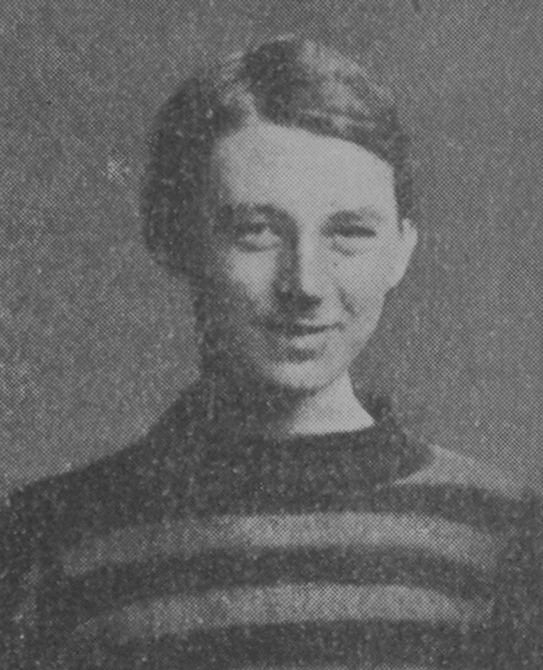
Thurlow A G 2nd Lt 8th West Riding Regiment

Thurlow A G 2nd Lt 8th West Riding Regiment

THURLOW, ARTHUR GEOFFREY, 2nd Lieut., 8th Battn. Duke of Wellington’s West Riding Regt., only s. of the late Arthur James Thurlow, of The Rookery, High Wycombe, Bucks, by his wife, Florence; b. High Wycombe, 8 Nov. 1891; educ. Norfolk House School, Beaconsfield; Felsted School, and won an open classical scholarship at Gonville, and Caius College, Cambridge (where he graduated B.A. with classical honours, June’ 1914); gazetted 2nd Lieut., 8th Duke of Wellington’s Regt., 9 Sept. 1914; left for the Dardanelles, 1 June, 1915; took part in the landing at Suvla Bay, 6 Aug.; was wounded 21 Aug., and died at Alexandria, 29 Aug. 1915, of his wounds; unm. Buried at Alexandria. He was a fine athlete; was Captain of his College football team, and a member of The Wanderers Club, and played hockey for the University.

Source : De Ruvigny’s Roll Of Honour Vol 1

Thornton E Pte 11817 3rd Coldstream Guards

THORNTON, EDWARD, Private, No. 11817, 3rd Battn. Coldstream Guards, s. of William Thornton, of 16, Berkeley Street, Lambeth; b. co. Surrey; served with the Expeditionary Force in France and Flanders; killed in action near Cambrin, 27 June, 1915; unm.

Source : De Ruvigny’s Roll Of Honour Vol 1

Thorburn W Sergt 101388 Army Service Corps Attd Motor Machine Gun Service

Thorburn W Sergt 101388 Army Service Corps Attd Motor Machine Gun Service

THORBURN, WILLIAM, Sergt.-Artificer, A.S.C., No. M./2, 101388, attd. to the 11th Battery, Motor Machine Gun Service, eldest s. of William Thorburn, of 110, Second Avenue, Clydebank, Linotype Operator, by his wife, Jessie Symington, 3rd dau. of the late Alexander Briton, Boot and Shoe Maker, Queen Street and Shawlands, Glasgow; b. Glasgow, 27 May, 1894; educ. at Dalmuir Public School, Clydebank; was employed by the Singer Manufacturing Company, Kilbowie, as an Engineer; enlisted 18 Nov. 1914; was promoted Corpl. and transferred to the Active Service Corps on Saturday, 29 May, 1915, being attd. to the 11th Battery, Motor Machine Guns, as Mechanic, and went to France on 7 July, 1915. He was employed at the time of his death in a blacksmith’s shop constructing an iron covering to bring a cycle and machine gun into action under cover, when one of the battery accidentally discharged a loaded revolver at 8 a.m. on Saturday, 7 Aug. 1915. The bullet entered his throat and travelled to his back and down the spine, and two and three-quarter hours later he died in hospital. He was buried in Chocques Military Cemetery, Pas de Calais, just outside Bethune; unm.

Source : De Ruvigny’s Roll Of Honour Vol 1

Thomson L Rfn 1877 16th London Regiment

Thomson L Rfn 1877 16th London Regiment

THOMSON, LESLIE, Rifleman, No. 1877, F Coy.1/16th Battn. (Queen’s Westminster Rifles) The London Regt. (T.F.), s. of Walter Thomson, of 18, Lorne Street, Reading, by his wife, Emma; b. Reading, co. Berks, 9 Feb. 1893; educ. Christ’s Hospital, West Horsham; volunteered and joined the Queen’s Westminsters, 5 Aug. 1914; went to France, 1 Nov. 1914, and was killed in action by a rifle grenade which burst just behind him in the trenches at Houplines, near Armentières, 18 March, 1915; unm.

Buried in the hospital cemetery, Rue Carnot, Houplines. Major Tyrwhitt wrote to his parents :  “Your son was always such a bright cheerful boy and such a good soldier,” and a letter signed by 42 men, including officers of his company (Sec. 11), also bore testimony to the respect in which he was held by all.

Source : De Ruvigny’s Roll Of Honour Vol 1


Thomson D T Pte 118 9th Highland Light Infantry

THOMSON, DUNCAN TURNER, Private, No. 118, 9th Battn. (Glasgow Highlanders) Highland Light Infantry (T.F.), s. of Alexander Thomson, of 8, Hamilton Park Terrace, Glasgow, M.B., C.M., Edinburgh, by his wife, Mary J. McKean, dau. of the Rev. Duncan Turner, M.A.; b. Huntly, co. Aberdeen, 23 Dec. 1888; educ. Glasgow Academy, and the Royal Technical College, Glasgow; was a fully qualified and diplomated architect, and was in the employment of Mr. P. Macgregor Chelmers, Glasgow; joined the 9th Highland L.I. Territorials in 1908; volunteered for active service on the outbreak of war; went to France in Oct. 1914, and died in the General Hospital, Northampton, 30 July, 1915, of wounds received in action on 19 June. He was shot by a sniper when on duty in the trenches at Vermelles; unm.

Capt. A. K. Reid wrote: “He was a man for whom I had the highest regard, especially since we came out here, and he was one of the most popular members of the company. His good humour even under the most trying circumstances caused him to be liked by all. He could be trusted at all times to do his duty as a soldier and as a man. I saw him in the Vermelles trenches a few minutes after he was hit, and he left us to walk back to the dressing station with a cheery good-bye to us all “; and one of his comrades, writing to a friend, said: “You doubtless have heard of Duncan Thomson’s death. Man! Why is it that all those splendid sportsmen get knocked out, and the rest of us go free. He was an awfully decent chap and I saw quite a lot of him in the G.H. at Dunfermline and in France. A more thorough, straighter, cleaner chap you could not meet. Five of the old 1st Battn.-friends of his-and myself carried the coffin into the Kirk, and then again to the grave. It wasn’t a military funeral (military honours having been paid when the body left Northampton), so we could only salute his grave, but if ever a man deserved honours at his graveside he did. We called him ‘Sniper’ out there, for the simple reason that he was so delightfully cool and casual. He never fired a shot at anything unless he was absolutely certain. If ever you wanted a hot drink, or anything to cheer yourself up with, you went to Duncan, and sure enough then you got it.”

Source : De Ruvigny’s Roll Of Honour Vol 1

Thomson A C Sergt 1380 13th Australian Imperial Force

Thomson A C Sergt 1380 13th Australian Imperial Force

THOMSON, ALEXANDER CAMERON, Sergt., No. 1380, D Coy., 13th Battn. Australian Imperial Force, 6th s. of James Thomson, of 57, St. Andrew Road, Pollokshields, Glasgow, by his wife, Elizabeth, dau. of the late Alexander Cameron, of Rothes; b. Glasgow, 30 March, 1892; educ. Kinning Park Public School; was two years in the 7th S. R. Glasgow before going to Australia, 25 Nov. 1912; volunteered on the outbreak of war and joined the Commonwealth Expeditionary Force in Sydney, N.S.W., 26 Sept. 1914; left for Egypt about 24 Dec.; took part in the landing at the Dardanelles, 25 April, 1915, and after being promoted Corpl. and Sergt. was killed in action there, 3 May, 1915; unm. His Officer Commanding, Lieut. C. B. Hopkins, wrote: “Your son was killed on the night of 3 May, doing his duty in a most gallant manner, in a charge against some Turkish trenches.”

Source : De Ruvigny’s Roll Of Honour Vol 1