Thomson A L/Cpl 6378 2nd Scots Guards

THOMSON, ALEXANDER, L.-Corpl., No. 6378, 2nd Battn. Scots Guards; b. Strickey, co. Aberdeen; enlisted 6 Jan. 1906; served with the Expeditionary Force in France, etc.; killed in action, 20-26 Oct. 1914. He m. Jennie (51, Esslemont Avenue, Aberdeen), dau. of (-) Anderson, and had two daus. : Mary Anderson, b. 20 April, 1910, and Joan, b. 25 June, 1915.

Source : De Ruvigny’s Roll Of Honour Vol 1

Thompson W D Pte 4843 2nd Coldstream Guards

THOMPSON, WALTER DARCY, Private, No. 4843, 2nd Battn. Coldstream Guards, s. of the late John Thompson, engineer: b. Elswick, Newcastle, 1883; educ. Southwick Board School; enlisted at Elswick, 26 Sept. 1902; left with the 1st Expeditionary Force for the Front on the outbreak of war, and was killed in action in France, 16 Sept. 1914. Private Thompson m. at Southwick, 21 Feb. 1906, Martha Alexandra, dau. of Robert Whyte, of Perth, and had two sons and one daughter: Vernon, b. 3 Nov. 1912; Walter Darcy, b. 11 Nov. 1914, and Edna, b. 21 April, 1909. His widow died 12 March, 1915, leaving the three infant children without any known relations. Capt. John Smith, of the Salvation Army at Southwick, took temporary charge of them, and Queen Alexandra hearing of the sad story wrote to Capt. Smith for particulars and expressed herself as anxious to assist in some way. The story was submitted to Her Majesty, and in reply a handsome money gift was sent for each child to be banked in trust for them.

Source : De Ruvigny’s Roll Of Honour Vol 1
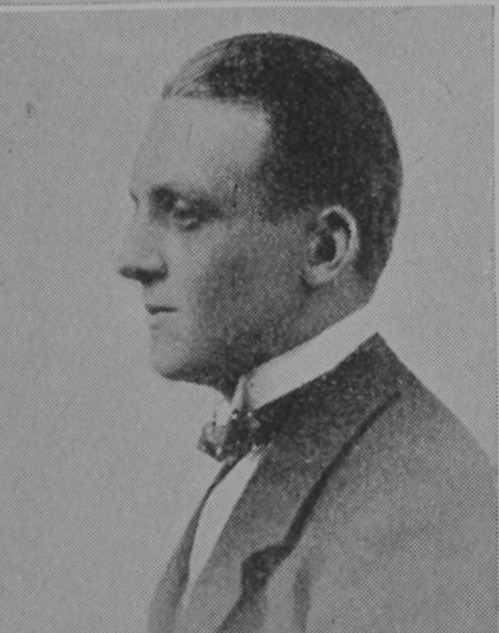
Thompson J A M Lt 10th Canadian Expeditionary Force

Thompson J A M Lt 10th Canadian Expeditionary Force

THOMPSON, JOHN ALEXANDER MACKAY, Lieut., 10th Battn. Canadian Expeditionary Force, eldest s. of William Thomas Thompson, M.A., Sc. (McGill), M.Can. Soc. C.E., D.T.S., District Engineer, Grenfell, Saskatchewan, Canada, by his wife, Mary, eldest dau. of the late Rev. Alexander Mackay, M.A., and grandson of the late Lieut.-Col. John Hall Thompson, M.P.; b. Qu’Appelle, Saskatchewan, 6 Aug. 1890; educ. Qu’Appelle Schools and by tutors, afterwards by his father in Surveying and Engineering, and was acting as assistant to him when war broke out. In Dec. 1914, he was given a temporary Lieutenancy in the 16th Light Horse and, after qualifying at the Military Institute, Winnipeg, was gazetted Lieut. to the 32nd Battn. He left for England in Feb. 1915, and in April went with his company to reinforce the 10th Battn. in France, took part in the Second Battle of Ypres and was killed in the Battle of Festubert, leading his platoon in a night attack on the German position K. 5 (or Bexhill), 21 May following. He was unm., and was buried in a shell hole near K. 5. His men said that “he died like a hero, leading his men, on a rush attack right into a murderous fire,” and his commanding officer describing the attack on K. 5 wrote: “Lieut. Thompson in his quiet unassuming way led his platoon out to return no more-no better little soldier graced the 10th.” A brother officer wrote: “He was a soldier with few superiors, and a courage that knew no limits.”

Source : De Ruvigny’s Roll Of Honour Vol 1

Thompson G M Lt 1st Royal Scots

Thompson G M Lt 1st Royal Scots

THOMPSON, GEORGE MASTERMAN, Lieut., 1st Battn. The Royal Scots, attd. Gold Coast Regt. West African Frontier Force, only s. of the late Col. George William Thompson, formerly commanding 1st Battn. Royal Scots (who saw service in the Crimea, China, and India), by his wife, Agnes (Beechwood, Burley, co. Hants), dau. of Admiral John Russell; b. Etschowe, Zululand, 21 Feb. 1890; educ. Mr. Stanford’s Private School, St. Aubyns, Rottingdean; Wellington College, and Sandhurst; gazetted 2nd Lieut., 2nd Royal Scots, 18 Sept. 1909; transferred to 1st Battn. in Jan. 1910, and served three years in India; promoted Lieut. 13 Feb. 1913, and attd. to the Gold Coast Regt. West African Frontier Force, and was killed in action, 22 Aug. 1914, while gallantly leading an attack on a strongly entrenched position at Chra, Togoland: “a deed of extraordinary courage.” Buried at Chra; unm.

Lord Kitchener forwarded to his relatives an official letter from the Governor-General of French West Africa, saying: “That he had decided that the splendid behaviour on 22 Aug. 1914, in the affair of Chra, of Lieut. Thompson, of His Britannic Majesty’s Army, and of the detachment of French native troops commanded by that officer, deserved to be commemorated in a Special General Order, as an example to all the troops in the Colony”; and one from General Pienau, forwarding the Order: “and expressing his very deep admiration for the magnificent way in which this officer performed his duty as a soldier, when sacrificing his life.” The terms of the Order were: “Placed on 22 Aug. before the fight of Chra under the orders of Capt. Castaing of the Dahomey Brigade, he gave proof of supreme courage, of fine qualities of command in leading his Tirailleurs to the attack of German trenches vigorously defended-fifty metres from the enemy’s line he fell mortally wounded-his splendid example earned that almost the whole of the French Tirailleurs placed under his orders laid down their lives defending his body.” The Commanding Officer wrote: “His conduct during the action was particularly gallant. He was killed while attempting to storm the German trenches on the enemy’s left. He was an officer who was genuinely popular with all ranks and one whom we could ill afford to lose, and I wish to convey to you not only my own profound sympathy in your loss, which is also mine, but that of all ranks of the Togoland Field Force. His conduct was that of a gallant officer and gentleman.”

The Adjutant wrote: “I had more opportunities than anybody of realising your son’s sterling qualities as a soldier in peace times and his conspicuous gallantry in times of war. His loss is deeply felt by the whole force”; and a District Commissioner wrote: “His proficiency in the language and his influence over the natives, both soldiers and civilians, were astonishing, and great regret was evinced by all at Quittah, where the force of his personality had been very much felt during the short time he had been in command there, the chief asking leave to visit the grave at Chra.” Lieut. Thompson was a fine linguist, and besides speaking French and the native dialect fluently, had passed the higher standard in Hindustani and Persian. He was a keen sportsman and a good fencer and polo player.

Source : De Ruvigny’s Roll Of Honour Vol 1


Thomas M Pte 1715 4th Royal Sussex Regiment

Thomas M Pte 1715 4th Royal Sussex Regiment

THOMAS, MAURICE, Private, No. 1715, 1/4th (Service) Battn. the Royal Sussex Regt. (T.F.), s. of the late Thomas Henry Thomas, of Worthing, by his wife, Ellen (11, Stanhope Road, Worthing), dau. of William Knight, of Washington, Sussex; b. Worthing, co. Sussex, 4 April, 1897; educ. St. Andrew’s Higher Grade School there, and on leaving became a messenger boy at the Worthing G.P.O. and had passed his examinations for the staff when war broke out. He had joined the Royal Sussex Territorials, 14 Aug. 1913; was called up 4 Aug. 1914, and volunteered for foreign service, and left England for the Dardanelles in July, 1915. He was attd. to the machine- gun section of his battn., landed at Suvla Bay, 8 Aug. and was killed in action there four days later, 12 Aug. 1915, as his battn. was retiring after being relieved from the front trenches. The Turks opened a heavy machine-gun fire on them, and he was hit and killed almost immediately. He was buried where he fell at Anafarta Sagir, 1.20-000-105H, near Track to Chocolate Hill between 4-7 p.m. He was a prominent member of the Holy Trinity Church Lads’ Naval Brigade.

Source : De Ruvigny’s Roll Of Honour Vol 1


Thomas E T Rfn 9867 3rd Rifle Brigade

THOMAS, EDWARD THOMAS, Rifleman, No. 9867, 3rd Battn. Rifle Brigade, eldest s. of John Thomas, Shearer, Raglan Bays Works, Briton Ferry, by his wife, Susanah, dau. of David Hopkins; b. Pontudlais, co. Glamorgan, 2 Feb. 1884; educ. Hammonford; was employed at Port Talbot; enlisted in the Rifle Brigade, 5 May, 1903; served three years with the Colours; and then joined the Reserve; was called up no mobilisation in Aug. 1914; went to France in Aug. 1914, and was killed in action at the Battle of the Aisne, 23 Oct. 1914. Buried near Chapelle d’Armentières. He was a member of the Silver Band, Briton Ferry. He m. at Neath, 6 March, 1909, Catherine (Lowther Street, Briton Ferry, Glamorgan), dau. of David Hopkins, and had four children: Thomas Ivor Gwyn, b. 18 Dec. 1913; Edward Ypres, b. (posthumous), 16 April, 1915; Jane Ellen, b. 9 Jan. 1910; and Mary Catherine, b. 27 April, 1911.

Source : De Ruvigny’s Roll Of Honour Vol 1

Thomas A J N Captain 1st Lancashire Fusiliers

Thomas A J N Captain 1st Lancashire Fusiliers

CAPTAIN A. J. N. THOMAS Lancashire Fusiliers Elmfield 99-02 Aged 29 April 25th, 1915

ELDER Son of Jocelyn H. W. Thomas (O.H.), J.P., formerly Captain Scots Fusilier Guards, of Belmont, Carlow, Ireland. R.M.C., Sandhurst.

Captain Thomas received his Commission in the Lancashire Fusiliers in 1905, and was promoted Captain in January, 1915. He went to the Front in February, 1915, and was killed at Lancashire Landing, in Gallipoli, on April 25th, 1915.

Source : Harrow Memorials Of The Great War 1914-1918 Vol 2

THOMAS, AUBREY JOCELYN NUGENT, Capt., 1st Battn. Lancashire Fusiliers, elder s. of Jocelyn H. W. Thomas, of Belmont, Carlow, Ireland, formerly Capt., Scots Fusiliers Guards; b. Belmont, co. Carlow, 23 Sept. 1888; educ. Harrow and Sandhurst; gazetted 2nd Lieut, 1st Lancashire Fusiliers, 16 Aug 1905, and promoted Lieut. 29 May, 1909, and Capt. 20 Jan. 1915; served with the Mediterranean Expeditionary Force, and was killed in action during the landing of the Lancashire Fusiliers at Beach W, Gallipoli, 25 April, 1915; unm.

Source : De Ruvigny’s Roll Of Honour Vol 1

Theobald W G M Pte 792 14th Australian Imperial Force

Theobald W G M Pte 792 14th Australian Imperial Force

THEOBALD, WILLIAM GEORGE MORLEY, Private, No. 792, No. 2 Coy. 14th Battn. 4th Infantry Brigade, Australian Imperial Force, eldest s. of George Theobald, of Littleport, Cambs, Superintendent of Fen Drainage, Littleport, and Downham District, by his wife, Hannah Jackson, dau. of James Hardwick, of Ipswich, Queensland, Australia; b. Little Downham, Isle of Ely, 12 Nov. 1894; educ. March (Cambs.) Grammar School; joined the Cambridgeshire Territorials in 1913; went to Australia, 18 April, 1914, and when war broke out volunteered and joined the Commonwealth Expeditionary Force at the end of Oct., 1914; left Melbourne for Egypt with the 2nd Reinforcements, 23 Dec. 1914; took part in the landing at Cape Helles, Gallipoli, 25 April, 1915, and was killed in action at 10 the same morning while out sniping with four others. He was unm. A comrade wrote: ” He was not out long before he was shot, but he did some good work before he was hit.” Another comrade wrote: “Every one of us was grieved when poor Tommy was killed, for all were agreed that Tommy was a gentleman.”

Source : De Ruvigny’s Roll Of Honour Vol 1


Tetley A N L/Cpl 304 8th Australian Light Horse

Tetley A N L/Cpl 304 8th Australian Light Horse

TETLEY, ARTHUR NORMAN, L.-Corpl., No. 304, B Squadron, 8th Australian Light Horse, 3rd Brigade, Australian Expeditionary Force, 3rd s. of William Tetley, of Berwick, Gippsland, Victoria, Squatter, by his wife, Kate, dau. of Arthur Noyes; b. in Victoria, 19 Feb. 1889; educ. C. E. Grammar School, Melbourne; volunteered on the outbreak of war, being the first to do so in his district; left for Egypt with the main force; went to the Dardanelles 15 May; was wounded in action at Walker’s Ridge, Gallipoli, 7 Aug., and died at sea on board the hospital ship Delta, 8 Aug. 1915; unm.

Sergt. C. H. Lyon wrote: “I saw a good deal of him over at Gallipoli, and he did splendidly from beginning to end. I know men in his troop thought a lot of him, and it was only owing to lack of vacancies that he didn’t get rapid promotion. On June 23 Norman got shaken up pretty badly. The Turks were shelling us pretty heavily with French 75’s and high explosives. Where Norman was stationed they got it very badly; he wasn’t actually hit, but the shells bursting near him peppered his face with gravel. He got over it, however, without going away, but when the attack came on 7 Aug. he was very run down. From that I heard the doctor had advised him not to go out, but like many others he was keen on being with his troop and couldn’t stand the idea of being left behind. For three days we were expecting the attack, and on the evening of 6 Aug. we were taken out into the left hand sap on Walker’s Ridge. All night we sat there not knowing what moment we would be called on, and towards daylight the men-of-war and cruisers bombarded the Turkish trenches right in front of us. The 8th were divided into the 1st and 2nd lines of attack. A squadron and two troops out of B formed the 1st line (including Norman), and C Squadron with the other half of B formed into 2nd line. The 10th Regt. formed the 3rd and 4th. The Turkish trenches were about 25 yards from us, and the whole front not more than 150 yards long. At 4.30 a.m. the bombarding stopped and the attack commenced. Owing to a misunderstanding, my troop was late in moving up, and just as we got into the front sap, our officer was shot through the hand and retired. I was left in charge, and being unable to jam past the men, jumped up and ran round to the front of the sap, calling on them to follow, but just as we got out, the 1st line fell back, nearly all wounded, with orders to retire. As we dropped back into the sap, I saw Norman lying just out in front, and with the assistance of others, got him in and laid him on the bottom of the trench. His leg was in a fearful state, a machine-gun had got on to him, but he stood it wonderfully and a 10th man applied first aid. The stretcher bearers were fearfully busy, and we were in an out of the way place and he had to lie there over two hours before it was possible to get him away. The loss of blood must have been very great. Of 318 of our men that went out that morning, 154 were killed, and 80 odd wounded. The Turks had 34 machine-guns playing on the narrow strip between the trenches, and only one of our men, a sergt. in A Squadron, ever reached their trenches. All but two of our officers that went out were killed, including Col. White, Major Retford, and our Adjutant.”

Source : De Ruvigny’s Roll Of Honour Vol 1

Tennant C G 2nd Lt 4th Seaforth Highlanders

Tennant C G 2nd Lt 4th Seaforth Highlanders

TENNANT, CHARLES GRANT, 2nd Lieut., 4th Batt. Seaforth Highlanders (T.F.), only s. of James Tennant, of Fairlie, Ayrshire, and formerly of Newcastle- on-Tyne, J.P., by his wife, Henrietta Grant, dau. of Alexander Andrew Fergusson; b. Lowfell, co. Durham, 23 July, 1882; educ Charterhouse, Godalming, where he was a senior scholar, and Trinity College, Cambridge, where he was an exhibitioner; and on finishing his education, became a Director of the Tharsis Sulphur and Copper Co., Ltd., and of Alexander Fergusson & Co., Ltd., Glasgow, Lead Manufacturers. On the outbreak of war in Aug. 1914, he volunteered and joined the Public Schools Battn. and was gazetted 2nd Lieut. to the 4th Battn. Seaforth Highlanders, 1 Oct. 1914; went to France, 5 Nov. 1914, and was killed in action near Neuve Chapelle, 9 May, 1915; unm.

His Commanding Officer wrote: “After less than four months soldiering his name was sent to the War Office for promotion to Capt.; that fact shows what a born soldier he was. On every occasion that we were under fire he was always the same, cool and collected. He declined promotion, as he wished to remain with the men with whom he had trained.”

Source : De Ruvigny’s Roll Of Honour Vol 1