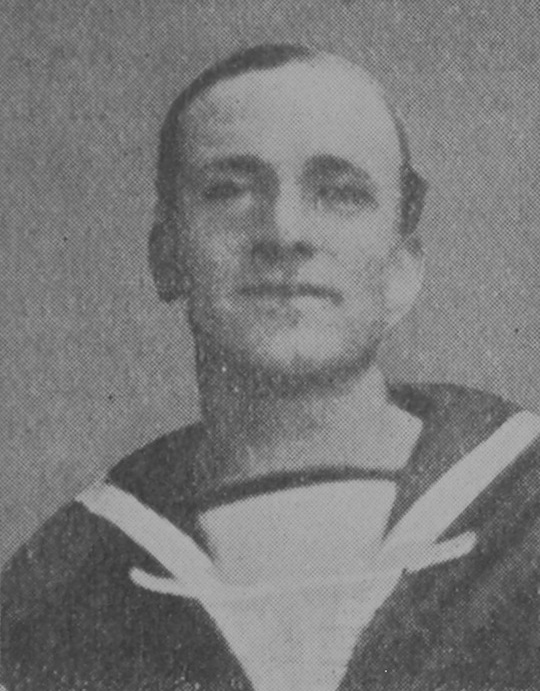
Stirling J Captain 3rd Attd 1st Cameronians

Stirling J Captain 3rd Attd 1st Cameronians

STIRLING, JAMES, Capt., 3rd., attd. 1st, Battn. The Cameronians (Scottish Rifles), eldest s. of Col. James Wilfrid Stirling, of The Grange, Rockbeare, Devon, now commanding 72nd Brigade, Royal Field Artillery, by his wife, Cecil Mary, dau. of Major-Gen. Dixon Edward Hoste, C.B., R.A.; b. Hong Kong, 7 June, 1884; educ. Wellington College and the Royal Military College, Sandhurst; gazetted 2nd Lieut. to the 2nd Cameronians, 22 April, 1903, and promoted Lieut., 5 Oct. 1907; retired in 1911 and joined the 3rd Battn. at Hamilton for Special Reserve duty; appointed Capt., 1912; rejoined on the outbreak of war; went to the Front from England, 6 Oct. 1914, where he was attached to the 1st Battn., and was killed in the trenches near Armentières, 2 Jan. 1915; unm.

His Colonel wrote: “The loss of your dear son is irreparable. As his late commanding officer I deeply feel his sad but glorious end; he was one of the most honourable, conscientious and reliable of all my officers.” A bronze tablet was placed in Rockbeare Parish Church to the memory of himself and his younger brother, Lieut. W. D. Stirling, R.N. (see following notice).

Source : De Ruvigny’s Roll Of Honour Vol 1


Stiling W C H Sig 216012 HMS Monmouth Royal Navy

Stiling W C H Sig 216012 HMS Monmouth Royal Navy

STILING, WILLIAM CHARLES HENRY, Signalman, No. 216012, Royal Navy, H.M.S. Monmouth, eldest s. of the late Charles Henry Stiling, of The Minories, by his wife, Phoebe (7, Circus, Minories, Aldgate, E.), dau. of William Thomas Pugh; b. St. George’s, E., 1 Dec. 1885; educ. Sir John Cass’ School, Minories; enlisted in the Devonshire Regt., 25 June, 1901, but was claimed out by his mother (29 June), being only 15, and then in the 5th Battn. Rifle Brigade, but was again claimed out; joined the Navy as a Boy (2nd class), 19 July, 1901; became Boy (1st class), 5 June, 1902; Signalman, 2 Dec. 1903; Ordinary Signalman, 1 Oct. 1907; Signalman, 26 Nov. 1907; served in H.M.S. Impregnable, Vivid, Royal Oak, Cambridge, Hogue, Cornwall, Mars, Hibernia, Crescent, Orontes, Egmont, Sutlej and Monmouth (appointed 30 July, 1914), and was lost on H.M.S. Monmouth when that ship was sunk in the battle off Coronel, on the coast of Chili, 1 Nov. 1914; unm. His brother, Thomas Edward, Leading Seaman, served at the Dardanelles on the Swiftshire, and is now (1916) on active service on H.M.S. Royal Oak in the North Sea.

Source : De Ruvigny’s Roll Of Honour Vol 1

Stiff H Pte 13118 1st Suffolk Regiment

STIFF, HARRY, Private, No. 13118, 1st Battn. Suffolk Regt., s. of William Stiff, of Wickhambrook, co. Suffolk, Agricultural Labourer, by his wife, Sarah Ann, dau. of William Willingham; b. Chedburgh, near Bury St. Edmunds, co. Suffolk, 16 Sept. 1886; educ. Hargrave, and served for six years in the 3rd Battn. Suffolk Regt., being discharged with exemplary character. On the outbreak of war he re-enlisted in the 1st Battn. Suffolk Regt., served in France and Flanders, and was killed in action south of Ypres, 18 Feb. 1915; unm.

Source : De Ruvigny’s Roll Of Honour Vol 1

Stewart W V 2nd Lt 1st Monmouthshire Regiment

Stewart W V 2nd Lt 1st Monmouthshire Regiment

STEWART, WILLIAM VICTOR, 2nd Lieut. 1st Battn. Monmouthshire Regt. (T.F.), only s. of William Stewart, of Brodawel, Caerleon, co. Monmouth, Mining Engineer, President of the South Wales Institute of Engineers, and late Chairman of the South Wales Coal Owners’ Association, by his wife, Margaret, dau. of Hopkin John. of Tonypandy, Glamorgan; b. Abertillery, co. Monmouth, 10 Jan. 1897; educ. Blundell’s School, Tiverton; enlisted, 28 Aug. 1914, and was killed in action at Festubert, near Ypres, 8 May, 1915; unm.

On the previous evening the 1st Monmouths had been moved up into the trenches, in which it was found there was little shelter. The battn. was thereupon engaged throughout the whole of the night in improving the trenches. At daybreak the enemy commenced fiercely bombarding the 1st Monmouths, and continued doing so all the morning until about midday, when they broke through our lines to the right of Mons, and it was then that Lieut. Stewart was killed by a bullet wound in the forehead. An incident which occurred on the day of the charge at Neuve Chapelle (12 March, 1915) is thus related in a letter which appeared in the “South Wales Argus” of 13 April, 1915: “Our time at the redoubt was 24 hours, and our next 24 hours was spent at a farm about half a mile from the line. It was at this point that I essayed my most dangerous exploit. Our Capt. asked for volunteers to carry ammunition to the trenches as their stock was getting exhausted. No sooner had the words been spoken than the volunteers were ready and I am pleased to say I was one of them. First we had to get back to headquarters to obtain the ammunition. Well, our party, under the direction of Lieut. Stewart, safely fulfilled this part of our duty. Then our task began in earnest, and slowly we approached the danger area along the road. On arriving at a certain point our officer, Lieut. Stewart, ordered us to open the boxes and carry 10 bandoliers each. Truly this was far more favourable for moving about, and at this juncture we crept on to the side of the road and then right into the ditch. What with the heavy going, the excitement of being spotted, I can tell you it was far from pleasant. Step by step we advanced until we got to the communication trench, which was also knee deep in water. Still keeping up heart and receiving encouragement from our officer, we plodded on. With our goal in sight we were spotted, and didn’t the lead fly! Still, there were no hits and we arrived safely, every man completely exhausted. After a brief spell we soon revived, only to stop with damp pants for some eight or nine hours, until darkness set in, when we marched back to our billets.”

Source : De Ruvigny’s Roll Of Honour Vol 1


Stewart J S 2nd Lt 5th Argyll And Sutherland Highlanders

Stewart J S 2nd Lt 5th Argyll And Sutherland Highlanders

STEWART, JOHN STEWART, 2nd Lieut. and Signalling Officer, 1/5th Battn. Argyll and Sutherland Highlanders (T.F.), only s. of William Stewart, of Benview, Gourock, M.B., C.M., D.P.H., M.O.H., by his wife, Margaret, dau. of the late John Kirkland, of Rutherglen; b. Gourock, co. Renfrew, 20 Oct. 1894; educ. Greenock Academy, and Glasgow University (where he was in the O.T.C.), and was studying medicine when war broke out in Aug. 1914. He was given a commission in the Argyll and Sutherland Highlanders as a 2nd Lieut., 6 Nov. 1914; went to the Dardanelles, 1 June, 1915, and died on H.M. Hospital Ship Rewa, 15 July following, from wounds received in action after the charge at Achi Baba on the 13th; unm.

Major Clapperton-Stewart, 1/5th Argyll and Sutherland Highlanders, wrote: “We had a very bad time on 12 July, and all the officers and men did well, but none better than John. He had a lot of dangerous and important work, getting the telephones across, and he did it well and fearlessly, coming through the attack unhurt. He was wounded on the head next morning by a sniper at 6 a.m. He is a boy with great backbone and lots of character and I do hope has been spared, but if not, your boy at least played the man”; and a friend: “You have a great sorrow in losing your son, but you have a great deal to help you to bear it, for everyone that speaks of your dear boy has some act of kindness to tell you he had done for them.” A tribute from the Ashton U.F. Church, Gourock, by the Rev. George Rae, M.A., states: “Lieut. Stewart, who has given his life in the service of his country in the cause of Justice and Righteousness, was known to most of us from his youth up, and by all who knew him highly esteemed. He was a singularly pure-minded and clean living young man; one who wore the white flower of a blameless life. He was also of a singularly lovable nature, a son of whom any parents might be proud. Having resolved to enter the medical profession he was quietly pursuing his studies when war broke out, preparing to save men’s lives and not destroy them, but a sense of duty compelled him to give up what promised to be a successful medical career to serve his country, as a soldier in her hour of need. To his military training he gave himself in the same whole-hearted manner that he had done whatever he undertook. He had a brief bright life. He died from wounds received in battle at the Dardanelles. His warfare is accomplished yet over such a death there rests, with mystic brightness, the graciousness of the sacrifice.”

Source : De Ruvigny’s Roll Of Honour Vol 1


Stewart J A Lt 2nd Royal Munster Fusiliers

Stewart J A Lt 2nd Royal Munster Fusiliers

STEWART, JAMES AUGUSTUS, Lieut., 2nd Battn. The Royal Munster Fusiliers, only s. of James Augustus Stewart, of Buncrana, Loch Swilly, co. Donegal, J.P. (who has since died), by his wife, Ann Wilhelmina Jean, dau. of the late William Wray, of Oakpark, co. Donegal, and nephew of the late Sir Augustus Abraham James Stewart, of Fort Stewart, 9th Bart.; b. Fort Stewart, Rathmelton, co. Donegal, 17 Aug. 1894; educ. at Rossall and Royal Military College, Sandhurst, from which he was gazetted to the 2nd Battn. Royal Munster Fusiliers, 12 Aug. 1914, being attached to the 3rd Battn. for a short time, and promoted Lieut. 28 Nov. following. He went to the Front, 4 Jan. 1915, was wounded in action at [place unknown], and had only rejoined his battn. on recovery a few days, when he was returned as wounded and missing after the fighting at Neuve Chapelle on 9 May, 1915. His company officer, Capt. T. W. Filgate, wrote: “On Sunday morning, the 9th, we made an attack on the German trenches just south of Neuve Chapelle. Your son was seen to fall while very gallantly leading his platoon to the assault. I very much regret that nothing further is known of him. His manner, coolness and dash was a splendid example to all. It may be a little consolation to you to know that we were the only regt. to reach a part of the German first line, and this was largely due to the bravery of a few officers and men like your son, who so gallantly led the assault. His name will never be forgotten in the regt., and we are all very proud of the many officers and men who fell.” The following passage is taken from a letter which appeared in the “Cork Examiner” of 17 Jan. 1915: “Two minutes later I, too, followed in his wake (i.e., over the parapets). I was happy to follow in the trail of another brave Munster officer. There was no hesitation about him -no halting-no get here nor there, but simply “Follow me, men.” As to his subsequent fate I know nothing. I have not seen him since, and I would not commit myself to any statement. He was Lieut. Stewart, 2nd Battn. Royal Munster Fusiliers.” Lieut. Stewart was unm.

Source : De Ruvigny’s Roll Of Honour Vol 1


Stewart J A L Lt 1st Rifle Brigade

Stewart J A L Lt 1st Rifle Brigade

STEWART, JAMES ALEXANDER LOGAN, of Alltyrodyn, Lieut., 1st Battn The Rifle Brigade, elder s. of the late Lieut. James Logan Stewart, 7th Hussars (died v.p. 29 June, 1898), by his wife, the Hon. Eveline Mary (Alltyrodyn, Llandyssul, co. Cardigan), sister of Roland John, 13th Baron Dormer, and dau. of the Hon. Sir James Charlemagne Dormer, K.C.B., and grandson of the late James Stewart, of Alltyrodyn, J.P., D.L.; b. Bombay, India, 7 March, 1893; educ. Winchester, and Trinity College, Cambridge; suc. his grandfather, 23 April, 1908; gazetted 2nd Lieut. in the Reserve Battn. of the Rifle Brigade, 2 Sept. 1913; and promoted Lieut., 1st Battn., 30 Nov. 1914; went to France and joined his regt. at Ploegsteert Wood in Dec. following, and was killed in action at Shell Trap Farm, near Ypres, 13 May, 1915. On this occasion the position he was in command of was heavily shelled and temporarily captured, by the Germans, and on the Rifle Brigade. subsequently retaking the position, no trace could be found of his body or of those of his men; unm. In 1911, he played for Winchester against Eton; was a good all-round sportsman, being a first-rate shot, fisherman and cricketer. His brother, 2nd Lieut. Douglas Stewart, is now (1916) on active service with the Royal Hussars.

Source : De Ruvigny’s Roll Of Honour Vol 1

Stewart G Captain 1st Coldstream Guards

Stewart G Captain 1st Coldstream Guards

STEWART, GEOFFREY, Capt., 1st Battn. Coldstream Guards, elder and only surviving s. of the late Major-Gen. Sir Herbert Stewart, K.C.B., by his wife, Georgina Janet, widow of Major-Gen. Sir Henry Tombs, K. C.B., and dau. of Admiral Sir James Stirling, and great grandson of the Hon. Edward Richard Stewart [7th s. of John, 7th Earl of Galloway, K.T.]; b. Binfield, co. Berks, 28 Oct. 1878; educ. Eton; gazetted 2nd Lieut. Coldstream Guards, 13 July, 1898, and promoted Lieut. 12 Dec. 1899, and Capt. 3 Feb. 1907; served in the South African War, 1899-1902; took part in the advance on, and relief of, Kimberley, including actions at Belmont, Enslin, Modder River, and Magersfontein; operations in the Orange Free State, Feb. to May, 1900; including actions at Vet River and Zand River; operations in the Transvaal in May and June, 1900, including actions near Johannesburg, Pretoria and Diamond Hill; operations in the Transvaal, east of Pretoria, July to Oct. 1900, including action at Belfast, and operations in the Transvaal, west of Pretoria, Nov. 1900; operations in the Transvaal, 30 Nov. 1900, to Sept. 1901, and those in Cape Colony, Sept. 1901, to 31 May, 1902, receiving the Queen’s medal with two clasps. He was employed with the Egyptian Army from 26 Oct. 1905, to 25 Oct. 1907; retired from the Coldstream Guards in 1910, and joined the Reserve of Officers, 23 July, 1910, joining the Leicestershire Yeomanry (T.F.) as Capt. in 1911, being promoted Major, 18 Feb. 1914. When war broke out was on the North Midland Mounted Brigade Staff, but rejoined the Coldstream Guards in Dec.; went to France at once, and was killed in action at Givenchy, on the 22nd of that month. He was mentioned in F.M. Sir John (now Lord) French’s Despatch of 5 April [London Gazette, 22 June], 1915. He was at one time Page of Honour to Queen Victoria. Capt. Stewart m. at the Guards Chapel, Wellington Barracks, 2 June, 1908, Violet (Winwick Manor, Rugby), dau. of William Clarence Watson, of Colworth, co. Beds., and had two children: Malise Herbert, b. 16 Feb. 1911, and Jean Violet, b. 25 March, 1909.

Source : De Ruvigny’s Roll Of Honour Vol 1
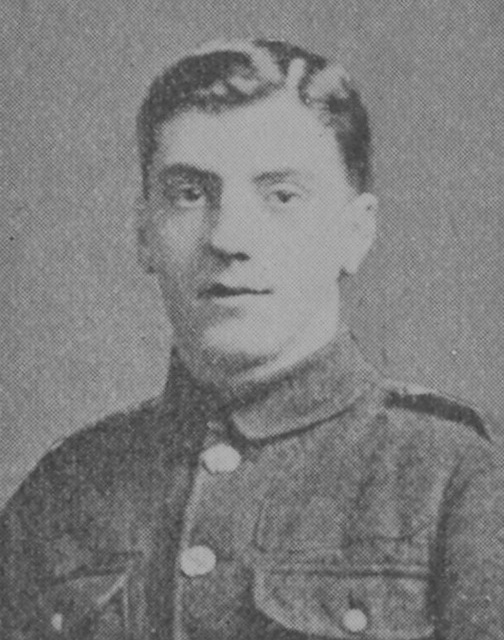
Stewart D E M Lt Col 1st Canterbury Regiment New Zealand Expeditionary Force

Stewart D E M Lt Col 1st Canterbury Regiment New Zealand Expeditionary Force

STEWART, DOUGLAS EVERARD MACBEAN, Lieut.-Col. 1st Canterbury Regt., New Zealand Expeditionary Force, s. of Francis Macbean Stewart, L.R.C.P., L.R.C.S., of Canterbury, New Zealand, formerly of Inverness, Scotland, by his wife, Annie Stevens (Bealey Avenue, Christchurch, N.Z.), dau. of S. C. Farr; b. Ashburton, Canterbury, 25 May, 1877; educ. Boys’ High School, Christchurch. On leaving school was for several years accountant for Messrs. Kempthorne, Prosser & Co., and later joined in establishing the firm of Stevenson, Stewart & Co., shipping agents. In 1900 was Lieut. Canterbury Highland Rifles, 10 months later becoming Capt. Commanding. When the Territorial scheme came into operation he was offered and accepted the Captaincy of the 1st (Canterbury) Infantry Regt., and in May, 1912, was promoted Major. On the outbreak of war he volunteered for foreign service, was given the command of his regt. 12 Aug. 1914, and was killed in action in the landing at the Dardanelles, 25 April, 1915. Col. Stewart held the medal for 12 years’ service with the New Zealand Volunteer and Territorial Forces, and was mentioned in Sir Ian Hamilton’s Despatch of 12 June, 1915.

In announcing his death, Major A. E. Loach, who succeeded to the command, wrote: “From first to last Col. Stewart evinced an unfailing interest in the efficiency and welfare of his command, and his loss is most keenly felt by one and all, not only in a personal sense, but in that the regt. has been deprived, at this early stage, of that able leadership, confidence in which means so much to any regt. on active service. . . . I enclose with this letter reports from Lieut. Lawry and Corpl. McInnis, who were with the Colonel at the time of his death. On Sunday last, after a landing had been effected, Col. Stewart pushed on to the rendezvous with the 1st and 2nd Companies, leaving me behind to bring on the remainder of the battn. The Colonel was accompanied by the Adjutant, but on attaining the ridge occupied by our troops he was separated from the majority of his men, the difficult nature of the country and the disposition of the troops being such that it was impossible to maintain touch. From Lieut. Lawry’s account it is evident that the Colonel, regardless of danger, gallantly pushed right into the firing line, with the object of steadying and encouraging the men preparatory to withdrawing them to a more suitable position. The circumstances under which your husband so bravely met a soldier’s end make the regt. proud, indeed, to have served under so gallant an officer, and his example will prove an incalculable stimulus to his regt. throughout the campaign.” The reports above referred to are as follows: Gallipoli, 27 April, 1915.-Sir, On the afternoon of Sunday, the 25th instant, I found myself left with a mere handful of some six or eight men on the extreme left of the firing line, about the spot Gallipoli 237-z-6. This ridge was so strongly occupied by Turks that I had to shelter my men down the side of the cliff. On the opposite bank shrapnel was raining torrents of lead, and we saw Col. Stewart nearly struck. He called to us, What are you doing?’ and learning that I had so few men, said, “Lie doggo where you are, I am sending for reinforcements.” Shortly afterwards he joined us, and about 100 reinforcements-Australians, Aucklanders and Canterbury men soon came up. Col. Stewart took charge, and with great coolness led us on to successive positions till we were within 150 yards of the crest where he decided to await the enemy. An Australian said to him, “Sir, we took this hill six times to-day, and 6 six times we have been driven back.” With characteristic coolness the Colonel replied, “Very well, we will take it a seventh time, and this time with the help of God and the battery we will hold it. But this is a better position than on the top, so we will await them here.” The hillside was covered with scrub, and as the Turks came on the Colonel moved with great daring from bush to bush, controlling fire and encouraging the men. At one time an Australian Capt. urged him to retire, but he replied, “No, if we lose this hill we are done. We must hold on.” There seemed to be snipers about picking off the officers. Possibly the Colonel was too unmindful of his own safety, and about 4 p.m. he was killed instantaneously by a bullet which passed through both temples. Immediately after the Turks made a bayonet charge. Finding myself the only officer on the ridge, I ordered rapid fire, which the men gave heartily, the Turks retiring to their trench. In a few minutes they charged again, and again rapid fire held them back, but as they fell back they rushed round our left flank. We swung our thin line round and a third time drove them back. But by now–4.45 p.m.-the ranks were sorely depleted. I had only a dozen men able to fire, and we took the opportunity to get away down into the valley with the wounded. I am sure that Col. Stewart’s cheery coolness under so very hot a fire enabled our men to do valuable and desperate work against vastly superior numbers. (Signed: R. A. R. Lawry, Lieut., Canterbury Infantry Battn.)

“Gallipoli, 26 April, 1915.-Sir, I was with Col. Stewart yesterday afternoon (25 April, 1915) when he was killed. It was about 4 in the afternoon, and we were very hard pressed trying to hold the top of ridge 237-z-6. We were on the point of retiring when Col. Stewart arrived with about 30 men, Australians and New Zealanders, and said, “Hullo, Corporal, how’s things?” I told him things were pretty hot and we were thinking of retiring. “Well, come on boys,” he said, “we’ll give them a bit more before we leave,” and although I told him it was not safe for him to come on the top as men were falling all round us, he came and knelt down beside me, and a few seconds later a bullet struck him in the temple, passing clean through his head, killing him instantly. I was hit twice myself then, one grazing my shoulder and another hitting the cartridges in my belt, but doing no damage. There were only about a dozen of us left then. Col. Stewart died fighting, Sir, like the brave man he was. (Signed) Corpl. A. McInnis, 2nd South Canterbury Coy., Canterbury Infantry Battn.”

Col. Stewart m. Christchurch, Canterbury, New Zealand, 9 April, 1902, Edit Illa (Zeitoun, Merivale Lane, Christchurch, New Zealand), eldest dau. of Richard Hill Fisher, of Canterbury, New Zealand, and had issue two sons and a dau.: Ian Warren, b. 30 March, 1903; Donald Machean, b. 16 March, 1905; Patricia Joan Hill, b. 24 Feb. 1910.

Source : De Ruvigny’s Roll Of Honour Vol 1
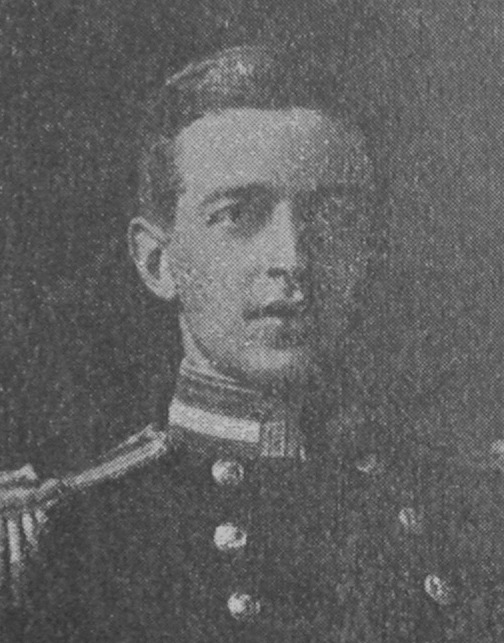
 

Stevenson G Cpl 9137 1st Cameron Highlanders

STEVENSON, GEORGE, Corpl., No. 9137, B. Coy., 1st Battn. Cameron Highlanders (Machine Gun Section), 3rd s. of the late John Kay Stevenson, 41, Muirpark, Eskbank, Dalkeith, late Sergt., 2nd Argyll and Sutherland Highlanders (died 23 Nov. 1915), by his wife, Jessie, dau. of the late Charles Graham, of Kirkcaldy, Master Painter; b. Eskbank, Dalkeith, co. Midlothian, 31 Aug. 1893; educ. Dalkeith High School; enlisted 4 Oct. 1911; went to France with his regt., and was killed in action, 14 Sept. 1914, at the Battle of the Aisne ; unm. Mrs. McLachlan, wife of the Col. Commanding 1st Camerons, wrote: “Tonight an officer of the Camerons has just been to see me, and I asked him about your George. He says that he was killed and buried on the battlefield during a lull in the fighting. He also said that George was a very fine soldier, and a great loss to the Machine-Gun Section.”

Source : De Ruvigny’s Roll Of Honour Vol 1