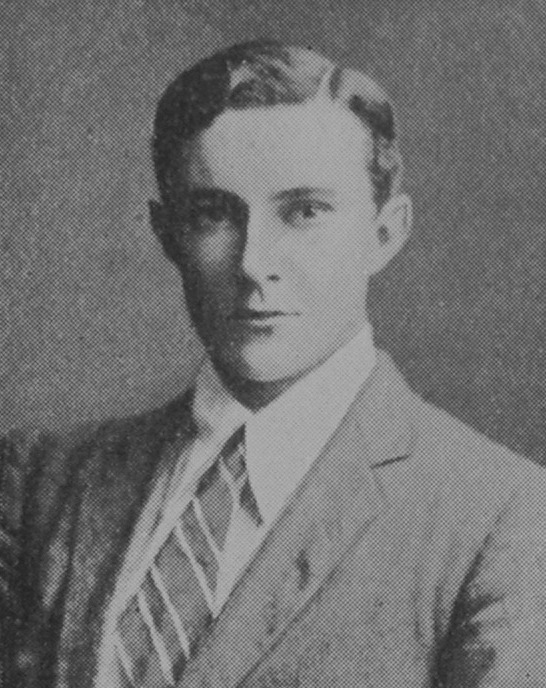
Stevenson C L/Cpl 1803 Royal Army Medical Corps

Stevenson C L/Cpl 1803 Royal Army Medical Corps

STEVENSON, CHARLES, Lc.-Corpl., No. 1803, 3/1st Battn. R.A.M.C. (T.F.), s. of Charles Stevenson, Ex-Provost of South Queensferry, West Lothian, by his wife, Jeanie, dau. of Robert Gibb, of Paisley, Scotland and Manitoba, Canada; b. Milngavie, 1873; educ. South Queensferry Public School; was an Organist and Choirmaster (retired); volunteered after the outbreak of war; left England for the Dardanelles, 30 July, 1915, and was drowned when H.M. Transport Royal Edward was sunk in the Ægean Sea, 13 Aug. 1915, by an enemy submarine; unm.

Source : De Ruvigny’s Roll Of Honour Vol 1

Stevens R W M Captain Royal Irish Rifles

Stevens R W M Captain Royal Irish Rifles

STEVENS, REGINALD WALTER MORTON, Capt., Royal Irish Rifles, and Brigade Major, 9th Infantry Brigade, 2nd s. of Col. George Morton Stevens, late R.A., by his wife, Mary, dau of Surg.-Gen. William Campbell Maclean, C.B., M.D., LL.D.; b. Dover, 18 Dec. 1876; educ. Mr. T. Eastman’s, Stubbington; Appuldurcombe, I.W., and the Royal Military College, Sandhurst; gazetted 2nd Lieut., Royal Irish Rifles, 5 Sept. 1896, and promoted Lieut. Aug. 1898; and Capt. 2 Jan. 1904; joined the 2nd Battn. at Poona in Oct. 1896; served in the South African War, Oct. 1890-1902; took part in operations in Cape Colony, 1899 to 1900 (was severely wounded at Stormberg, 10 Dec. 1899) and Nov 1900, to April, 1901 (Assistant Staff Officer to Assistant Inspector- Gen., Western Section, Lines of Communication), and in Orange River Colony, April, 1901, to 21 May, 1902 (Queen’s medal with two clasps, King’s medal with two clasps); and (2) in East Africa; was Special Service Officer on Staff during operations in Somaliland, 7 May, 1903, to 12 June, 1904; present at action at Jedballi (medal with two clasps); was Adjutant 25 Jan. 1905 to 25 Jan. 1908, and Officer of a company of Gentlemen Cadets at the R.M.C., Sandhurst, 25 Jan. 1908 to 21 Jan. 1910; joined the Staff College in 1910; was attd to the Naval War College, Portsmouth, 1912, and 1 Nov. of that year was appointed Brigade Major, 9th Infantry Brigade, Southern Command, an appointment he continued to hold until his death.

He went to the front 13 Aug. 1914; was in action at Le Cateau on the 26th, and an urgent order to retire instantly having been received, to ensure its reaching the front line and being acted on without delay, Capt. Stevens rode himself to deliver it and was mortally wounded in doing so, and died in a farmhouse the following day, 27 Aug. 1914. He was mentioned in F.M. Sir John (now Lord) French’s Despatch of 8 Oct. [London Gazette, 19 Oct.], 1914, for gallant and distinguished service in the field. He m. at Alverstoke, Hants, 1912, Elisabeth (Cambridge Cottage, Alverstoke), dau. of the late Rev. J. C. Mace, of Hawley, Blackwater, and had a dau., Agnes Desirée, b. 11 Sept. 1914-two weeks after her father’s death.

Source : De Ruvigny’s Roll Of Honour Vol 1
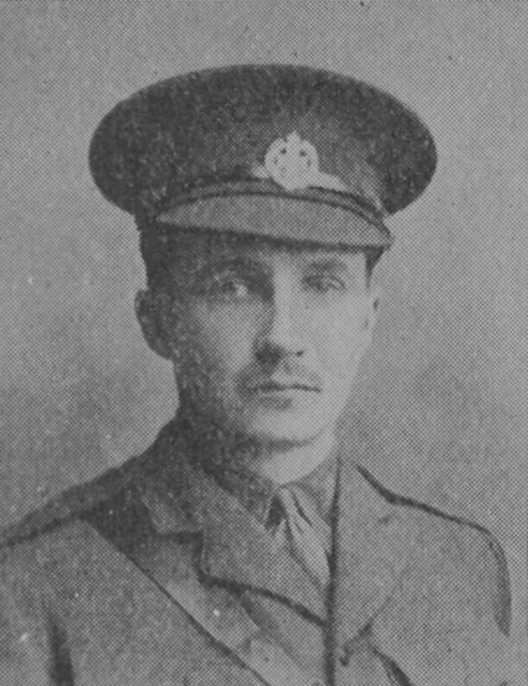
Stevens L B 2nd Lt 2nd South Staffs Regiment

Stevens L B 2nd Lt 3rd South Staffs Regiment

LOTHIAN BASIL STEVENS, son of Colonel G. M. Stevens, was born in 1894, came up to Balliol as a Blundell Scholar in 1913, and took a First in Mathematical Moderations in 1914. He enlisted in the Public Schools Battalion Middlesex Regiment in August 1914, but was given a commission in October in the 3rd South Staffordshire Regiment, and went to France in March 1915. There he was attached to the 2nd Battalion of the Scottish Rifles, and was killed in the action at Fromelles in May 1915. He was with his platoon, holding a German trench against an overwhelming counter-attack when he was killed.

Stevens was a mathematician of great promise, and a man of wide interests and attractive character. His achievements in his short period at College, and his tragically short career on active service, show that he would have gone far if he had lived. It is eminently fitting that his name, with that of G. M. Paddison, has been associated with the War Memorial Exhibition now attached to the Blundell Scholarship.

Source : Balliol College War Memorial Book

Stevens L B 2nd Lt 2nd South Staffs Regiment

STEVENS, LOTHIAN BASIL, 2nd Lieut., 3rd Battn. South Staffordshire Regt., attd. 2nd Battn. Scottish Rifles, yst. s. of Col. George Morton Stevens, late R.A., by his wife, Mary, dau. of Surg. -Gen. William Campbell Maclean, C.B., M.D., LL.D.; b. Southampton, 13 March, 1894; educ. Blundells School, Tiverton, and Balliol College, Oxford (Mathematical Scholar); where he took a first-class in moderations in mathematics, July, 1914; joined the Public Schools Battn. of the Middlesex Regt. in Sept. 1914, and obtained a commission in the 3rd South Staffordshires, 3 Oct. 1914; went to France in March, 1915; was attd. to the 2nd Scottish Rifles; was reported wounded and missing after the fighting at Fromelles, 9 May following, and is now assumed to have been killed in action that day; unm. The officer commanding the 2nd Scottish Rifles wrote:  “I am afraid your son must have died from his wound. It is a great distress to us all, as he was so keen and interested in his work, and such a bold and reliable leader.” His brother, Capt. R. W. M. Stevens, died of wounds, 27 Aug. 1914.

Source : De Ruvigny’s Roll Of Honour Vol 1

Braithwaite R W Captain 10th Durham Light Infantry

Braithwaite R W Captain 10th Durham Light Infantry

CAPTAIN RICHARD WILFRED BRAITHWAITE, Durham Light Infantry, was the son of the late Reverend J. M. Braithwaite, Vicar and Rural Dean of Croydon.

He was educated at Marlborough College and began his career as a planter in Ceylon. He fought and was wounded in the South African War as a trooper in the Ceylon Mounted Infantry. In 1910 he became a member of the Stock Exchange and a partner in the firm of Foster and Braithwaite.

On the outbreak of War he received a commission as Captain in the 10th Durham Light Infantry. He was wounded on 27 July 1915, but refused to leave the trenches, and was killed four days later.

Captain Braithwaite married, in 1907, a daughter of Mr. Brodhurst Hill.

Source : The Stock Exchange War Memorial 1914-1918

Blackwell W G Lt 8th Royal Fusiliers

Blackwell W G Lt 8th Royal Fusiliers

L IEUTENANT WILLIAM GORDON BLACKWELL (“Don”), Royal Fusiliers, was the seventh son of Samuel John Blackwell, J.P., and of Elizabeth, his wife, and was born in 1885.

Educated at Mr. Herbert Bowden-Smith’s Preparatory School at Bengeo and privately, he joined his brother Robert in the firm of Blackwell Brothers, and became a member of the Stock Exchange in 1908.

On the declaration of war he enlisted straightway in the Honourable Artillery Company and was sent to the French front in September 1914, obtaining a commission in the 4th Royal Fusiliers in 1915.

He fell at Flers, in the battle of the Somme, on 6 October 1916, being then attached to the 8th Royal Fusiliers.

One of his Commanding Officers wrote of him: “I saw a great deal of him and he naturally endeared himself to me by his kind nature and manliness of character. I deplore his loss; the nation has lost a gallant soldier and a great gentleman.”

His Major wrote: “He was a grand soldier; he could get the utmost out of men and did so, but they all worshipped him.”

Lieutenant Blackwell married in 1910 Nina Mary, daughter of the late Middleton Moore O’Malley and Mrs. O’Malley of West- port, co. Mayo, and leaves a widow and one son.

Source : The Stock Exchange War Memorial 1914-1918

Blackwell W G Captain 8th Royal Fusiliers

Source : The Sphere 13th Jan 1917

Bessell M Captain 10th Queen’s Royal West Surrey Regiment

Bessell M Captain 10th Queens Royal West Surrey Regiment

CAPTAIN MOWBRAY BESSELL, The Queen’s (Royal West Surrey) Regiment, was born on 23 September 1876. He became a member of the Stock Exchange in 1902. A keen supporter of the Volunteer movement, he was for many years a captain in the 3rd Volunteer Battalion, Royal Fusiliers.

On the outbreak of war he applied for a commission and was gazetted Lieutenant in the East Surrey Regiment, being promoted Captain on 1 January 1915 and transferred to The Queen’s Regiment.

He was one of the many victims of the battle of the Somme, being killed in action on 15 September 1916 at Flers.

His Colonel wrote: “You know how much we all loved him, and personally I feel I have lost a real and dear friend; never was there a more loyal and hardworking officer. I can’t tell you what I and all the regiment owe him. He loved his Company and was always working for them, and it was through him that they were able to do what they did last Friday, and go through everything with the greatest dash and in a manner unsurpassed by any regiment in the British Army.”

Captain Bessell was married, and resided at Indian Farm, Effingham, Surrey.

Source : The Stock Exchange War Memorial 1914-1918

Bayley E V 2nd Lt Royal Flying Corps

Bayley E V 2nd Lt Royal Flying Corps

SECOND LIEUT. EDWARD VINCENT BAYLEY, Royal Air Force, was the second son of James Bayley, of Willaston Hall, Nantwich. He was born in 1885, educated at Marlborough, and became a member of the Stock Exchange in 1909.

He was a good shot and keen rider to hounds. An illness prevented him from joining the army until the second year of the war. He then joined the South Staffordshire Regiment, and shortly afterwards was transferred to the R.A.F.

He was killed at Vendôme in an accidental crash on 24 February 1917.

The record of his partner, Noel Keith, in the firm of Keith, Bayley and Reader, will be found on a later page.

Source : The Stock Exchange War Memorial 1914-1918

Bartholomew C Captain MC 1st Scots Guards

Bartholomew C Captain MC 1st Scots Guards

CAPTAIN CLAUDE BARTHOLOMEW, M.C., Scots Guards, was born in August 1883, the elder son of the late Henry Bartholomew. He married in 1907 the youngest daughter of G. W. Share, sister of the Lady Rothermere, and left one daughter. In 1911 he became a member of the Stock Exchange,

He joined his regiment in February 1915, and went straight to the French front in the following month.

He was killed in September 1916, while in command of the Machine Gun Company of the 2nd Guards Brigade.

Source : The Stock Exchange War Memorial 1914-1918

Barnett H W Captain 13th London Regiment

Barnett H W Captain 13th London Regiment

Barnett H W Captain 13th London Regiment

CAPTAIN HERBERT WALTER BARNETT, 13th Battalion, London Regiment, was the son of Maurice H. Barnett, and was born in 1879. Educated at University College School, he joined the Stock Exchange at the age of twenty, and five years later became a member. For some years he was a junior partner in the firm of Bensinger and Co.

He was given a commission in 1907 in the 4th Middlesex Volunteer Rifle Corps, which, on the formation of the Territorial Force, was converted into the 13th (Kensington) Battalion, London Regiment. He was promoted Captain in 1912. From the time of joining the Regiment he devoted himself with the greatest keenness to the promotion of its well-being and efficiency and in so doing became a most efficient and popular officer.

His Battalion went to France in November 1914 and he took part in its activities through those critical months in which little was left of the Old Army, and the New Armies were not yet in being. He was killed at the head of his men in the attack on Aubers Ridge of 9 May 1915, an historic engagement in which his battalion played a notable part.

“He died,” wrote his Major, “leading his men in the true British way, and under the most exacting conditions that any troops could be called on to face.” And his Colonel wrote: “His memory will remain with us as a keen and capable English gentleman, always ready to do his share.”

The work of the Kensingtons on that day was described by General Sir Henry Rawlinson, then commanding the 4th Army Corps, as “a feat of arms surpassed by no battalion in this great war.”

Source : The Stock Exchange War Memorial 1914-1918

Barnett H W Captain 13th London Regiment

Source : The Illustrated London News 29th May 1915

Ballance L A Captain 2nd Kings Royal Rifle Corps

Ballance L A Captain 2nd Kings Royal Rifle Corps

CAPTAIN LESLIE ARTHUR BALLANCE, King’s Royal Rifle Corps, was born in 1889, and educated at Eton and Trinity College, Cambridge.

He became a member of the Stock Exchange in 1911 and a partner in his father’s firm, Marnham and Co., in 1914.

On the outbreak of war he was given a commission in the 15th County of London Regiment, but transferred to the King’s Royal Rifle Corps early in 1915.

He went to France in May, fought in the second battle of Ypres, and was invalided home in August.

Rejoining his regiment in September 1916 as a Company Commander, he was killed on 27 September. He had volunteered for a dangerous duty and lost his life in its execution.

His Colonel wrote: “I at once fell under the same quiet charm which he exercised over all with whom he came in contact. He was fearless to a fault and a very gallant officer.”

A brother officer wrote: “A better and finer character I never knew in all my life, and we always wanted to serve together out here. He simply was too wonderful in the show, never had a fear, and was so calm and splendid. The men just loved him and did anything for him . . . I can only say he was the finest man I ever knew.”

Source : The Stock Exchange War Memorial 1914-1918

BALLANCE, LESLIE ARTHUR, Capt. 2nd Battn. (60th Foot) The King’s Royal Rifle Corps, s. of Arthur William Ballance, of Park Lodge, Blackheath Park, London, S.E., and the Manor House, Herringswell, co. Suffolk, by his wife, Jane Peek, dau. of G. M. Frean; b. London, 9 Jan. 1889; educ. Eton, and Trinity College, Cambridge. In Aug. 1914, he obtained a commission in the 15th County of London Regt., but was transferred to the King’s Royal Rifle Corps, March, 1915; served with the Expeditionary Force in France and Flanders; was present at the Second Battle of Ypres, and was invalided home 12 Sept. 1915; rejoined his regiment on recovery, and was killed in action during the Battle of the Somme 27 Oct. 1916. Buried at Flers. His Colonel wrote: “It is with the deepest regret I write to tell you all about your son’s death. At about 4 p.m. on 27 Sept., when a bombing attack on the Germans in the line was in progress, a report was received by me that the Germans were giving ground. It was essential that the battalion on our right should have the information at once, so as to co-operate, and for greater chance of success I wanted to send an officer, but none was available. You son Leslie, hearing this, volunteered, and ran across towards the battalion on our right. . . . After he had gone about 60 yards out of the 100 yards, I heard a bullet fired from a distance. Your son ran on, but almost at once a bullet struck him. . . He fell on his face and never moved again. He was fearless to a fault, and a very gallant officer, . . . He is most  sorely missed by all.” Unm.

Source : De Ruvigny’s Roll Of Honour Vol 3